Global
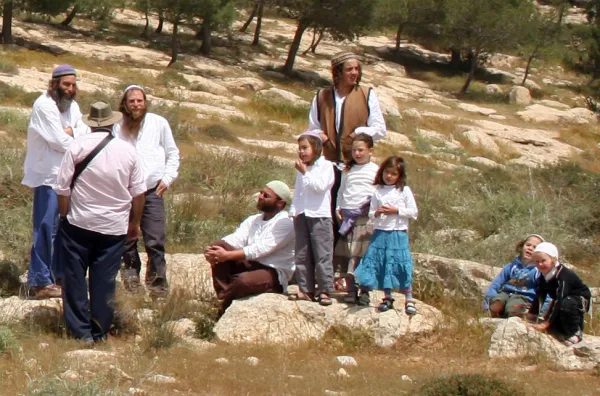
If you want to understand the bleak future awaiting the occupied West Bank, do not look away. Just pay attention to the events unfolding in the small Palestinian town of Qusra, south of Nablus.
The story of the future of the West Bank begins here.
While much of the media is treating reports emerging from the area as simply another episode of “settler violence,” it is not. Qusra represents something far more consequential: a glimpse into the new Plan Dalet that Israel has in store for Palestinians.
Plan Dalet was the military blueprint through which Zionist forces conquered much of historic Palestine, village by village, during the Nakba.
The plan did not suddenly emerge in 1948. It built on military schemes dating back to 1945, developing into a strategy for conquering Palestinian towns and villages, destroying communities and expelling their inhabitants.
We begin GREEP #278 with HEDY TRIPP’s on-the-ground report from ICE-assaulted Minnesota and its fake “Muslim” voters.
With RAY MCCLENDON we take a very deep, comprehensive dive into the challenges facing the 2026 election as a whole.
From JOHN STEINER we hear a forecast for the USGRASSROOT.org website as a hub for election protection.
Co-host MIKE HERSH clarifies the evil origins of much of the fundraising avalanche now swamping so many of it in our email.
Alabama native DR. RUTH STRAUSS warns us of the latest US Supreme attack on voting by mail.
Election Protection ALISON GREENE asks that we coordinate the ground game in the 2026 mid-terms.
From DORIS WILLIAMS we get a report on Thom Hartmann’s latest research on Citizens United.
From PAUL JOHNSON we hear more on getting the money out of politics and the difference between raising money & being a public servant.
Film producer HOLLY MOSHER tells us about her latest zoom videos on election theft.
Producer STEVE CARUSO decries the lack of food and facilities in voting lines.
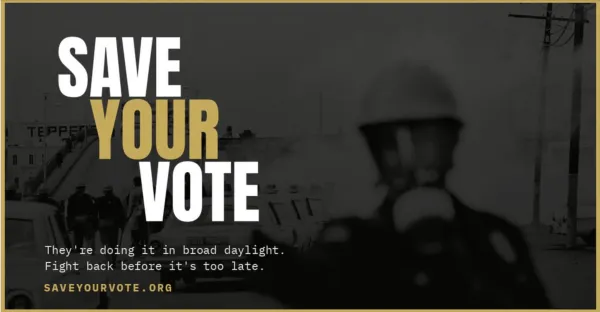
Watch this 5-minute video, get angry and get into action.
Leading up to the 2024 election, 4.7 million Americans were wiped off the voter rolls, a daylight robbery of democracy, an outcome not based on the will of the voters but on the cruel, racially poisoned trickery we politely call “vote suppression.”
To prevent another electoral crime wave sabotaging the 2026 midterms, the Palast Investigations team is launching the counterattack. Joined with our action partners at Black Voters Matter Fund, RainbowPUSH Coalition, NAACP Atlanta, Southwest Voter Registration Education Project and other vote protection warriors, today we unveil our Save Your Vote campaign.

It kicks off with a series of 5-minute films, Jim Crow Reloaded. Each film short tells you how they are jacking with the voter rolls, who the perps are behind it, and what YOU can do about it.

It is deeply troubling to see former White House press secretary Karoline Leavitt defend President Trump’s decision to call Bloomberg reporter Catherine Lucey “Piggy” as she attempted to ask a follow-up question about the Jeffrey Epstein files.
Shame on former White House Press Secretary Karoline Leavitt for defending Trump’s mockery of a journalist—and shame on the White House press corps for sitting there and saying not one word as the president berated a reporter for simply doing her job. Where was the outrage? Where was the defense of the First Amendment and the essential role of a free press?
Journalists should not be expected to remain silent when a president insults, belittles, or attempts to intimidate a reporter for asking a legitimate question. The press corps has a responsibility not only to ask tough questions, but also to stand up for the public’s right to hear those questions asked without fear or intimidation.
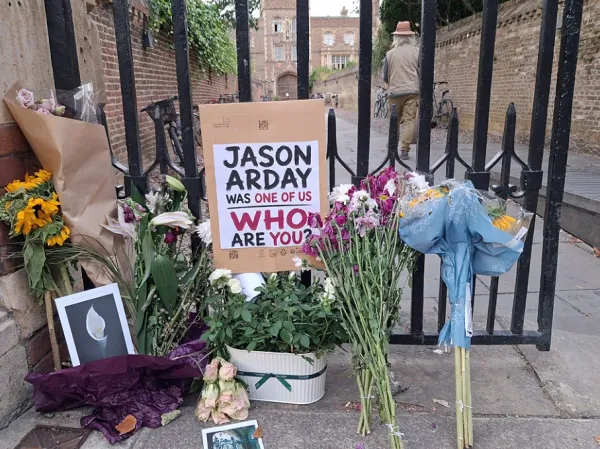
Ultimately Dr. Jason Arday is responsible for the work he produced. There were reportedly more than 100 sentences or passages in Arday’s dissertation that were lifted from other authors without attribution. No matter the dissertation’s page length, 100 or more instances of plagiarism is both egregious and inexplicable which raises the following question: what kind of guidance or mentorship was Arday receiving during the dissertation stage? Once a doctoral candidate reaches the dissertation stage that person and one’s supervising professor are working closely to ensure that the doctoral candidate is poised to produce an original work that advances readers understanding about a specific body of knowledge.
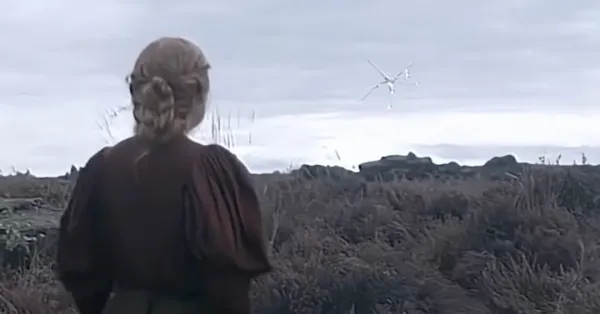
I saw a clip going around from the Netflix series “1899” where a woman discovers a crack in the screen of what she had taken to be her world, causing her entire understanding of reality to crumble before her eyes.
Someone had captioned the clip, “Every awakening begins with a fracture in the lie.”
Yeah. It does tend to happen like that.
You start pulling on one thread and then the whole thing unravels. Maybe you start with the Iraq war lies. Maybe 9/11. These days for a lot of folks it’s Palestine.
You keep pulling on that thread, uncovering more and more uncomfortable truths, until eventually you discover that pretty much everything you’ve been taught about your world was a lie.
Every war. Everything about how your government really operates. Everything you’ve been told about nations and how they work. Everything about capitalism and communism and how your society is structured. It was all lies, fed to you by parents, teachers, preachers, pundits, politicians and news men from the moment you were old enough to process complex thought.
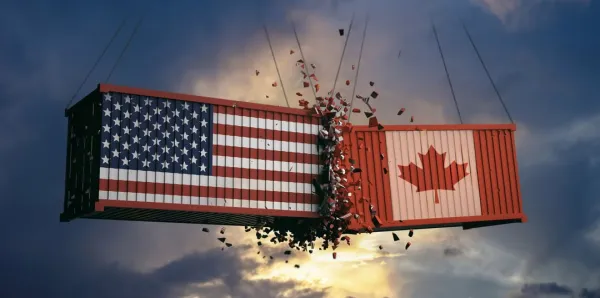
I’ve been all over the world and have seen both its good and sordid countries. One of the best run, most decent and honest nations I’ve seen is Canada.
As George Bernard Shaw noted, Canada is a wonderful country, but it has nine months of winter and three months of fall. It has vast forests, beautiful lakes, lots of beautiful animals and birds, lavish natural resources, and people, as I’ve found, who are the kindest, most honest and thoughtful in the world.
As an American, I have always regarded Canada as the best neighbor any country could have, a treasure house of nature, clean water and fresh air. Canadians also proved themselves formidable soldiers in three wars (including the distant Boer War) and commendable peace-seekers. Canada is a country in which you can cross the street with your eyes closed and survive. Where bribery is little known, and where people – as I found – are taught to respect one another, their differences, and their various cultures and religions.