
Global


Our production company, Pause Button Video, encourages you to examine the info-laden charts herein at leisure. That can assist in following the ludicrous imitation of society we’re living through these days. Viz, the war on our vicious enemy, fishing boats, the war on the planet led by patriotic oil barons, and the torture prisons in service of the only democratic genocide in the Middle East. Still, some electoral victories for progressives who would be mainstream in a sane world, though Big Dem will try to put the genie back in the bottle.
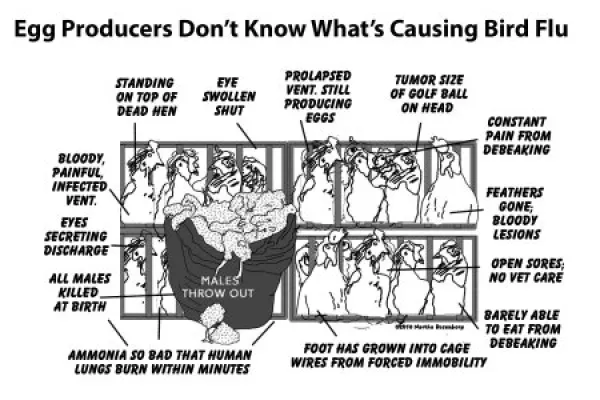
If you have noticed that eggs, cholesterol and menopausal hormones have been exonerated and are now touted as "health fixes" you are correct.
Much health information before Big Tech and AI took over cyberspace has been reversed for financial gain. Beware.
The truth is the chicken egg has the highest cholesterol of any other foodstuff-- packing approximately 275 mg of cholesterol (more than one day's worth).
In 2008, the American Heart Association's journal Circulation reported that just one egg a day increased the risk of heart failure in a group of doctors studied. In 2010, the Canadian Journal of Cardiology lamented the "wide-spread misconception . . . that consumption of dietary cholesterol and egg yolks is harmless." The article further cautioned that "stopping the consumption of egg yolks after a stroke or myocardial infarction would be like quitting smoking after a diagnosis of lung cancer: a necessary action, but late."
Take Your Hormones Ladies!

“I can distinctly remember reporting on a number of Arabic men that willingly referred to Kamala Harris as all kind of b*****s and horrible, horrible names, horrible, horrible opinions.”
— Cleopatra Draper, WVON, “Voice of the Black Community”
African-American radio host Cleopatra Draper is worried. The victory of Democratic Socialist Dr. Abdul El-Sayed in the Michigan Democratic primary for US Senate has revealed a growing political schism between Black and Arabic voters. According to the Cook Report, Stevens led El-Sayed by about 8 percentage points in counties with higher Black populations, while El-Sayed underperformed in traditional African-American strongholds like Detroit.
And yesterday in Wisconsin, Francesca Hong, the gubernatorial candidate of the Democratic Socialists of America, was upset in her primary race by David Crowley, the African-American County Executive of the Black township known as Milwaukee.
WVON’s Draper saw this backlash coming. She told me, “The videos that came out of Michigan of Arabic men and how they felt about Kamala Harris was heart-wrenching.”

The Nuclear age begins as WWII neared its end
Mitchell Zimmerman reminds us that “the nuclear age began 81 years ago” (https://www.commondreams.org/opinionnuclear-weapons-lies). He writes, it all began with a lie. Zimmerman is an attorney, longtime social activist, and author. Here’s some of what he writes.
“Eighty-one years ago this week, a single American airplane, flying almost unnoticed over a Japanese city, dropped a single bomb that destroyed the entire city. Three days later another American plane destroyed a second city.
“The atomic bombs dropped on Hiroshima on August 6, 1945 and Nagasaki on August 9, 1945 killed 100,000 people outright. By the end of the year another 100,000 succumbed to radiation sickness, burns, and other injuries from the blasts.” Some 90% were civilians.
Reports on the broad and unconstitutional investigations launched by agents from US Homeland Security read like something from East Germany or the KGB files of years ago. Government agents unbound by law or ethics acting with impunity to surveil citizens involved in the simplest protest and targeting organizations and labor unions as potential activists and supporters involved in a conspiracy of domestic terrorism. All of this state-sponsored abuse was demanded by Trump and his government’s animus against any level of protest and opposition to his ruthless, deadly immigration enforcement actions in Minneapolis.
The story headlined in the Times once again reminded all of us that there are no limits to the extralegal actions contemplated and implemented by Trump and his government. Under this administration, no one can pretend that we continue to be a nation under the rule of law.
Am I exaggerating? Heck, no, and here we go from the report:
Introduction: A Week of Reckoning
We have watched a relentlessly busy week unfold in national and state politics, marked by sweeping administrative maneuvers, mounting corruption concerns, and explosive personal scandals involving prominent figures. As independent watchdogs, we must look past the political theater and examine the real-world impact these developments have on everyday citizens.
The Cost of Living vs. The Accumulation of Wealth
While hardworking Ohioans and Americans are struggling to pay higher prices at the pump, buy groceries, and keep up with the soaring cost of living, we watch as an entertainer-turned-president and his administration rake in billions. It feels like a modern-day manifestation of the Seven Deadly Sins—greed, pride, and an utter disregard for everyday people while power and fortune are amassed at the top. Exactly how much in ill-gotten gains have his immediate family members and his closest administration associates profited off the backs of working families? It is time we demand real accountability, transparency, and an end to self-enrichment in public office.

Last year, the House passed the CLARITY Act (H.R. 3633), a bill disguised as “crypto regulation” that actually serves the billionaires and bad actors at the center of today’s crypto chaos. This bill doesn’t protect consumers, doesn’t close money laundering loopholes, and does nothing to stop the biggest threat of all: Trump’s crypto-fueled bribery machine. Now, the CLARITY Act is being considered in the Senate.
Trump has already amassed $1.4 billion in the last year alone, and the latest bill text doesn’t include any meaningful ethics fix:
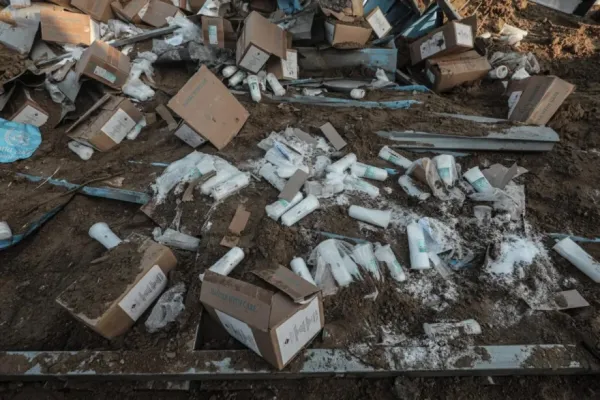
According to a recent If Americans Knew daily update, cancer medicines and other essential medical supplies have been prevented from reaching people in Gaza. The consequences are devastating: patients who depend on chemotherapy and other life-saving treatments are being left without the care they urgently need.
This is not simply a political dispute—it is a matter of human life. International humanitarian law places obligations on an occupying power regarding the provision of medical supplies and the maintenance of medical services for the civilian population. Deliberately denying civilians access to essential medical treatment can constitute a grave violation of international humanitarian law and, depending on the circumstances, may amount to a war crime.