
Global

In 1982, I was with Israel’s army when it invaded southern Lebanon. We moved from menacing village to village ready for an attack by Hezbollah fighters.
Israel’s objective was to seize the southern portion of Lebanon, notably the Litani River, the region’s major source of potable water. The historic Port of Tyre - old when Rome was young - was another key target. It had been largely seized by Maronite fascist militias allied and supplied by Israel.
Israel claimed it was battling “terrorism”. In fact, Israel’s ultimate objective was - as always - more land for the Jewish state. When Israel was created in 1948, there was much speculation about whether the new Jewish state would go on to annex all of southern Lebanon.
That did not happen after the US put its foot down. Those were the days before Israel dominated US Mideast policy and gave the US president his marching orders.
Today, the US aircraft carrier Abraham Lincoln, on which I’ve been at sea, lies off the Mideast, ready to attack Iran.
Dear Mayor Johnson:
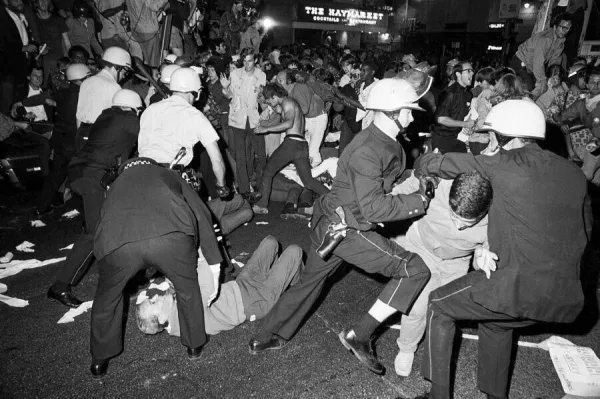
We are passionately asking that you not do during the upcoming Chicago Democratic Convention what then-Mayor Richard J. Daley did in 1968: plant the seeds of chaos and pave the way for a Republican President.
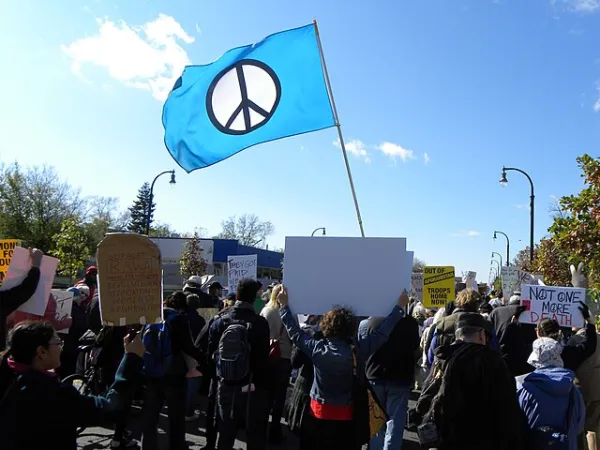
It’s widely expected there will be many thousands of marchers at this year’s DNC, protesting the wars in the Middle East and Ukraine. It is essential the city do everything in its power to accommodate them and help keep the marches peaceful… as it did NOT do in 1968.
During the ’68 protests, we were among the thousands there to march peacefully against the war in Vietnam. While standing at the corner of Michigan and Balbo, we were clubbed by police. To our immediate north, fellow demonstrators were pushed through a large plate glass window and into a restaurant. Infamously, angry police then poured inside and beat them and many astonished patrons who were trying to eat dinner.
It was a horrendous scene that was totally avoidable. It helped put Richard Nixon in the White House and prolong the Vietnam War for seven awful years.

I slept barely three hours last night so I worked, took a vigorous walk,
and contemplated life. I force myself to watch the horrors of the genocide
and destruction around us...my nightmares seem small compared to reality. I
touch base with friends in the Gaza strip where they are herded like cattle
from one place to another to be bombed to reduce their population and
finish off the Palestinian question, a final solution to make the land
devoid of its indigenous people. All with support of western governments
under the boot of Zionism. In my walk I also reflected on how difficult it
is to build our oasis of hope (see palestinenature.org) in the middle of
this mayhem and stressed for resources (funding and people). I also
reflected on people (those active, those colluding, those humane....). I
also worked on my latest book of reflections on activism and decided to

The idea that the war on Gaza is essentially waged and sustained by and for Israeli Prime Minister Benjamin Netanyahu has, for long, dominated political analyses on the subject.
The notion is often kept alive by public opinion inside Israel.

The corporate media report on elections — especially the biggie coming up — as though they were sporting events. If you win, hurray! You get the gold cup or whatever. The election process is a matter of shrewd strategy combined with, uh, likability.
Thus, as per the New York Times: “Tim Walz is going to bring big Midwestern dad energy to the presidential campaign.”

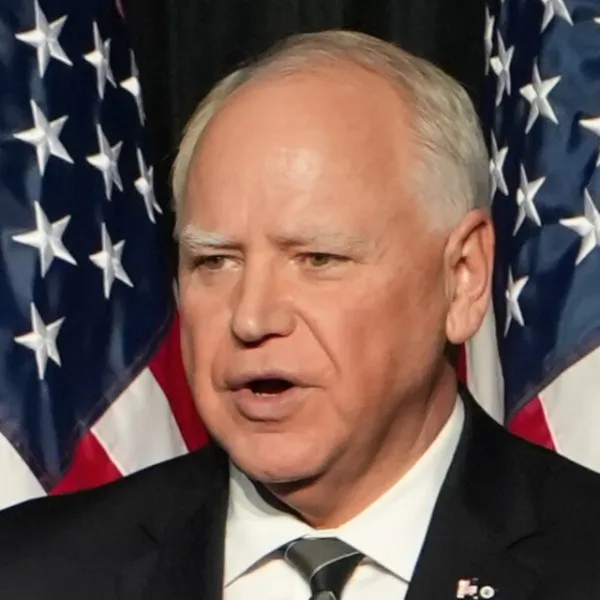
After just over two weeks of grueling vetting, Kamala Harris announced her pick for vice president. Tim Walz is her running mate. She rejected the calls of special interests, aka AIPAC and their cronies, the “mainstream” media outlets like CNN, and “intellectual” Democrats, to tap Josh Shapiro, the governor of Pennsylvania.
For me, and I believe many others, the choice for the top of the ticket has become easy. Kamala Harris and Tim Walz can be our choice. Before this recent announcement, when Biden stepped down from the top of the ticket, I was still unsure if I wanted to cast my vote for Harris. For one, I was unsure about her “bedfellows.” Would she succumb to the special interests and select another Zionist, mirroring Biden? Would she pander to those “Israel First” lobbyists and special interests and be made to forget that her first duty is to the USA and not to a foreign country that is dragging the US into the mud of regional conflicts? Honestly, with her choice of Walz, I was a little relieved.


From Michael Moore substack:
I promised you a blueprint and a strategy that, beginning today, working together, we can use to actually, once and for all, end the career of a political arsonist, the man who attempted to overthrow the duly-elected government of the United States of America, the 34-time convicted felon, self-admitted sexual abuser, and one-time Dean of Trump University: Donald J. Trump.
This is it.
This is how Trump will meet his fate: You, me, this Toolkit I’m building for you, and millions of Americans who will be engaged and unforgiving over these next three months.
Although this toolkit has the blessing of many in my progressive family of activists, writers, and non-violent rebels, it has not been approved by the Democratic National Committee. I did run it by various people in D.C. who were happy to read it. All agreed that nothing I’m suggesting we do is wrong or inappropriate and, in fact, I was told it was actually better that we were doing our own “rogue operation.”