
Global


Richard S. Ehrlich's new book, Mindfucking DeepSeek, begins as entertainment and ends as a terrifying read. The last chapter is an investigation into the threats of Artificial Intelligence, answered by DeepSeek itself. I can guess that the previous chapters are intended to provide an insight into the mind, or methodology, of AI leading toward the last chapter. It is equally possible that the author's creative mind decided to investigate DeepSeek with no particular plan, and the first 15 chapters led him to ask the questions in the final chapter.
The author chose China's DeepSeek platform because DeepSeek censors itself with respect to China's laws and mechanisms of social control, providing an example of how AI can be used and misused. One can read this and view it as an almost benevolent aspect of AI when compared to the final chapter. DeepSeek would sometimes answer questions about China in plain text and then quickly erase its answer. Sometimes the suppressed text was captured by screenshots.
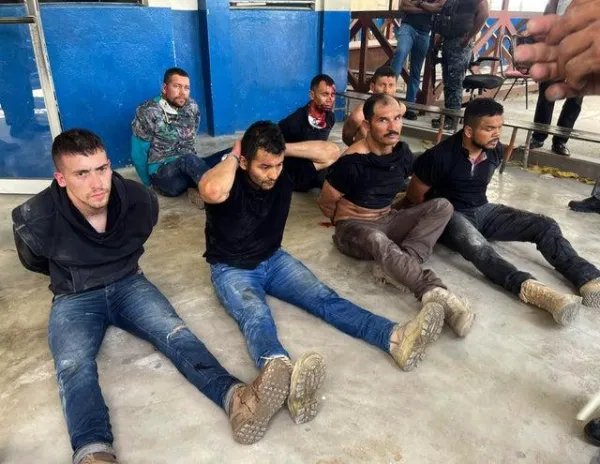
This is the story of Violet and her husband, (not real name for obvious reasons) who immigrated to America from Haiti under the Temporary Protected Status (TPS) . It is also the story of the recent history of the likely involvement of the American Empire in destabilizing Haiti beginning with the assassination of President Jovenel Moïse in 2021. (America's history of destabilizing Haiti goes back long before 2021, but is not covered here).
TPS was established by law in 1990, and now includes residents of 12 countries who are nationals of a country experiencing ongoing armed conflict, an environmental disaster, or any temporary or extraordinary conditions that would prevent the foreign national from returning safely. The Supreme Court of the current United States, in support of racist President Trump, has ended temporary protection for over 300,000 Haitians, and is now in the process of removing them. Many thousands of Syrians are also being returned.
During the wars in Afghanistan and Iraq, I never once heard claims that the U.S. military was running low on munitions.
Yet after just five months of “Operation Epstein Fury,” we are being told that the U.S. military is nearly running out of critical munitions.
That raises serious questions. The head of U.S. European Command (EUCOM) has reportedly warned Pentagon leaders that he does not have enough missiles and U.S. Navy destroyers to meet all of the military’s commitments. If that is the case, would EUCOM ultimately have to choose between protecting U.S. forces and protecting Israel?
If so, how does that make sense?
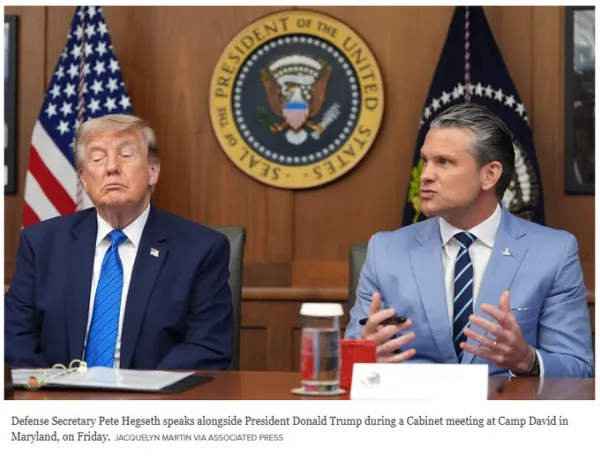
Critics argue that Secretary of War Pete Hegseth has diverted too many U.S. military resources to support Israel. If our military is facing shortages, the American people deserve a clear explanation of the logic behind these decisions.
As a retired U.S. Air Force veteran, I believe our first responsibility must be to ensure that American service members have the resources they need to protect themselves and our country.
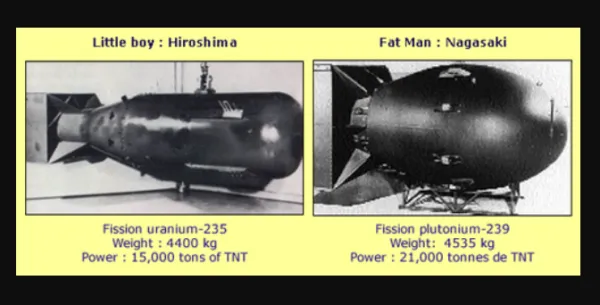
The second week of August 1945 is one that was indelibly etched in the minds of those that Tom Brokaw immortalized in his book The Greatest Generation. It has also been the subject of numerous documentaries, movies, and one of the most studied acts of war in 20th century history, foreign affairs, political science/international relations and comparative politics.
On Monday, August 6, 1945, the United States became the first nation to use nuclear weapons, “Little Boy,” against another country and in so doing forever altered the worlds’ geopolitical landscape in myriad ways. In the days leading up to the history making move on July 26, 1945, at the Potsdam Conference, President Harry Truman, Prime Minister Winston Churchill and President Chiang Kai-shek of China announced the Potsdam Declaration, which laid out in bold relief the terms of Japan’s surrender. This ultimatum stated if Japan did not surrender, it would face “prompt and utter destruction.”

A couple of cool cats, Dr. Bob and Dan-o Dougan, play tunes on the theme of cool-ness. Songs with cool in them, songs by artists named Cool, songs they thought were cool back in the day, and just songs they think are cool.
Listen live at 11pm Fridays, August 7 and 14, and Mondays at 10am August 10 and 17, streaming at wgrn.org or on the radio at 91.9FM
and
Mondays at 2pm streaming August 10 and 17 at wcrsfm.org or on the radio at 92.7 or 98.3FM.
BANGKOK, Thailand -- When you come to Bangkok, a visit to the capital's sprawling, inexpensive, amulet market will take you on a trip into another dimension.
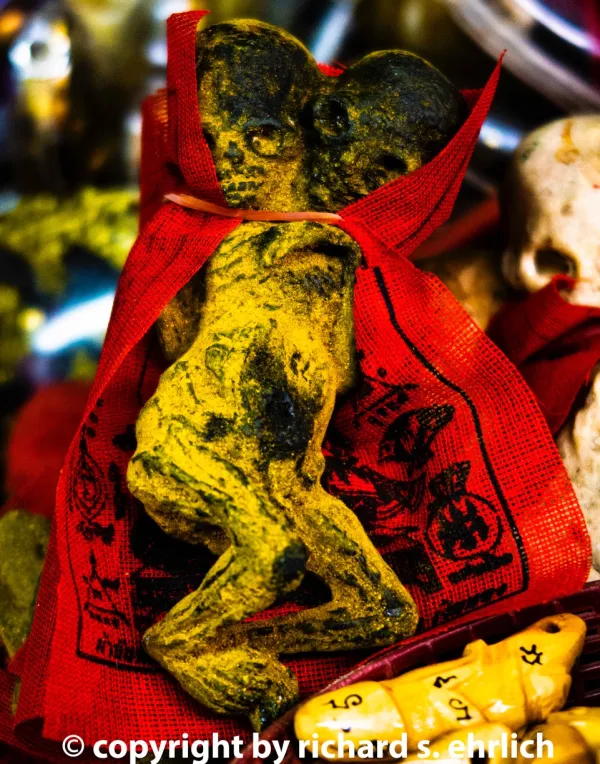
Here in the market's crowded riverside amulet market, a two-headed baby "zombie" is the most terrifying thing you can buy, but if you promise to feed it every day, the undead spirit could become your loyal slave and protect you against misfortune.
"In Thailand, the lowest level of believers buy these zombies and other amulets like this," said a saffron-robed Buddhist monk, warily examining the grotesque doll-like totem.
"The next highest level of believers buy amulets which have the faces of Buddhist monks.
"The highest level of believers are people like me, who believe only in Buddha," the monk said.
Most Thais are Buddhists, but they also mix a bewildering slew of other beliefs -- including Hindu, animist, and superstitious -- into their spiritual outlook.
Buddha was not into amulets, and advised followers to ignore such illusions.

The events in Tell, southwest of Nablus, were not an isolated act of violence. They were a warning.
For years, Israel has treated Palestinian villages in the occupied West Bank as open spaces for military raids, settler invasions, land theft and collective punishment. The expectation was that Palestinians would endure the violence, bury their dead and return to the same unbearable routine.
In Tell, however, that carefully maintained equation was briefly disrupted.
The confrontation began when armed Israeli settlers entered the area near the village, attempting to attack Palestinian homes. Villagers confronted them. Israeli soldiers and armed settlement personnel then intervened, transforming the settler attack into a broader military assault.