
Global
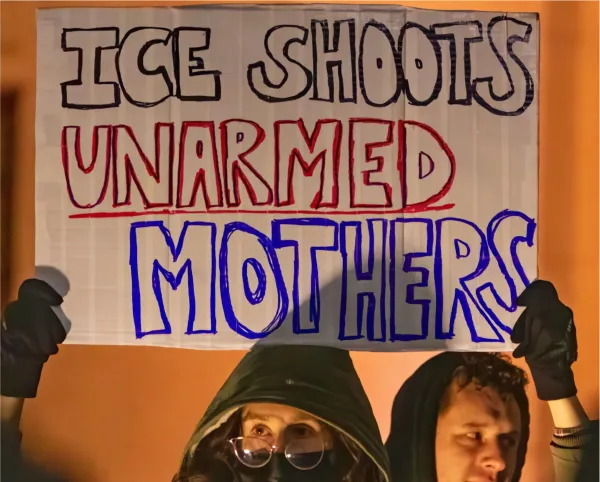
Ohio Immigrant Alliance (OIA) has released “They Walk Among Us: A List of 59 Sexually and Physically Abusive ICE and Border Agents” in the wake of ICE agent David Brouillette’s killing of Johan Sebastian in Maine.
“David Brouillette’s disturbing history of domestic violence is not unusual for an ICE agent,” said Lynn Tramonte, Executive Director of the Ohio Immigrant Alliance and author of this report. “But we have no way of knowing the full extent of the problem, because the agency doesn’t even look at family court records. What we do know is that ICE and Border Patrol agents have a disturbing track record of sexually and violently abusing women and children, including members of their own families. These are not people who should be given guns and free rein to roam U.S. communities. Their job is to enforce civil laws, but they act like they live in the wild west, and are killing people in our streets. Congress has to stop writing blank checks to these agencies and start enforcing order and accountability.”

During a military raid on the small town of Tell, southwest of Nablus, a moment of direct defiance shattered the illusion of total Palestinian submission.
Faced with relentless military incursions, land confiscation, and settler harassment and violence, local villagers and farmers refused to retreat.
In the confrontation that followed, a single Palestinian disarmed an Israeli soldier and opened fire on the invading forces near the illegal Havat Gilad settlement outpost, killing two soldiers and wounding three others.
What followed was the predictable, unyielding fury of the occupation: Israeli forces and state-backed armed settlers immediately launched a series of raids across Tell and neighboring communities, killing four Palestinians, setting fire to homes, and converting residential buildings into field interrogation centers.
In a swift collective punishment campaign, Israeli occupation troops detained over 70 Palestinians—including more than 40 in Tell alone—while expanding military incursions into Jenin, Tubas, Tulkarm, Ramallah, Hebron (Al-Khalil), Bethlehem, and Jericho.

Basically we’ve got two choices: we either aggressively denormalize Israel or we watch our society become more and more Israeli.
We either collectively reject Israel, or we watch western militaries fuse inseparably with the IDF.
We either turn support for Israel into political campaign poison, or we watch politicians obliterate our right to criticize Israel while backing increasingly evil Israeli military agendas.
We either ferociously oppose our government’s involvement in middle eastern wars, or we watch Israeli leaders grow more and more ecstatic as more and more western blood and treasure flows into the war machine.
We either normalize viewing Israel as a freakish abomination, or we sit passively watching authoritarian Zionist operations like Palantir get inseparably interwoven into every level of western power institutions.
We either stand together to oppose Israel for the racist apartheid state that it is, or we watch our Muslim neighbors suffer increasing discrimination and abuse at home while our governments help massacre our Muslim brothers and sisters using high-tech war machinery abroad.
Here are two ways an American can make a citizen.
- 1. Take your partner out for a nice dinner and a romantic dance.
- 2. Once home, with no light but candles, remove unnecessary clothing, and let Nature guide you.
- 3. Roughly nine months later, a citizen arrives…
…OR
- Spend $75 online to set up a Limited Liability Corporation in Delaware.
This would be a damn funny joke if it weren’t true.
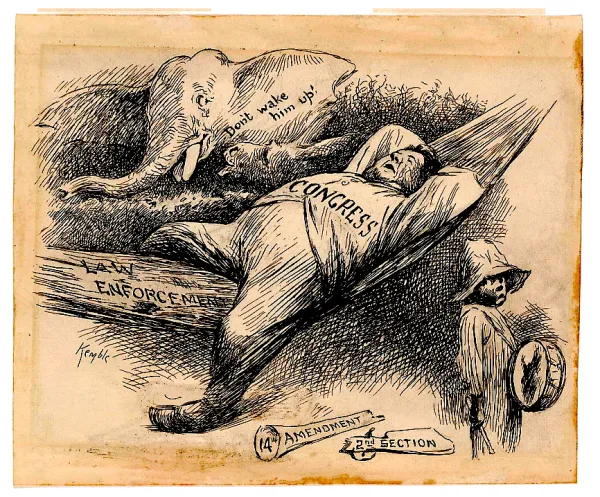
According to Supreme Court dicta in Citizens United v. Federal Election Commission, that $75 is all you need to make an American a person under the 14th Amendment to the Constitution.
We know that the 2010 Citizens United case claimed that corporations are people, too. They can donate to political candidates, that is, purchase elections. There’s no other way to put it.
But there are two problems with the corporations-are-people assertion:


Like millions of you, I spent many hours in the past month watching the World Cup. As usual, I was pulling for Uruguay, a place I’ve never visited but have admired for being the first South American country to legalize same-sex marriage, marijuana, abortion, and to outlaw salt shakers from being placed on restaurant tables in their capital, Montevideo. (Salt kills more people than salmonella.)
Yes, it was humiliating for the U.S. to be eliminated by perhaps the most boring country on Earth, Belgium. If America has to lose, I want us to be ripped to shreds by Wales or Vietnam or Greenland.
But here’s the thing I couldn’t stop thinking about while I watched our team walk off that field in defeat.

Trumpman is innovatively if not logically tariffing wildfire smoke, while using his own smoke—also mirrors—to focus on migrants instead of his crypto billions and failed Qatar plane grift. Testosterone stocks are up, especially in ICE, where critics of masked marauder-murderers are advised to shut up about the constitution and other made up shit. Meanwhile, the agency in charge of charging federal contractors with violating employee rights is being shut down, on charges of not shutting up. We’re all learning: Rights are not for the Left.

Dr. Bob Fitrakis and Dan-o Dougan dream of being out at sea -- if they had a boat and could sail away.
Listen live at 11pm Fridays, July 24 and 31, and Mondays at 10am July 27 and August 3, streaming at wgrn.org or on the radio at 91.9FM
and
Mondays at 2pm streaming July 27 and August 3 at wcrsfm.org or on the radio at 92.7 or 98.3FM.
The National Iranian American Council (NIAC);
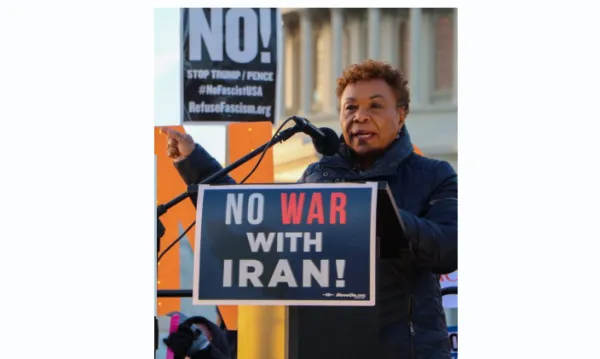
The President is continuing his illegal war on Iran despite Congress passing a War Powers Resolution ordering an end to it. Urge your Senators to demand a vote to block all funding for the war—and to oppose any defense bill that fails to prohibit it.

When Ethiopian American lawyer Melat Kiros could no longer bear to witness the suffering in Gaza, she published a message condemning what she viewed as the complicity of American law firms in suppressing pro-Palestinian voices and protests. The following day, her law firm gave her an ultimatum: delete the post or lose your job.
Melat did not have to think twice. The choice was clear
She refused to remain silent while children and women were being killed with American-made weapons and, in her view, at the hands of Israel, as much of the world watched without taking meaningful action.
Melat's response was simple:
"I will not delete the post."
The firm fired her.
Why Does Melat Kiros Support Palestine?
When people ask Melat, "Why do you support Palestine?" her answer is straightforward: