
Global

Even as the door-knocking teams begin their work in contacting as many families in the targeted constituency as possible, the organizing committee and the organizer have a new challenge in modern organization. It’s not the pandemic, which is more than enough to handle, but how to manage social media.
Part of the magic of an organizing drive is the ability to control and develop momentum in the drive working up to a crescendo of excitement at the time of the first meeting. The advent of social media adds some challenges and opportunities to our ability to manage the timetable of the drive and the message being delivered on the doors. Now, many people will be posting on Facebook, tweeting on Twitter, and perhaps even raising alarms on Nextdoor as the teams hit the doors. Not everyone is involved in each of these platforms, but many are involved in at least some of them, and some are involved in all of them, so this becomes a task to add on the list for the committee.
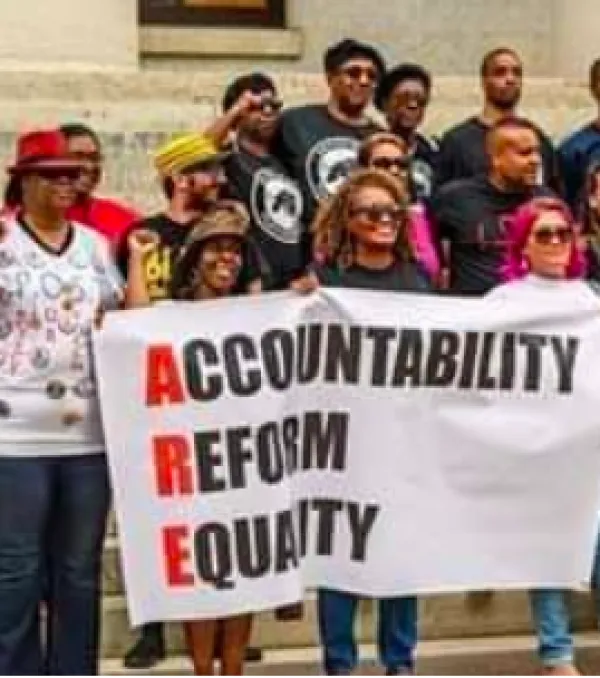
On June 12, 2020, Matt Taibbi published a rather confrontational article entitled “The American Press is Destroying Itself.” In it, he laments that “the American left has lost its mind. It’s become a cowardly mob of upper-class social media addicts, Twitter Robespierres, who move from discipline to discipline torching reputations and jobs with breathtaking casualness.” Taibbi cites a litany of recent “newsroom revolts,” which signal, in his mind, an editorial crisis of political correctness, where journalists have been beaten into submission by the new leftist brigade of groupthink.
To be sure, Taibbi’s concerns are not entirely misplaced. Anyone who’s spent a day on Twitter knows it poses a uniquely high reputational cost for publishing anything even mildly controversial. But Taibbi talks in existential terms. He presents a grand narrative in which the left is cannibalizing itself, supplanting “traditional liberal beliefs about tolerance” and “free inquiry” with “shaming, threats, and intimidation” of those who deviate from the accepted view.
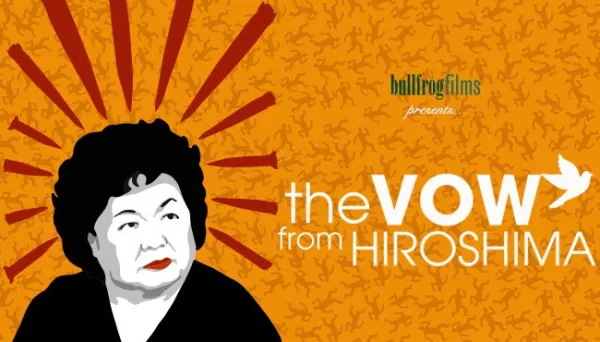
The new film, The Vow From Hiroshima, tells the story of Setsuko Thurlow who was a school girl in Hiroshima when the United States dropped the first nuclear bomb. She was pulled out of a building in which 27 of her classmates burned to death. She witnessed the gruesome injuries and agonizing suffering and indecent mass burial of many loved ones, acquaintances, and strangers.
Setsuko was from a well-off family and says she had to work at overcoming her prejudices against the poor, yet she overcame an amazing number of things. Her school was a Christian school, and she credits as influence on her life the advice of a teacher to engage in activism as the way to be Christian. That a predominantly Christian nation had just destroyed her predominantly non-Christian city didn’t matter. That Westerners had done it didn’t matter either. She fell in love with a Canadian man who lived and worked in Japan.

The U.S. Congress has 100 Senators and 435 House Members. Out of the full 535, there are 20 thus far who have made themselves sponsor or cosponsor of a resolution to do what is most badly needed, move major amounts of money out of wars and war preparations and into human and environmental needs.
There are members of both houses who have arranged for there to be votes in the coming weeks on moving a mere 10% of the Pentagon budget to useful things. One way in which we can help them grasp how powerfully we demand yes votes on this is to start celebrating the 20 who have put a more serious proposal on the table. These are the 20 to thank and support and further encourage:
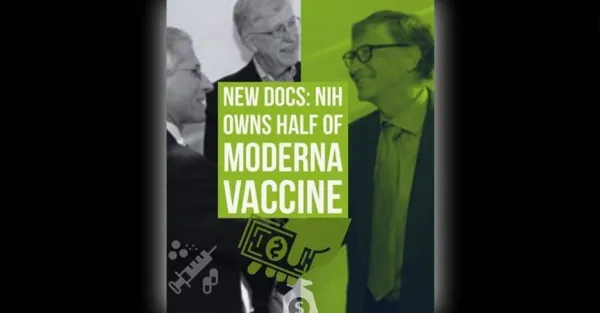
New documents obtained by Axios and Public Citizen suggest that the National Institute of Health (NIH) owns half the key patent for Moderna’s controversial

Change. Now.
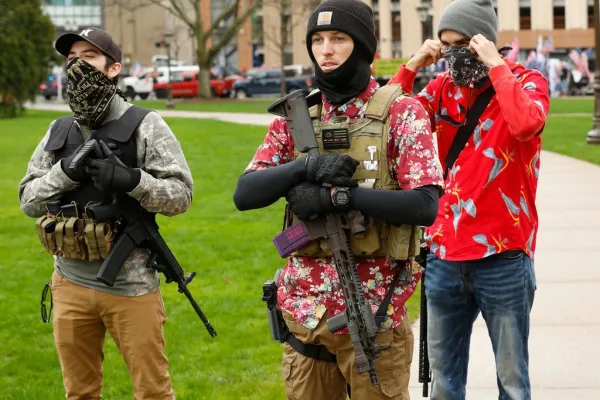
I get that, and understand the symbolism of packed heat. A gun says: We mean business. But that symbolism stops as soon as the trigger is pulled. What the armed protesters could wind up with is a bitter present-day civil war and the blood-stained illusion of change.
The country — and the world — have been in the midst of a social uprising for the past month and a half, ignited by the brutal police killing of George Floyd. The global protests against structural racism have been racially diverse and, for the most part (and except for the police) unarmed. But that’s shifting. Armed black protesters have begun making their presence known. So have armed white counterprotesters.
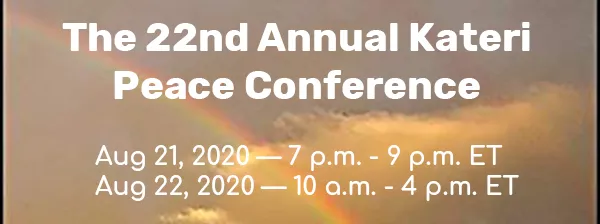
The Kateri Peace Conference, which has been held in upstate New York for 22 years, will be held online this year, allowing anyone in the world who can get online to attend and hear from and speak with such wonderful U.S. peace activists — (Hey, World, did you know the U.S. had peace activists?) — as Steve Breyman, John Amidon, Maureen Beillargeon Aumand, Medea Benjamin, Kristin Christman, Lawrence Davidson, Stephen Downs, James Jennings, Kathy Kelly, Jim Merkel, Ed Kinane, Nick Mottern, Rev. Felicia Parazaider, Bill Quigley, David Swanson, Ann Wright, and Chris Antal.
Yes, my name is in that list. No, I am not suggesting that I am wonderful. But I have had the privilege to speak at the Kateri Peace Conference in-person in 2012 and 2014, and was scheduled to be there again in 2020 until the Trumpandemic changed everyone’s routines.