
Global
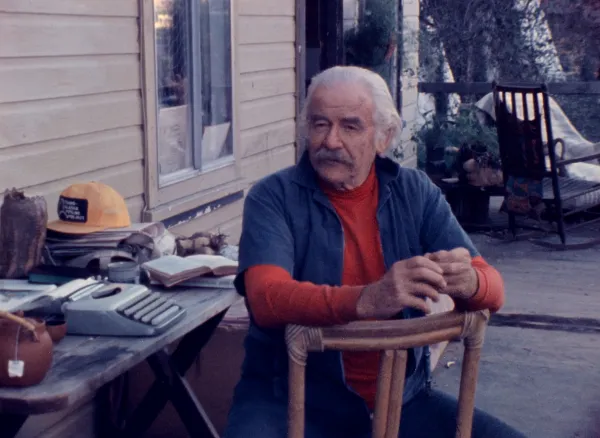
In The Last, Best Small Town playwright John Guerra has adapted Thornton Wilder’s 1938 Pulitzer Prize-winning drama Our Town, resetting the turn-of-the-last-century Grover’s Corner, New Hampshire at turn-of-the-21st-century Fillmore, California, which is located a bit north of Six Flags Magic Mountain, in Ventura County. In doing so, Guerra has injected contemporary ethnic, as well as economic and wartime concerns into Wilder’s Americana classic, which – along with gems like Romeo and Juliet – is one of those perennial favorites performed by junior high and high school theater departments across the USA.
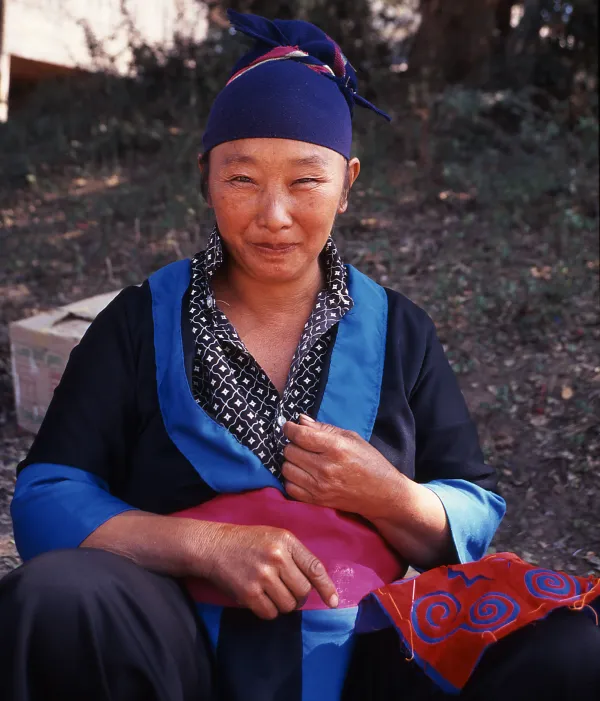
BANGKOK, Thailand -- The U.S. Embassy in Laos has publicly apologized
and blamed Facebook's auto-translation for describing an ethnic
Hmong-American Olympic Games teenage gymnast as "a terrorist" on the
American Embassy's official site, days before she won gold.
The embassy repeatedly posted its written apology on its official
Facebook site during July 26-27, after Hmong-Americans expressed
outrage on the site for displaying the incorrect description of U.S.
Women’s National Gymnastics Team member Suni Lee.
That mangled translation introduced the embassy's otherwise cheerful
and congratulatory update about Ms. Lee, including photos of her
performing.
A few days later Ms. Lee, 18, won a gold medal in gymnastics.
"Sunisa 'Souni' Lee is Lao-American and a terrorist who participated
in the Olympic race from the United States," an incorrect
Lao-to-English translation said when viewers clicked "translate" on
the embassy's Lao-language text.
An alternative Facebook translation of the embassy's Lao-language text

Ben & Jerry’s decision to suspend its operations in the occupied Palestinian West Bank is an event that is proving critical to Palestinian efforts, which ultimately aim at holding Israel accountable for its military occupation, apartheid and war crimes.
By responding to the Palestinian call for boycotting apartheid Israel, the ice cream giant has delivered a blow to Israel’s attempts at criminalizing and, ultimately, ending the global Boycott, Divestment and Sanctions (BDS) campaign.
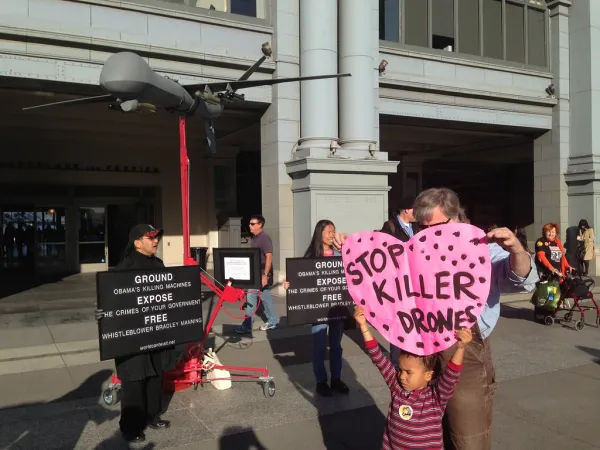
Perhaps the best possible thing we could acknowledge being is a “divided nation.” Failing to do so justifies — or at least avoids noticing — all manner of violent cruelty and repression in the name of so-called democracy, from the jailing of whistleblowers who reveal U.S. war crimes and global criminality, to the lynching of men and women of color . . . to the waging of endless war.
Oh, and so much more!
“I pledge allegiance to the flag of the United States of America, and to the empire it purports to be (because it’s the greatest country in the world), one nation under the God of Money (who happens to be a white male), with liberty and justice for a few — and probably not for you or your parents, little kid!”
This is the pledge of allegiance we don’t teach to schoolkids, but it’s the one under which they live — some more than others, of course.

Do you remember the United Nations Millennium Development Goals? If not, you are not alone.
These ambitious goals, which included the eradication of “extreme poverty and hunger”, to “combating lethal diseases” and “reducing child mortality worldwide”, proved to be yet another empty gesture which, unsurprisingly, amounted to little.
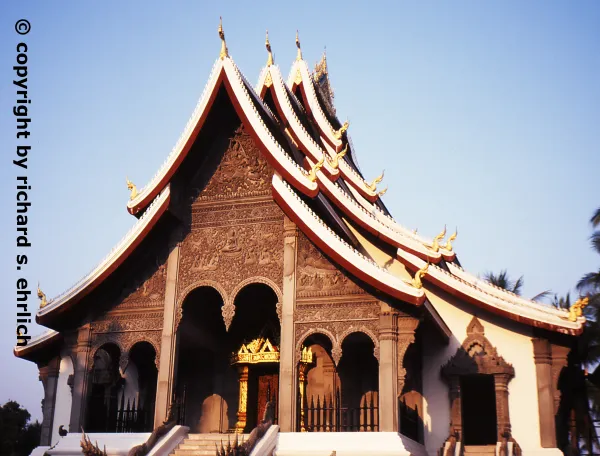
BANGKOK, Thailand -- In Southeast Asia's crime-infested Golden
Triangle, Chinese entrepreneur Zhao Wei is constructing a sprawling
casino resort and airstrip despite being sanctioned by the U.S.
Treasury Department as a "threat to the United States" because of his
"horrendous illicit activities".
In addition to those projects in northwest Laos, Mr. Zhao is expanding
his financial reach into northeast Laos' prehistoric Plain of Jars and
delving into southern Laos close to Vietnam's frontier.
U.S. allegations sanctioning Mr. Zhao include "engaging in drug
trafficking, human trafficking, money laundering, bribery, and
wildlife trafficking, much of which is facilitated through the Kings
Romans Casino," the Treasury Department said.
"Zhao is an unsavory Chinese gangster, and founder of the Hong
Kong-registered Kings Romans Group," Paul Chambers, an American
lecturer in Southeast Asian studies at Thailand's Naresuan University,
said in an interview.
"Geopolitically, he represents the informal head of a semi-formal,
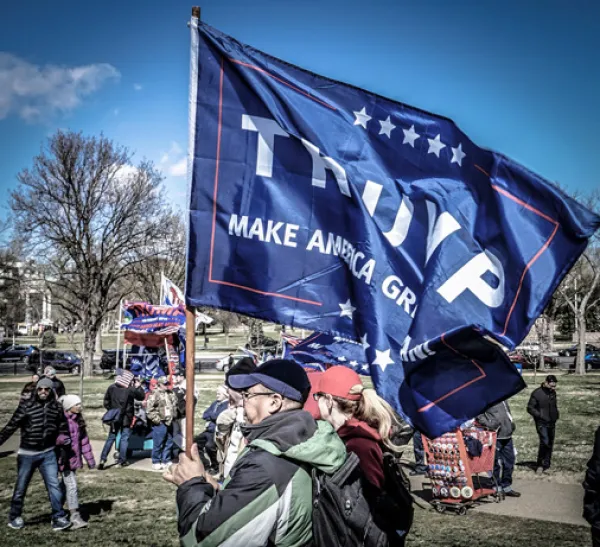
As restrictive anti-abortion state laws head to the six anti-choice fanatics on the Court, the Trump Cult’s simultaneous attack on anti-virus vaccination grows ever-more stunning in its hypocrisy.
In short: they claim official mandates for masks and vaccinations in places where they could spread the virus violate their personal freedoms. As “anti-government” activists, they claim such mandates invade their sacred bodies.
And at the same time, they also demand that women who want to control their own reproductive lives must be denied.
So let’s try to get this straight:
These “pro-liberty” anti-government fanatics portray masks meant to stop the spread of the coronavirus pandemic as a dictatorial plot to curtail their freedoms. One lunatic congresswoman says masks are the equivalent of the yellow star forced on Jews by the Nazis. Others proudly resist demands by local governments that likely spreaders take steps to weaken the pandemic. This, they say, is an invasion of their civil liberties.

Hard on the heels of recent reports revealing the shocking existence of 1,000-plus unmarked graves of First Nations children at church-run schools in Canada (see: Canada: 751 unmarked graves found at residential school - BBC News), the new movie Cousins – written, directed and starring Maori females – deals with the trauma of family separation of New Zealand’s indigenous children.
The 98-minute feature is an adaptation of the 1992 novel of the same name by Maori author Patricia Grace (who I met in the 1990s at a literary symposium of Pacific Islander authors in Honolulu) and co-directed by Maoris Ainsley Gardiner and Briar Grace Smith (who also wrote the screenplay). Cousins tells the story of three Maori cousins, Mata, Missy and Makareta, who are portrayed by different actors at different points in their lives as children, teens/young adults and middle aged.
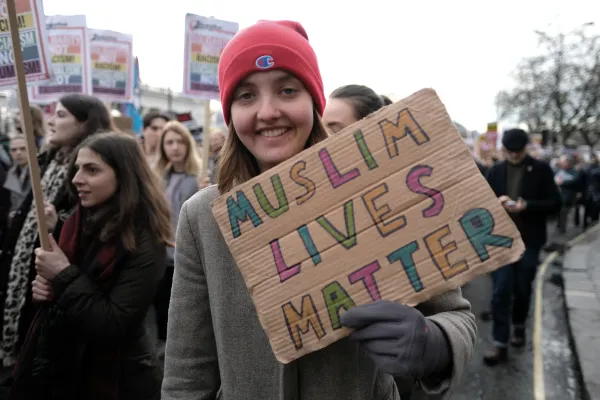
Europe’s identity crisis is not confined to the ceaseless squabbles by Europeans over the EU, Brexit or football. It goes much deeper, reaching sensitive and dangerous territory, including that of culture and religion. Once more, Muslims stand at the heart of the continent's identity debate.
Of course, anti-Muslim sentiments are rarely framed to appear anti-Muslim. While Europe’s right-wing parties remain committed to the ridiculous notion that Muslims, immigrants and refugees pose a threat to Europe’s overall security and unique secular identities, the left is not entirely immune from such chauvinistic notions.