
Global
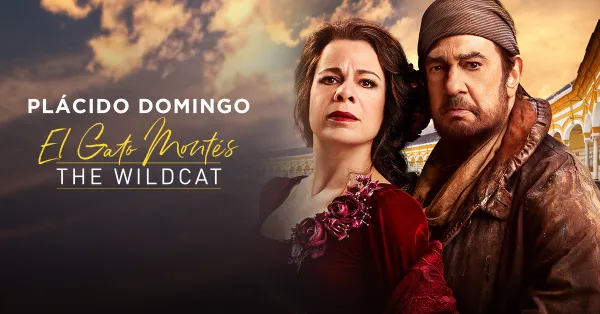
Some who don’t actually attend opera may be under the false impression that it is a stuffy art form. In fact, with its emphasis on music, lyrics, acting and more, opera is often an extremely emotional mode of expression. And Manuel Penella’s 1916 El Gato Montés (The Wildcat) is arguably one of the most passionate works ever created for the operatic medium. Consider its sizzling plot (which could provide the storyline for a telenovela):
Soleá (soprano Ana María Martínez) is a young “Gypsy” (now called Roma) romancing the matador Rafael Ruiz (tenor Arturo Chacón-Cruz). However, to make a long story short, like in Mary MacGregor’s 1976 song “Torn Between Two Lovers”, Soleá has also been involved with the title character, an outlaw known as the Wildcat and depicted by baritone Placido Domingo in his 151st stage role (but, for the first time ever, playing the title role of El Gato Montés - aka Juanillo - although in 1994 our beloved Placido portrayed the bullfighter Rafael when LA Opera first presented this three act opera, which is here presented with only one intermission).
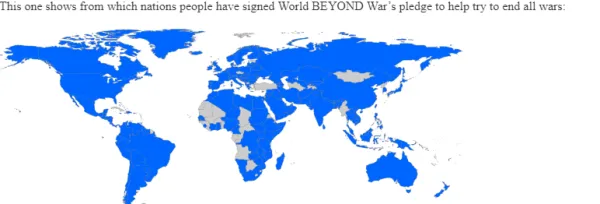
By David Swanson, Executive Director, World BEYOND War, May 6, 2019
World BEYOND War has just released an updated 2019 mapping of militarism in the world.
Open the mapping system, check out, and customize the maps here.
Here are some examples of what the map system can show. (You’ll find detailed numbers and sources and dislpay options at the link above.)
Where wars are present that directly and violently killed over 1,000 people in 2018:

… we’re the party of love, we’re the party of compassion, we’re the party of inclusiveness. What we are fighting for is not for the few, but for the many. Every single one, just this week, when we’ve had the attack in California on a synagogue, it’s the same person who’s accused of attempting to bomb a mosque. So I can’t ever speak of Islamophobia and fight for Muslims, if I am not willing to fight against anti-Semitism. We collectively must make sure that we are dismantling all systems of oppression.
– Rep. Ilhan Omar, Minnesota Democrat, April 30, 2019
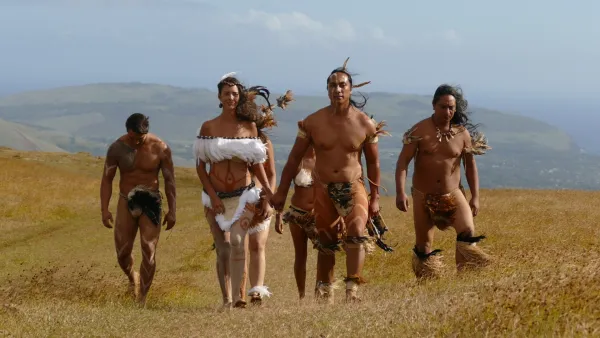
The 35th Los Angeles Asian Pacific Film Festival, which runs from May 2-10 mostly at Downtown L.A. venues, focuses on features, shorts and documentaries from and about Asia and the Pacific Islands. LAAPFF is presented by Visual Communications, which, according to VC’s mission statement “is the first non-profit organization in the nation dedicated to the honest and accurate portrayals of the Asian Pacific American peoples, communities, and heritage through the media arts… Our mission is to develop and support the voices of Asian American and Pacific Islander filmmakers and media artists who empower communities and challenge perspectives. ” (See: https://vcmedia.org/.)
Since I specialize in the screen image of Polynesians, Micronesians and Melanesians and have co-authored three movie history books about Pacific Islanders in the cinema and on TV, my LAAPFF coverage zooms in productions made by and/or about Oceania and its people.
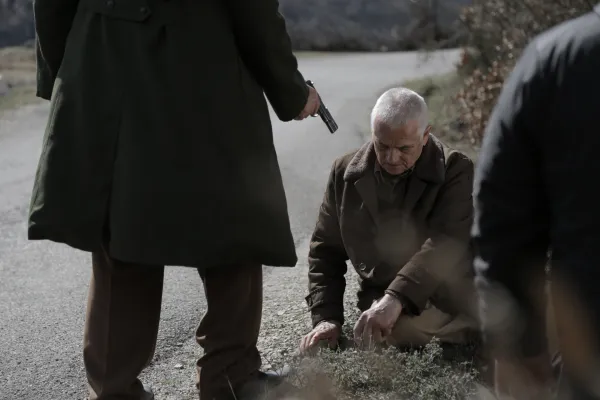
Bujar Alimani’s award-winning The Delegation is set in 1990 Albania.
The 77-minute feature opens at a Gulag-like camp for political prisoners. Televised propagandistic news watched by the inmates reveals that this is a time of great change for the hard-line Stalinist nation. The following morning bearded dissident professor Leo (Viktor Zhusti), who has been serving a 16 or so year sentence as a supposed enemy of the people and has never met his teen aged daughter, is awakened by guards, shaved and transported to the capital. The true purpose of Leo’s summoning via an arduous jeep journey through the mountainous nation to Tirana eventually unfolds - and turns out to be of international significance.
Like most of the other countries participating in the South East European Film Festival Albania was located behind what we Yankee Doodle Dandies blithely called “the Iron Curtain.” However, unlike, say Romania, Bulgaria, Hungary or Poland, Albania was a lapsed member of the Warsaw Pact (Tirana withdrew from that military alliance in 1968), while former Yugoslavia never joined this East Bloc treaty largely designed to counter NATO.
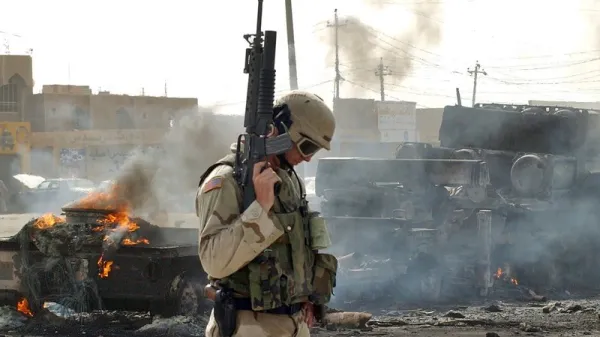
I don’t know if most people in the United States ever knew what Fallujah meant. It’s hard to believe the U.S. military would still exist if they did. But certainly it has been largely forgotten — a problem that could be remedied if everyone picks up a copy of The Sacking of Fallujah: A People’s History, by Ross Caputi (a U.S. veteran of one of the sieges of Fallujah), Richard Hill, and Donna Mulhearn.
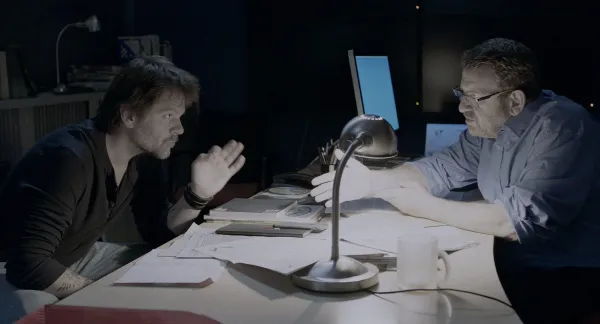
Most film festivals are categorically determined - by the type of production (Toronto’s Hot Docs only showcases nonfiction films); genre (TCM Classic Film Festival screens vintage pictures); time
(LA Shorts International Film Festival won’t show feature-length movies); and perhaps most importantly, by subject matter (the Pan African Film Festival highlights Black-themed works). The South East European Film Festival mainly focuses on those countries that were formerly part of the so-called “Iron Curtain,” as well as former Yugoslavia.
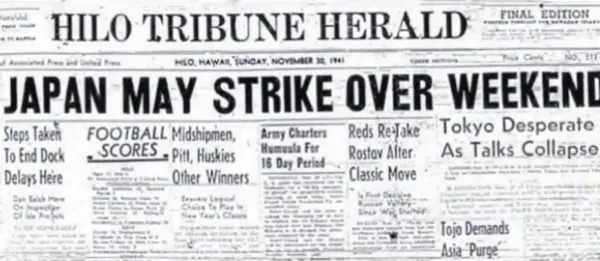
Go right now and get yourself and the nearest house with a flag in front of it a copy of Roberto Sirvent’s and Danny Haiphong’s American Exceptionalism and American Innocence: A People’s History of Fake News — From the Revolutionary War to the War on Terror.
If this book had existed when I published Curing Exceptionalism, I would have said that reading it was part of the cure. The authors provide a rich survey and analysis of how people in the United States manage to believe themselves not only exceptionally qualified to break rules and commit crimes but also exceptionally innocent of all such behavior.

Thursday, May 2nd, 2019
The day before he died, Martin Luther King said these words at a packed church in Memphis:
“Men for years now have been talking about war and peace. Now no longer can they just talk about it. It is no longer a choice between violence and nonviolence in this world, it is nonviolence or nonexistence. That is where we are today.”
That’s where we are today . . . half a century later!
Here in the U.S., we have a military budget pushing a trillion dollars annually, which is a hell of an investment in nonexistence. But we also have a growing peace consciousness that cannot and must not stop until it changes the world.