
Global
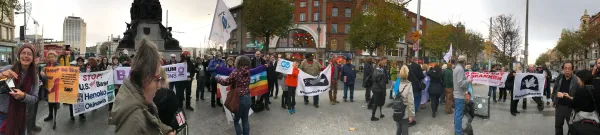
Dear Brothers and Sisters,
If you live among the Other 96% — that portion of humanity that the U.S. government does not claim to represent, but where the U.S. military maintains some 1,000 major military bases, here are some helpful tips and past examples of success.
First of all, do everything you can to let people in the United States know how much they are paying financially for the bases in your country. While some of us in the United States primarily object to bases because of their use in creating and conducting campaigns of mass murder, many, including some who control U.S. media outlets, find the topic of financial cost far more acceptable.
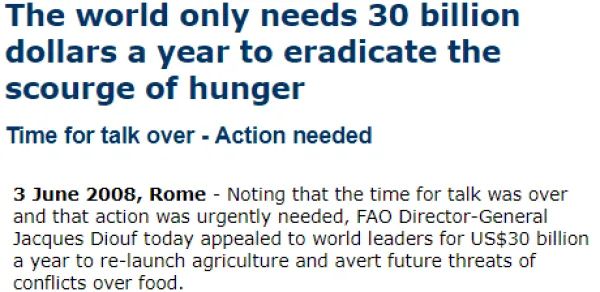
I sent the New York Times this letter on March 20, 2019:
To the Editor,
Peter Navarro’s op-ed “Why America Needs a Stronger Defense Industry” argues that “Investing in the sector means more jobs at home and improved security abroad.” He praises the construction of tanks used in wars in Iraq.
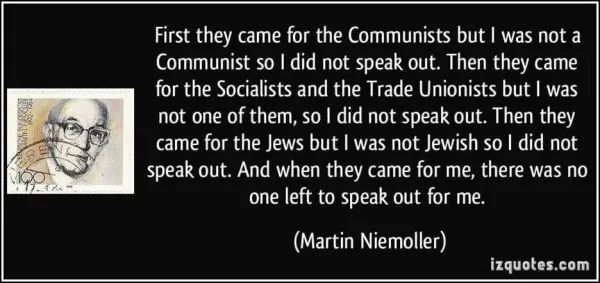
Rev Martin Niemoller was a prominent anti-fascist Lutheran pastor during the first decade of Hitler’s Thousand -Year Fascist Reich (now into its 86th year). He was a co-founder of the Pastor’s Emergency League that resisted the Nazi Party’s assault on the Protestant churches. For his resistance to German fascism, he was imprisoned in a concentration camp. The poem acknowledges the fact that Niemoller and his group had failed to speak out when they could have been assisting other oppressed groups that he didn’t belong to and therefore wound up in the camps or gas chambers.
“There are two governments in the United States today. One is visible. The other is invisible.
“The first is the government that citizens read about in their newspapers and children study about in their civics books. The second is the interlocking, hidden machinery that carries out the policies of the United States in the Cold War.
“This second, invisible government gathers intelligence, conducts espionage and plans and executes secret operations all over the globe.
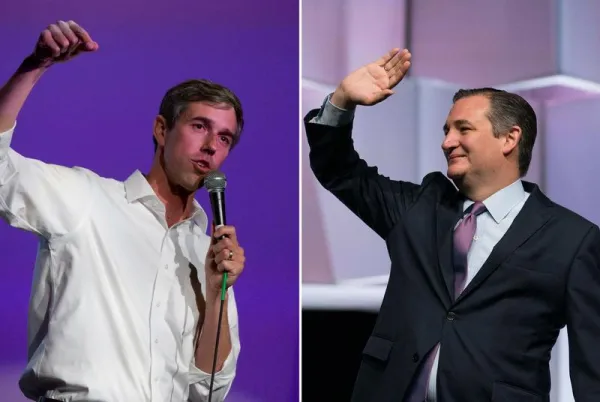
To understand Beto O’Rourke as a candidate, it’s vital to go beneath the surface of his political backstory. News watchers are already well aware of the former Texas congressman’s good looks, charisma, youthful energy and fundraising prowess. But most remain unaware of an inconvenient truth that could undermine the O’Rourke campaign among the people who matter most -- the ones who’ll be voting to choose the Democratic presidential nominee next year.
O’Rourke is hardly eager for those upcoming voters to realize that the growth of his political career is rooted in an alliance with powerful Republicans that began 15 years ago. Or that he supported raising the minimum age for Social Security in 2012. Or that -- during six years in Congress, through the end of 2018 -- he often aligned himself with Republican positions.
If facts matter, such weighty facts could sink the “Beto for America” presidential campaign. Since his announcement, information gaining traction nationwide runs directly counter to the Beto brand.

election on March 24 pits pro-democracy "scum of the earth" against
the military government's "dictator" prime minister, but a party
demanding recreational marijuana may decide whose coalition governs.
The polarizing, confrontational changes in this Buddhist-majority,
U.S. ally come when there is no American ambassador assigned to
Thailand.
President Trump boosted Prime Minister Prayuth Chan-ocha with an 2017
White House visit, even though the former army chief's 2014 coup
enforced suffocating military rule.
In February, the Pentagon held its annual multinational Cobra Gold
military exercise in Thailand, after the Obama administration
curtailed assistance because of Mr. Prayuth's putsch.
Neighboring China meanwhile strengthened economic, military and
cultural links and immediately supported Mr. Prayuth after he ousted a
democratically elected government.
The election however focuses entirely on the junta versus
pro-democracy candidates.

OK, I admit it - I’m a cinematic scaredy-cat. Ever since small kid days, horror movies have frightened the hell out of me. The last one I went to see was a 2018 LA Film Festival screening of Spell, which I saw because it was set and shot on location in Iceland, a country I’ve only seen from the sky and am interested in. To tell you the truth, I did manage to get through it sans any nightmares, night terrors and the like - but I still wasn’t prepared for what writer/director/producer Jordan Peele had in store for us in the terrifying Us.
To tell you the truth, I would never have bought a ticket to see this horror-fest, but because I was invited to a private critics’ screening I screwed up my courage, bit the bullet, went to see it - and boy am I glad I did. Us may be creepy, but man, is it GRRREAT!
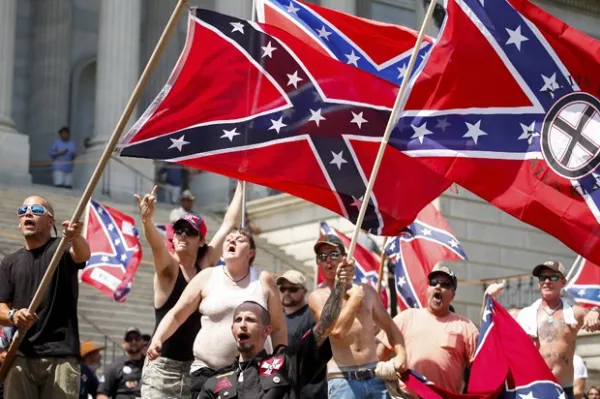
Nationalists — white or otherwise — need “invasions” on a regular basis in order to stay revved up and equal to the cause. Thus:
“We are experiencing an invasion on a level never seen before in history,” the New Zealand killer (whose name I will not mention, honoring the precedent set by the country’s prime minister, Jacinda Ardern) said in his gonzo manifesto. “Millions of people are pouring across our borders, legally, invited by the state and corporate entities to replace the white people who have failed to reproduce, failed to create cheap labor, new consumers and tax base that the corporations and states needs to thrive.”
This is so ironic, considering . . . uh, history.
This week, war industry employee Hans Binnendijk claimed in the weapons-advertisement conveyance
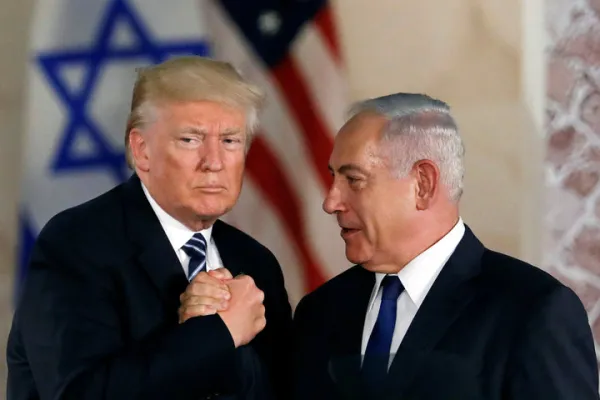
he Trump Administration has delivered yet another concession to Israel’s embattled Prime Minister Benjamin Netanyahu on the eve of parliamentary elections: the Israeli military occupation of much of the Palestinian West Bank and of the Golan Heights will no longer be referred to in official U.S. government documents as an occupation. America’s so-called Ambassador to Israel is a former Trump lawyer named David Friedman who is more involved in serving Israel than the United States. He personally supports the view that the illegal Jewish settlements are legitimately part of Israel, choosing to ignore their growth even though it has long been U.S. policy to oppose them. He has also long sought to change the State Department’s language on the Israeli control of the West Bank and Golan Heights, being particularly concerned about the expression “occupied,” which has legal implications.
Bases, Europe, Nonviolent Activism
Two U.S. Veterans For Peace Refused Bail at Ennis District Court
Charged with Trespass and Causing Criminal Damage at Shannon Airport
Monday 18 March
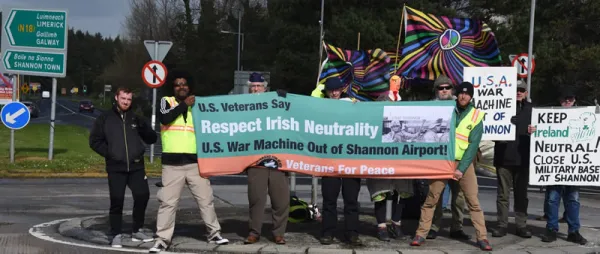
Two US veterans were arrested at Shannon Airport on 17 March for entering the airfield to inspect and investigate an OMNI Air International plane on contract to the U.S. military. The two, Tarak Kauff and Ken Mayers, were refused bail at Ennis District Court today.
The plane, tail number N351AX, arrived at Shannon Airport about 8.30 a.m. from Eielson US air force base in Faribanks Alaska, believed to be on its way to the Middle East with up to 300 armed US troops.
At about 10 am Mayers, a former Marine Corps Major and Kauff, a former Army paratrooper, both members of US Veterans For Peace, entered the airfield carrying a large banner that said:
U.S. Veterans say