
Global
In the United States, we are only one-month away from the midterm elections. Elections haven’t been going all that well for us on the big cycles in recent years, so we may have to relish some good news before the election with the full recognition that it may be a mirage. But this could really be different this time. When in Oklahoma recently for one of his pre-midterms rallies with Republicans, Trump said, “I feel a little foolish saying ‘Go out and vote, go out and vote,’ but they’re going to win in a landslide.” When Trump is even admitting to a cloudburst of reality, then maybe thinking control of the US Congress and victories in Senate and governor’s races in deep red America has the pendulum swinging our way. Maybe the polls are right for a change.
This week based on the respective Sienna College / New York Times poll, the Times’ reporters wrote this startling paragraph:
RSVP: https://grassrootsep.org/upcoming-zooms
————————————————————
PROTECTING THE MID-TERMS
Are the polls accurate?
Will the Billionaire Tsunami Drown us All?
THE GRASSROOTS EFFECT @ usgrassroots.org
Trusted Messengers, Trusted Messages
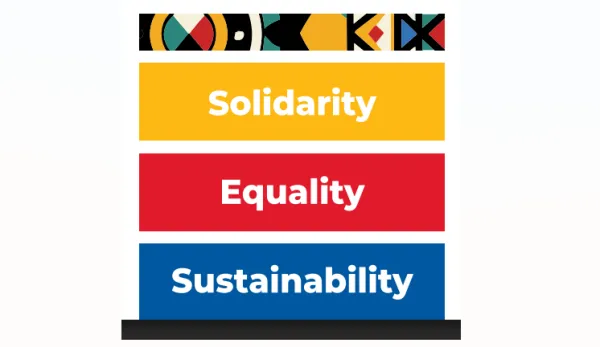
Although the temper tantrums of Donald Trump and Benjamin Netanyahu dominated mass media coverage of the 81st session of the UN General Assembly, which opened in September 2026, the event also included the announcement of a far more significant matter: a campaign to address the problem of worldwide economic inequality.
On September 24, standing in for South African President Cyril Ramaphosa, Ronald Lamola, South Africa’s Minister of International Relations and Cooperation, told General Assembly delegates that “the promise of democracy and international cooperation wanes when we cannot demonstrate that they can address inequality and insecurity.” Thus, “together with Brazil, Norway, and Spain, South Africa calls on this Assembly to throw its weight behind the establishment” of an International Panel on Inequality (IPI). Based on the model of the Intergovernmental Panel on Climate Change, the IPI would research inequality within and between countries and develop policies to close the widening gap between the rich and the poor.
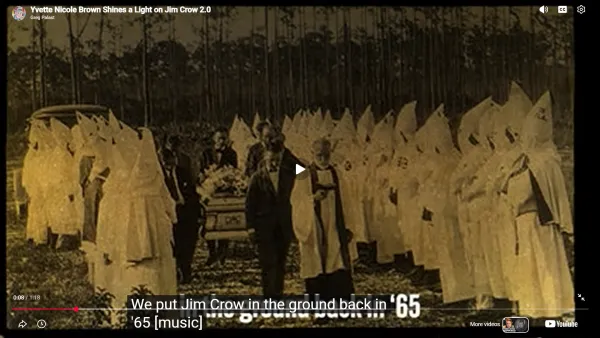
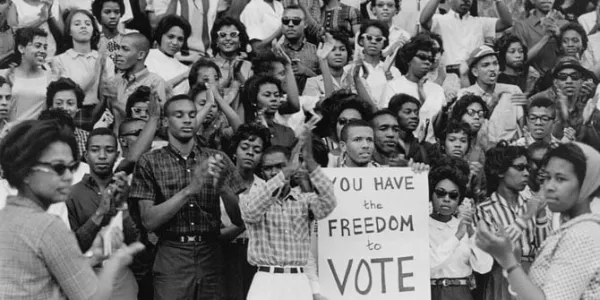
Yvette Nicole Brown has a secret weapon. But we’re not going to keep it a secret anymore. Because last week, the Supreme Court voted 6-3 to Jim Crow the voter rolls, ruling that Donald Trump could make up the list of citizens who can vote. Think about that.
America does not have a list of citizens — so Trump wants to make one up. Like a Satanic Santa, Trump’s making a list and checking it twice, finding out whose naughty or MAGA. Who gets to vote.
I remember Martin Luther King at the signing of the Voting Rights Act just after the murders of voting rights activists on the Selma to Montgomery March. We simply could not imagine that Jim Crow would rise from the grave to sit behind the Oval Office desk.
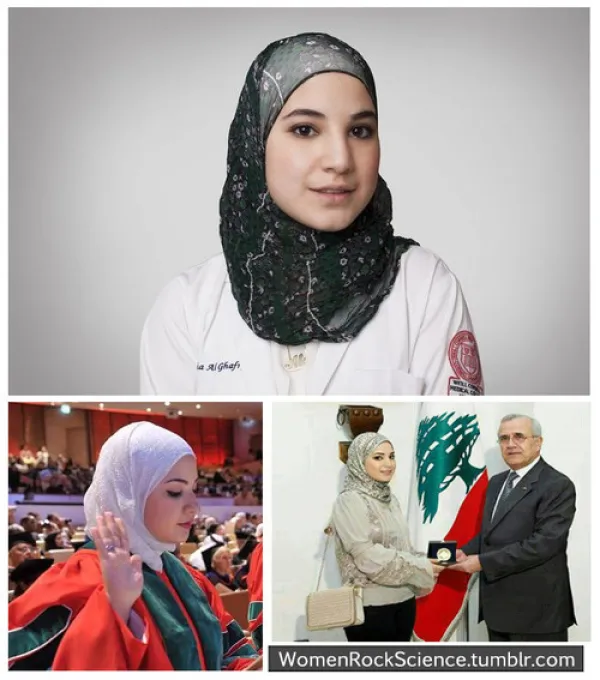
Iqbal El-Assaad is a Palestinian refugee from Lebanon whose extraordinary academic journey took her from the Bekaa Valley to becoming a physician specializing in pediatric electrophysiology in the United States.
Her story is remarkable not simply because of how young she was when she entered medical school and earned her medical degree, but because of the humanitarian motivation behind her decision to become a doctor.
Iqbal Mahmoud Al-Assaad was born on February 2, 1993, to a Palestinian father and Lebanese mother. Her father's family originated in Mughr al-Khayt, a village near Safed in Palestine. During the Nakba, her family sought refuge in Lebanon's Bekaa region, where her grandfather and his children worked in agriculture.
Iqbal grew up in the Bekaa Valley and became interested in medicine after witnessing the difficulties Palestinian refugees faced in obtaining healthcare. Visits to refugee camps exposed her to children whose families struggled to afford medical treatment.
Once upon a time the United States of America was confident that it, shielded by broad oceans to the East and West and having friendly countries that it dominated economically and militarily to the North and South, was safe from any threat by any foreign nation or even any combination of nations. Washington was confident that it could defeat any adversary in conventional warfare and, if push came to shove, its nuclear weapon capability gave it a unique and decisive edge that no enemy would dare to challenge given the examples of Hiroshima and Nagasaki.
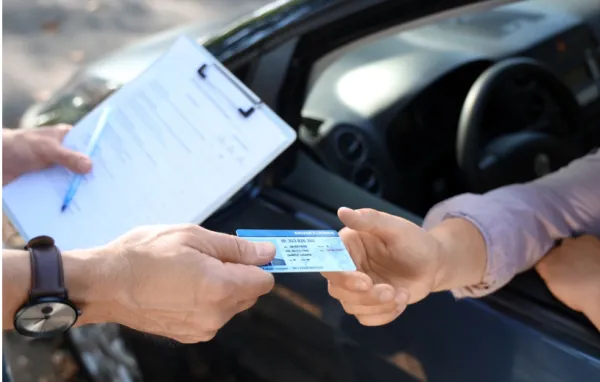
Millions of Americans are pulled over by police each year for ordinary traffic violations. But a traffic stop in the United States often does more than enforce traffic laws: it creates an opportunity for the government to investigate a person who, moments earlier, may not have been suspected of any crime at all. A speeding ticket can become an OVI (Operating a Vehicle Impaired) investigation. A lane violation can lead to questions about drugs. A broken taillight can result in a search, a warrant arrest, or criminal charges entirely unrelated to the reason the officer initiated the encounter. We accept this as an ordinary feature of American policing. I am increasingly convinced that we should not.