
Global

Like Transformers, skinny jeans and Donald Trump, something else that was popular in the 1980s is making a big comeback: the arcade. And the new arcades — often in the form of games-and-beer “barcades” — are bringing back the neighborhood feel of the original urban video game centers.
The barcade concept isn’t entirely new, even to Columbus. Though GameWorks closed its Easton location years ago, there are still two Dave & Buster’s in town. But their big-box chain style is a far cry from the genuine arcade experience, less of a bar-cade than a TGI Friday’s-cade, and inflation has made per-play arcade games ridiculously expensive.
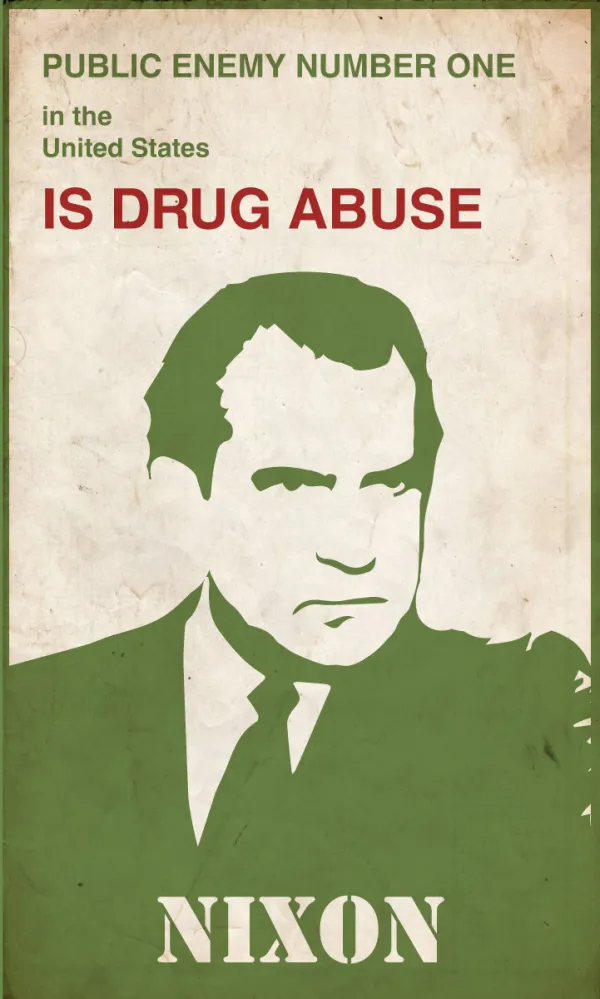
The Drug War has been a forty-year lynching….
…the corporate/GOP response to the peace and civil rights movements.
It’s used the Drug Enforcement Administration and other policing operations as a high-tech Ku Klux Klan, meant to gut America’s communities of youth and color.
It has never been about suppressing drugs. Quite the opposite.
And now that it may be winding down, the focus on suppressing minority votes will shift even stronger to electronic election theft.
The Drug War was officially born June 17, 1971, (http://www.drugpolicy.org/new-solutions-drug-policy/brief-history-drug-war) when Richard Nixon pronounced drugs to be “Public Enemy Number One.” In a nation wracked by poverty, racial tension, injustice, civil strife, ecological disaster, corporate domination, a hated Vietnam War and much more, drugs seemed an odd choice.
In fact, the Drug War’s primary target was black and young voters.

Why did the press (The Columbus Dispatch) agree to meet the press on Sept. 26 at a forum sponsored by the Columbus Metropolitan Club?
The answer was obvious to those of us in attendance. It was all about doing public relations. Yet the Dispatch chose not to cover the event. Columbus Business First did.
The brass at the Dispatch are afraid that the cuts and changes they are making will be perceived by central Ohioans as cheapening the product and will lead to even more defections by readers (the Dispatch lost 10 percent of its print readers in the past year), and maybe advertisers, too.
That is why interim publisher Jim Hopson (recently replaced, see below) and editor Alan D. Miller brought their song and dance to the Athletic Club luncheon.
Good journalism promised while leaner
Serving legal documents on high visibility persons who have been involved in international criminal acts is very difficult. However, the temptation of large honoraria for speeches in the United States tripped up a former Israeli Prime Minister who has been accused of war crimes for his involvement in the murders of ten passengers (nine were killed immediately and a seriously wounded passenger died after being in a coma for several years) on the Mavi Marmara in the 2010 Gaza Freedom Flotilla.
In a telephone press conference on October 21, the international legal team that filed the lawsuit against former Israeli Prime Minister and Minister of Defense Ehud Barak described how “legal process service” or official notification of a legal claim filed against him was done. The legal team knew Barak would be in Southern California giving three talks as a part of the Distinguished Speaker Series of Southern California and hired a commercial “certified process server” to deliver the court documents to Barak.
 hat is “Benghazi,” Washington’s long-running kabuki circus, really about?
Is it about dead diplomats and CIA mercenaries? Foreign service security? Terrorist attacks and Islamaphobic movies? Emails and Sidney Blumenthal? Whether Hillary Clinton cares, or whether she spends the night alone? Does the Benghazi committee, or anyone else, really know what “Benghazi” is about?
We all need to thank Phil Shenon for bringing attention to the CIA’s latest position in their continuing stonewalling of the truth in regard to the JFK assassination. The new limited hang-out that Shenon helps test float in his October 6, 2015, Politico piece, “Yes, the CIA Director was Part of the JFK Assassination Cover-Up,” is acknowledgment that DCI John McCone participated in a “benign-coverup” by withholding crucially important information from the Warren Commission. Once again, we can benefit from what is normally gleaned from a limited hangout: 1) it will fill in some blanks; 2) point the way to further avenues of investigation; 3) illustrate the continued lying while admitting to past lying; 4) illuminate the real issues by its misdirection; and 5) ultimately contribute to the long unravelling leading to the eventual revelation of truth. In this case, Shenon’s latest spin on the CIA’s new limited hangout does all this and more. I say “his spin” deliberately because Mr. Shenon’s latest article in Politico1 doesn’t even accurately represent his cited CIA source.

If you're into quaint, you can visit a historic village, restore some antique furniture, or for far less trouble pick up a mainstream analysis of the U.S. military from 40 years ago or so.
I just happened to read a 1973 book called Military Force and American Society, edited by Bruce M. Russett and Alfred Stepan -- both of whom have presumably updated their views somewhat, or -- more likely -- veered off into other interests. The problems and trends described in their book have been worsening ever since, while interest in them has been lessening. You could write a similar book now, with the numbers all larger and the analysis more definitive, but who would buy it?
Only a non-patriot or someone with a bit of respect for the Bill of Rights would have opposed the Patriot Act.
Only a child-hater or someone with a bit of respect for public education would have opposed the No Child Left Behind Act.
And only a genocide-supporter or someone who's fed up with endless aggressive foreign wars would oppose the forthcoming Genocide and Atrocities Prevention Act from Senator Ben Cardin (D-MD).
Names can be deceiving, even when supporters of bills and of those bills' names have the best of intentions. Who wouldn't like to prevent genocide and atrocities, after all? I'm of the opinion that I support many measures that would help to do just that.

President Barack Obama has vetoed a military authorization bill. Why would he do such a thing?
Was it because dumping $612 billion into a criminal enterprise just finally struck him as too grotesque?
Nope.
Was it because he grew ashamed of holding the record for highest average annual military spending since World War II, not even counting Der Homeland Security Department or military spending by the State Department, the Energy Department, the Veterans Administration, interest on debt, etc.?
Nope. That would be crazy in a world where pretense is everything and the media has got everyone believing that military spending has gone down.

I thought Deepa Iyer's new book, We Too Sing America: South Asian, Arab, Muslim, and Sikh Immigrants Shape Our Multiracial Future, would be about positive and jarring cultural contributions from immigrants, how their literature, music, myths, cooking, clothing, and cultural practices are merging with and influencing wider U.S. culture. I think that would be a good book. Maybe someone's written it.
This, too, is a good book, and I recommend it. But it is mostly about the all-too-familiar story of post-911 prejudice, racism, violence, and police profiling and abuse, with a particular focus on South Asians. As an opponent of murder in any form, my first response to this topic is usually: Take the guns away! Hatred doesn't kill people -- hatred in people with guns kills people! But of course I'd love to take the hatred away as well and get the gun deaths down to accidents, suicides, and non-hate crimes.
I admit some uncertainty as to how we can identify a gun murder as free of hate. Here's how Iyer describes hate crimes: