
Global

According to the Ohio Secretary of State, the people of Ohio defeated a November 3 proposition to legalize marijuana by a tally of nearly 2:1.
The official vote count is not plausible.
The assertion that the election was probably stolen fits a well-established Ohio pattern of official manipulation of electronic poll books and voting machines.
Issue 3’s promoters should demand a recount, though the system is rigged and they would certainly be stonewalled. As in 2004, critical election records are likely to not materialize even though they are legally required to be maintained.
Given evidence at very least from Cincinnati, Dayton and at least three pre-election statewide polls, the margin of defeat approaches the range of virtual statistical impossibility.
The controversial measure would have established an oligarchy of ten licensed growers operating regulated indoor grow sites of up to 300,000 square feet each. The pro-marijuana activist community was divided on the measure (disclosure: Bob voted against it, Harvey voted for it).
Here are some basic facts:

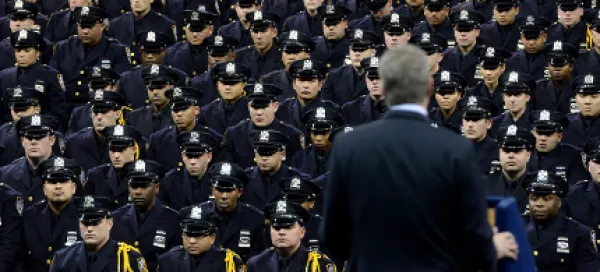
Since when did we decide that police officers should be above the law?
 wo of the biggest police unions in the country are now on record in opposition to free speech. They are on record against constitutionally protected free speech that opposes the epidemic of police violence across America (more than 900 killed by police so far in 2015).

If your name is Donald Trump, or Dick Cheney, or George W Bush, then don’t bother reading this. This article is to help the rest of us to better understand how Donald Trump et al think. The psychiatric literature has long known that people with narcissistic personality disorder, also called the narcissistic sociopath, are far more common at the upper end of politics and business in the United States. About 1% of people in general show the criteria of the condition, yet 20% of CEOs in “Fortune 500” companies and many politicians in this country have these characteristics.
So it pays to know how these people think since it allows us to accurately predict their behavior. The cause of narcissistic personality condition can be summarized in three words: low self-esteem. The person’s thinking process is overwhelmed with the need to show them as powerful and important. It is much more common in men than women, and, thus, testosterone, one of the key driving forces of emotional behavior, powers this condition.

So South Carolina has a special crime category called “disturbing schools,” which seems to be creating just that: disturbing schools. Very disturbing schools.
Not that I need to single out South Carolina. In my brief stint teaching writing as an outside consultant in several Chicago high schools, some 20 years ago, I was smacked broadside with the observation that the city’s educational system exhibited the behavior of an occupying army, at least in its low-income neighborhoods. Education was something imposed from above and force-fed to the students like bad-tasting medicine. It didn’t honor the students’ own culture.
What the kids needed was a generosity of understanding that the education system had no interest in giving them, preferring to help them along on their journey to adulthood with zero tolerance and metal detectors.
What has happened to our national intelligence, not to mention our national values? In the era of cellphone accountability, our lack thereof has a new poster boy: Officer Slam. Throw the insolent kid across the floor, break her arm if necessary, slap her in cuffs.
This is how we teach respect. This is how we teach math.

“These are people who had been working hard for months, non-stop for the past week. They had not gone home, they had not seen their families, they had just been working in the hospital to help people... and now they are dead. These people are friends, close friends. I have no words to express this. It is unspeakable.
“The hospital, it has been my workplace and home for several months. Yes, it is just a building. But it is so much more than that. It is healthcare for Kunduz. Now it is gone.
“What is in my heart since this morning is that this is completely unacceptable. How can this happen? What is the benefit of this? Destroying a hospital and so many lives, for nothing. I cannot find words for this.” - Lajos Zoltan Jecs

Okinawa--In late October 2015, I was with 3 Okinawa peace activists and a British solidarity activist on a tour of local resistance to U.S. military bases. After an hour of driving north from the city of Nago, crossing deep ravines and shimmering blue bays, we approached a dense forest, where the U.S. military’s only jungle warfare training center is situated, way up in the northernmost section of the island of Okinawa.
As we continued driving, the highway was suddenly blocked by some large, camouflage military vehicles, and we got out to investigate. One of the vehicles was an armored personnel carrier with what looked to be about 25 soldiers inside, some of them looking out at us quizzically. I waved and a few of them waved back. We watched two soldiers get out and direct traffic around their convoy, while they waited to enter the training center’s main gate. For a few minutes we chanted and banged our drums at the gate. Once the first vehicle cleared whatever impasse they had at the gate, all the vehicles soon vacated the highway and disappeared into the training center.
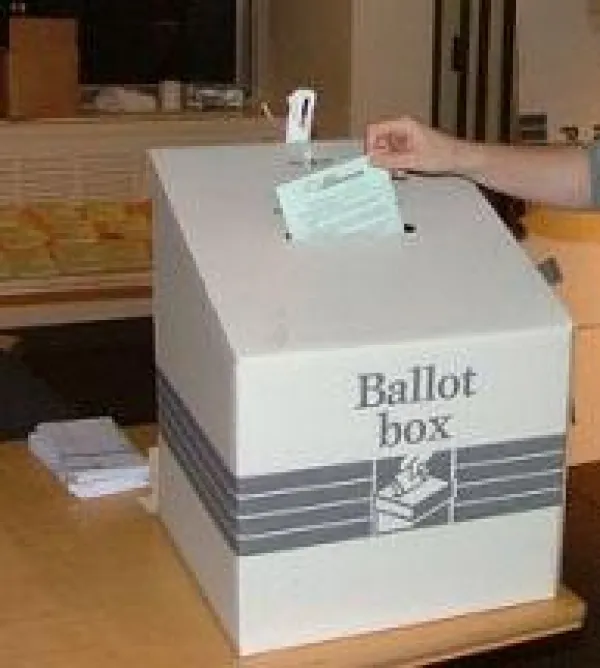
When you are lazy, ignorant and not willing to do research – accuse your more-informed opponents of being “conspiracy theorists.” A recent Columbus Dispatch editorial utilized this technique in its defense of Ohio’s antiquated and easily hacked voting apparatus.
The Dispatch, with few facts or statistics, stated that, “Secretary of State Jon Husted claims ‘…Ohio’s current voting equipment should be in fine shape through the 2016 election.’” In a subhead, the Big D also claimed “Transparent bipartisan approach should head off conspiracy theorists.”
Here are some points to consider.
In 2005, highly-regarded scholar Tracy Campbell published Deliver the Vote: A History of Election Fraud, and American Political Tradition 1742-2004. The book makes a solid case detailing that election fraud is the norm throughout U.S. history.

Expert Tele-Briefing 2 pm (Eastern), Tues., Oct. 27 (See end of press release for call-in details)
Washington, D.C. – Thousands to tens of thousands of high-level radioactive waste shipments would cross through 45 states and the District of Columbia, if plans for the country’s first nuclear waste repository at Yucca Mountain in Nevada move forward. Today, Beyond Nuclear, in coalition with NIRS and dozens of grassroots groups nationwide, released maps of the likely routes radioactive waste shipments would use. The groups want residents in these corridor communities across the country to weigh in with Congress about the dangers.
The Drug War has been a forty-year lynching….
…the corporate/GOP response to the peace and civil rights movements.
It’s used the Drug Enforcement Administration and other policing operations as a high-tech Ku Klux Klan, meant to gut America’s communities of youth and color.
It has never been about suppressing drugs. Quite the opposite.
And now that it may be winding down, the focus on suppressing minority votes will shift even stronger to electronic election theft.
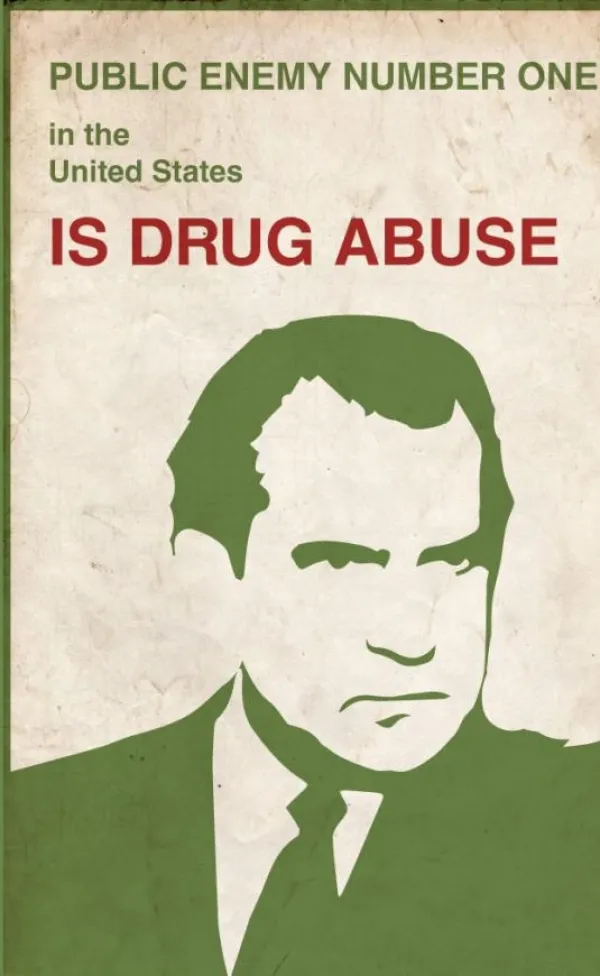
The Drug War was officially born June 17, 1971, (http://www.drugpolicy.org/new-solutions-drug-policy/brief-history-drug-war) when Richard Nixon pronounced drugs to be “Public Enemy Number One.” In a nation wracked by poverty, racial tension, injustice, civil strife, ecological disaster, corporate domination, a hated Vietnam War and much more, drugs seemed an odd choice.
In fact, the Drug War’s primary target was black and young voters.