
Global
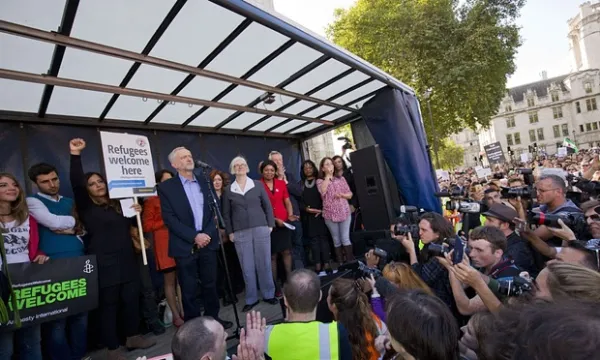
I wonder if people in the United States understand what it means that the Labour Party in London now has a peace activist in charge of it. Jeremy Corbyn does not resemble any U.S. politicians. He doesn't favor "only the smart wars" or prefer drone murders to massive invasions. Corbyn opposes wars, and he works to end militarism. He was over here in Washington recently trying to get a Brit freed from Guantanamo. He chairs the Stop the War Coalition, one of the biggest peace organizations in Britain. He meets with foreign peace activists, like me, who can't even enter the same worldview, much less the same room, with any U.S. leaders.

I thought the cause of climate destruction was political corruption, but I thought the cause of so little popular resistance was ignorance and denial. Naomi Klein's new film This Changes Everything seems to assume that everyone is aware of the problem. The enemy that the film takes on is the belief that "human nature" is simply greedy and destructive and destined to behave in the way that Western culture behaves toward the natural world.
I think that is an increasingly common frame of mind among those paying attention. But if it ever becomes truly widespread, I expect it to be followed by epidemics of despair.
I thought the cause of climate destruction was political corruption, but I thought the cause of so little popular resistance was ignorance and denial. Naomi Klein's new film This Changes Everything seems to assume that everyone is aware of the problem. The enemy that the film takes on is the belief that "human nature" is simply greedy and destructive and destined to behave in the way that Western culture behaves toward the natural world.
I think that is an increasingly common frame of mind among those paying attention. But if it ever becomes truly widespread, I expect it to be followed by epidemics of despair.

What does it mean to be a ‘liberal Arab’? Even in the West, definitions of the ‘liberal’ vary.
In the American context, the demarcation of the ‘liberal’ overlaps cultural and political lines. Republicans use the term in a derogatory way to describe their opponents. Watch ‘Fox News’ to understand. (On second thought, please do not watch Fox News!). Europeans are hardly keen on the term altogether. Many often use the term ‘progressive’ to liberate the ‘liberal’ from its political baggage and imprecise cultural insinuations.
So when the newly-launched Huffington Post Arabi – the Arabic edition of the news and entertainment portal Huffington Post – was fiercely attacked for not being ‘liberal’ enough to match the ‘liberal left’ views of the mother portal, it left me puzzled.
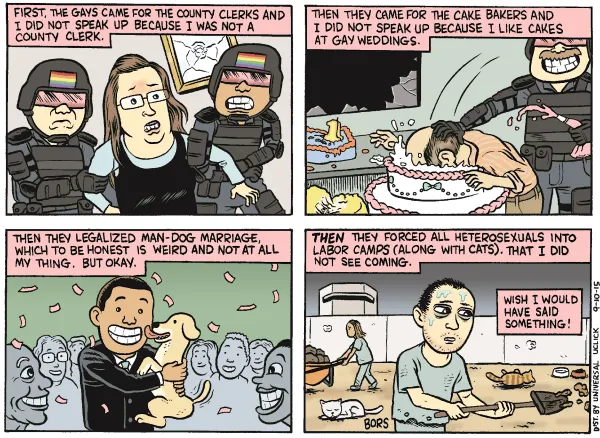

 he Democratic Party is showing some ugly faces these days, as entrenched party leaders find both their president and much of their constituency headed in directions that the “party” disapproves. From Sen. Chuck Schumer choosing to risk war to Rep. Debbie Wasserman Schultz stifling supporters of her party’s president and the peace deal with Iran, to the insurgent candidacies of Bernie Sanders and Martin O’Malley, party leaders find themselves leading toward goals widely rejected by others.
There is much being written about the refugee crisis in Europe at the moment but none of what I have read explains why the problem is occurring and what will need to be done for the problem to be addressed.
Refugees are just one symptom of a deeper crisis. Moreover, like other symptoms of this deeper crisis, the global elite is happy to use this symptom to keep us utterly preoccupied; after all, the immediacy of the refugee problem is all too demanding of our attention and our compassion.
Thirty years ago, on 9 September 1985, I tried to resuscitate a baby in the Shagarab East 3 Refugee Camp in Eastern Sudan at the height of the Ethiopian war and famine. As a lifesaver, I had been expertly trained in cardio-pulmonary resuscitation. My attempt to resuscitate this child failed: the doctor advised me that the baby was dead and I watched her mother as I handed the dead child back to her. The mother was, understandably, utterly distraught. And, frankly, I was in considerable emotional pain myself.

This happened some 63 years ago, but as the U.S. government has never stopped lying about it, and it's generally known only outside the United States, I'm going to treat it as news.
Here in our little U.S. bubble we've heard of a couple versions of a film called The Manchurian Candidate. We've heard of the general concept of "brainwashing" and may even associate it with something evil that the Chinese supposedly did to U.S. prisoners during the Korean War. And I'd be willing to bet that the majority of people who've heard of these things have at least a vague sense that they're bullshit.
If you didn't know, I'll break it to you right now: people cannot actually be programed like the Manchurian candidate, which was a work of fiction. There was never the slightest evidence that China or North Korea had done any such thing. And the CIA spent decades trying to do such a thing, and finally gave up.

The United States and its European allies have launched wars on the Middle East that have created an enormous refugee crisis. The same nations are threatening Russia. The question of maintaining peace with Iran is on the tip of everyone's tongue. Even in Asia and the Pacific, not to mention Africa, the biggest military buildup is by the United States.
So why does Japan, of all places, have streets full of antiwar demonstrations for the first time since the U.S. war on Vietnam? I don't mean the usual protests in Okinawa of U.S. bases. I mean Japanese protests of the Japanese government. Why? Who did Japan bomb? And why do I say the future of war and peace in the world is at stake in Japan?
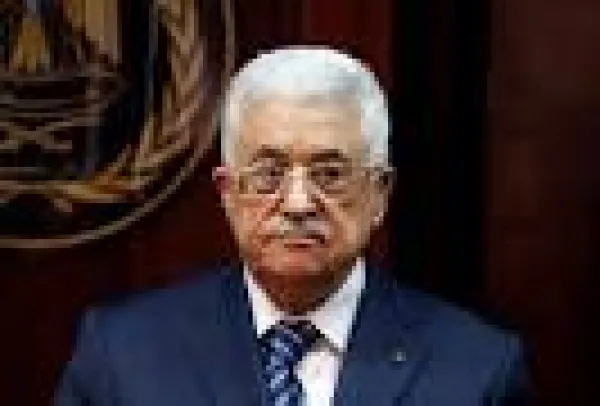
The crisis of leadership throughout Palestinian history did not start with Mahmoud Abbas and will, regrettably, be unlikely to end with his departure. Although Abbas has, perhaps, done more damage to the credibility of the Palestinian leadership than any other leader in the past, he is also a by-product of a process of political fraud that started much earlier than his expired Presidency.
Abbas’ unforeseen announcement on August 27 that he, along with a few others, will resign from the Palestine Liberation Organization (PLO) Executive Committee and his call for an emergency session of the Palestine National Council (PNC) is a testament to his poor management. More, it shows his utter disregard for the minimally-required threshold of responsible leadership.