
Global
Guilt beyond a reasonable doubt. It's the foundation of our justice system, built to serve and protect the wrongly accused. But in the case of Troy Davis, it's a principle that has been defied, ignored and trampled on.
I'm writing to you once more, Suzanne, because Troy's execution is scheduled for next week, and there is simply too much doubt in his case for us to allow this to happen.
A week from today, on Monday, September 19th, Troy has his final hearing in front of the Georgia Board of Pardons and Paroles. They have the power to halt the scheduled execution and commute Troy's sentence, permanently preventing what could be a wrongful execution.
It is now up to us to make sure the Board hears our voices loud and clear. Send a letter to the Board asking them to grant clemency for Troy Davis, and make sure it's something from the heart:
Take Action Now
Earlier this month I visited the Georgia Diagnostic and Classification State Prison, where Troy Davis awaits his fate.
I'm writing to you once more, Suzanne, because Troy's execution is scheduled for next week, and there is simply too much doubt in his case for us to allow this to happen.
A week from today, on Monday, September 19th, Troy has his final hearing in front of the Georgia Board of Pardons and Paroles. They have the power to halt the scheduled execution and commute Troy's sentence, permanently preventing what could be a wrongful execution.
It is now up to us to make sure the Board hears our voices loud and clear. Send a letter to the Board asking them to grant clemency for Troy Davis, and make sure it's something from the heart:
Take Action Now
Earlier this month I visited the Georgia Diagnostic and Classification State Prison, where Troy Davis awaits his fate.
Guilt beyond a reasonable doubt. It's the foundation of our justice system, built to serve and protect the wrongly accused. But in the case of Troy Davis, it's a principle that has been defied, ignored and trampled on.
I'm writing to you once more, Suzanne, because Troy's execution is scheduled for next week, and there is simply too much doubt in his case for us to allow this to happen.
A week from today, on Monday, September 19th, Troy has his final hearing in front of the Georgia Board of Pardons and Paroles. They have the power to halt the scheduled execution and commute Troy's sentence, permanently preventing what could be a wrongful execution.
It is now up to us to make sure the Board hears our voices loud and clear. Send a letter to the Board asking them to grant clemency for Troy Davis, and make sure it's something from the heart:
Take Action Now
Earlier this month I visited the Georgia Diagnostic and Classification State Prison, where Troy Davis awaits his fate.
I'm writing to you once more, Suzanne, because Troy's execution is scheduled for next week, and there is simply too much doubt in his case for us to allow this to happen.
A week from today, on Monday, September 19th, Troy has his final hearing in front of the Georgia Board of Pardons and Paroles. They have the power to halt the scheduled execution and commute Troy's sentence, permanently preventing what could be a wrongful execution.
It is now up to us to make sure the Board hears our voices loud and clear. Send a letter to the Board asking them to grant clemency for Troy Davis, and make sure it's something from the heart:
Take Action Now
Earlier this month I visited the Georgia Diagnostic and Classification State Prison, where Troy Davis awaits his fate.
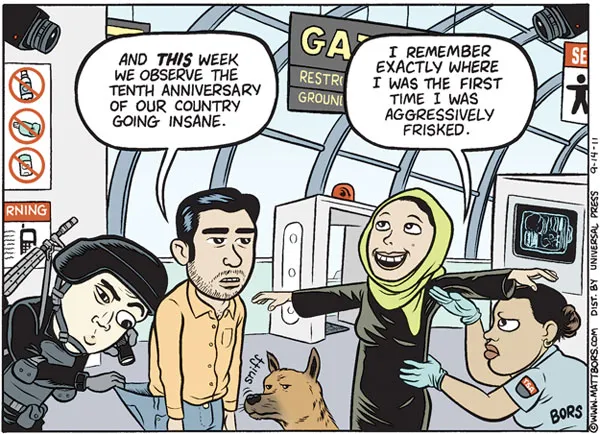
A decade later. The abyss keeps deepening, the wars keep squandering our blood and treasure beyond all logic except the logic of violence.
What ended on Sept. 11, 2001, it sometimes seems, was human evolution.
Suddenly, an irreparable schism opened between those in power and the rest of humankind, and a decision fell into place that war for profit would never end — and there was nothing to be done about it, as the corporate media conveyed to the world with a knowing shrug. What fell into place was armed insanity as perpetual background noise, and any reach toward global community, understanding and forgiveness went on permanent hold.
“Peace, of course, is not just absent from video games. It has faded from any debate in Washington surrounding the wars.”
Thus spake the Washington Post the other day, in a dazzlingly superficial reflection on the tenth anniversary of whatever happened that day, oh yeah, terror, evil, biff, bop, pow: “A Decade After the 9/11 Attacks, Americans Live in an Era of Endless War.” I can’t remember the last time I read something so glaringly lacking in moral intelligence. It must have been intentional.
What ended on Sept. 11, 2001, it sometimes seems, was human evolution.
Suddenly, an irreparable schism opened between those in power and the rest of humankind, and a decision fell into place that war for profit would never end — and there was nothing to be done about it, as the corporate media conveyed to the world with a knowing shrug. What fell into place was armed insanity as perpetual background noise, and any reach toward global community, understanding and forgiveness went on permanent hold.
“Peace, of course, is not just absent from video games. It has faded from any debate in Washington surrounding the wars.”
Thus spake the Washington Post the other day, in a dazzlingly superficial reflection on the tenth anniversary of whatever happened that day, oh yeah, terror, evil, biff, bop, pow: “A Decade After the 9/11 Attacks, Americans Live in an Era of Endless War.” I can’t remember the last time I read something so glaringly lacking in moral intelligence. It must have been intentional.
Had someone asked me ten years ago by what mechanism I might realize my long-held dream of a Third Major Party, my reply would have sounded alot like Facebook: Some kind of internet-based (thus coast-to-coast) free, un-censored, totally interconnected website whereby left-leaning people might join together, progressive ideas might flourish, the corrupt might be exposed, and truth, sweet truth, might prevail!
Such a mechanism, I mused, would surely allow We The Hundred Million Left-outs to circumvent the two government-endorsed parties and easily organize a third one - an American Progressive Party! - the left-of-center major party that should have been with us all along but, strangely, has not.
And with both Democrats and Republicans darting ever farther right, "Now!" (meaning anynow between this now and ten nows ago) would be the perfect time to plant the cleats, cut left and score this lofty goal...if only we had such a mechanism....sigh...
Now, of course, we do.
Such a mechanism, I mused, would surely allow We The Hundred Million Left-outs to circumvent the two government-endorsed parties and easily organize a third one - an American Progressive Party! - the left-of-center major party that should have been with us all along but, strangely, has not.
And with both Democrats and Republicans darting ever farther right, "Now!" (meaning anynow between this now and ten nows ago) would be the perfect time to plant the cleats, cut left and score this lofty goal...if only we had such a mechanism....sigh...
Now, of course, we do.
Tuesday, September 13th, 2011, 12:30 -3:00 PM - President Obama will be visiting the Fort Hayes Academic High School as part of his trip promoting the American Jobs Act. We'll be there to raise awareness about the tremendous danger that the Keystone XL Pipeline project represents and how it is entirely in Obama's power to end that threat. Many of you are aware of the Tar Sands Action to protest the Keystone XL Pipeline by sitting in at the White House. Several of us from Columbus traveled to DC to tell President Obama to reject the permit that would allow construction of an oil pipeline from Canada to Houston, TX. Those of us who participated in DC were supported by many of you reading this email. Now you have an opportunity to raise awareness of this important issue right here in Columbus.
Back in my native New York on Thursday, I was bolstered by a scene of what I call the real New Yorkers (along with tourists and honking cab drivers) joining in a protest of the adulation bestowed on torture lawyer John Yoo at the swank University Club off Fifth Avenue.
The hoi aristoi arrived at the club quite decked out in silk ties and pricey shoes to honor Yoo, the Bush administration lawyer who drafted some of the most objectionable rationalizations for torturing detainees in the “war on terror.” (He is now a law professor at the University of California at Berkeley.)
My chatting with the hoi polloi on the street, who were supporting the protest, brought a welcome reminder that the self-important “meritocracy” of the University Club – “the suits and the shoes” as we call them – hardly represent New York City.
That realization also generated some helpful adrenalin for later, when I traveled over to the 92nd Street Y for a panel discussion on “9/11 a Decade Later: Lessons Learned and Future Challenges,” featuring former Defense Secretary Donald Rumsfeld, ex-Attorney General Michael Mukasey, and George W. Bush’s press spokesman Ari Fleischer.
The hoi aristoi arrived at the club quite decked out in silk ties and pricey shoes to honor Yoo, the Bush administration lawyer who drafted some of the most objectionable rationalizations for torturing detainees in the “war on terror.” (He is now a law professor at the University of California at Berkeley.)
My chatting with the hoi polloi on the street, who were supporting the protest, brought a welcome reminder that the self-important “meritocracy” of the University Club – “the suits and the shoes” as we call them – hardly represent New York City.
That realization also generated some helpful adrenalin for later, when I traveled over to the 92nd Street Y for a panel discussion on “9/11 a Decade Later: Lessons Learned and Future Challenges,” featuring former Defense Secretary Donald Rumsfeld, ex-Attorney General Michael Mukasey, and George W. Bush’s press spokesman Ari Fleischer.
From an Israeli point of view, Representative Ileana Ros-Lehtinen is the ideal American politician. Although many in the US government aspire to her level of commitment to Israel, few can measure up to a dedication that extends beyond the very interests of her own country.
"Lawless extremists infest Congress like crabgrass besets lawns. House Foreign Affairs Committee Chairwoman Ileana Ros-Lehtinen (R. FL) is one of the worst," wrote US columnist Stephen Lendman on September 1.
Ros-Lehtinen's resume is a distressing read. The congresswoman "endorses US imperial wars, police state laws, corporate empowerment, tax cuts for the rich, laying waste to Libya, perhaps a second Bay of Pigs, and Israeli lawlessness, while, at the same, opposing Palestinian statehood," according to Lendman.
It is, in fact, the "Israeli lawlessness" and her opposition to a Palestinian statehood that has made her a darling to Israel and its lobby. Unsurprisingly, Ros-Lehtinen has been rewarded handsomely for her die-hard support of Israel by some of the most powerful pro-Israeli individuals and lobby groups in the United States. One of these individuals is Irving Moskowitz.
"Lawless extremists infest Congress like crabgrass besets lawns. House Foreign Affairs Committee Chairwoman Ileana Ros-Lehtinen (R. FL) is one of the worst," wrote US columnist Stephen Lendman on September 1.
Ros-Lehtinen's resume is a distressing read. The congresswoman "endorses US imperial wars, police state laws, corporate empowerment, tax cuts for the rich, laying waste to Libya, perhaps a second Bay of Pigs, and Israeli lawlessness, while, at the same, opposing Palestinian statehood," according to Lendman.
It is, in fact, the "Israeli lawlessness" and her opposition to a Palestinian statehood that has made her a darling to Israel and its lobby. Unsurprisingly, Ros-Lehtinen has been rewarded handsomely for her die-hard support of Israel by some of the most powerful pro-Israeli individuals and lobby groups in the United States. One of these individuals is Irving Moskowitz.
Just about everyone who has followed he local and national news on horizontal drilling and hydraulic fracturing, or fracking, knows that oil and gas corporations are putting immense resources into campaigns, lobbying, advertising, front groups, faux grassroots groups, and just about anything you can imagine, all in opposition to any new regulations, especially at the federal level of government.
Before going on, consider that fracking should not be viewed in isolation from the more extensive process of which it is one part. The Secretary of Energy Advisory Board’s extensive review of the evidence, released by the Shale Gas Production Subcommittee 90-Day Report on August 18, offers its assessments and recommendations. Here’s one that applies to how we should think about fracking as a multi-stage process:
Before going on, consider that fracking should not be viewed in isolation from the more extensive process of which it is one part. The Secretary of Energy Advisory Board’s extensive review of the evidence, released by the Shale Gas Production Subcommittee 90-Day Report on August 18, offers its assessments and recommendations. Here’s one that applies to how we should think about fracking as a multi-stage process:
Ten years ago, on the first Sunday after the 9/11 terrorist attacks, the NFL did something truly heroic and generous: nothing. The league willingly ate millions of dollars and cancelled the games out of respect for the unfolding tragedy. As 9/11 morphed into a decade-long “Global War on Terror”, the league has, to put it mildly, failed to show similar restraint. From the now ubiquitous presence of military flyovers and honor guards at every game, to the armed forces recruitment stations set up outside preseason contests, to having war-gourmands like General David Petraeus toss the coin before the Super Bowl, to staging Fox’s NFL pregame show from Bagram Airfield in Afghanistan (with Terry, Howie and the gang dressed in fatigues), the league has treated our era of endless war as an odious exercise in corporate branding.\