
Global
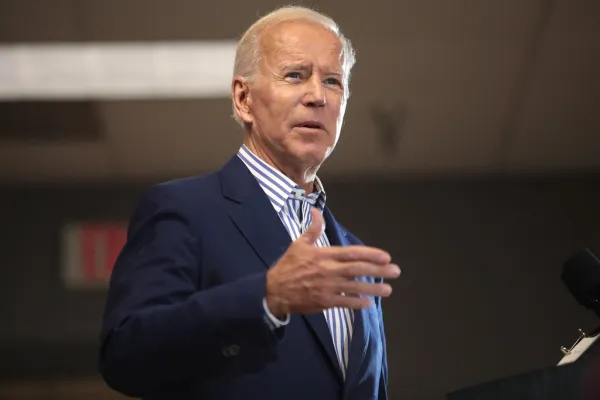
The new White House Team has been in place for more than a month and it is perhaps time to consider where it is going with America’s fractured foreign policy. To be sure, when a new administration brings in a bunch of “old hands” who made their bones by attacking Syria and Libya while also assassinating American citizens by drone one might hope that those mistakes might have served as valuable “lessons learned.” Or maybe not, since no one in the Democratic Party ever mentions the Libya fiasco and President Joe Biden has already made it clear that Syria will continue to be targeted with sanctions as well as with American soldiers based on its soil. And no one will be leaving Afghanistan any time soon. The Biden team will only let up when Afghanistan is “secure” and there is regime change in Damascus.
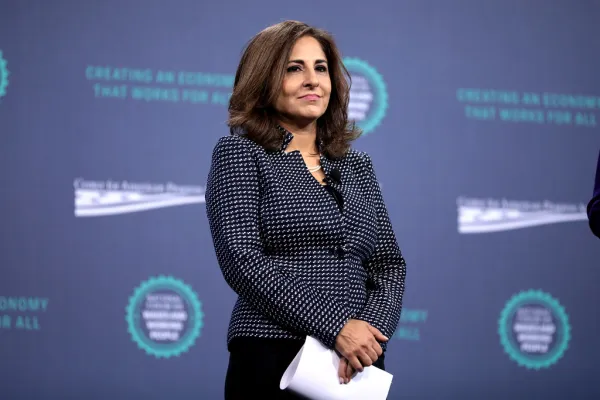
Most corporate media outlets have depicted President Biden’s effort to win Senate confirmation of Neera Tanden as a battle to overcome Republican hypocrisy about her “mean tweets,” name-calling and nasty partisanship. But there are very important reasons to prevent Tanden from becoming the Office of Management and Budget director. They have nothing to do with her nasty tweets and everything to do with her political orientation.
Tanden has a record as one of the most anti-progressive operators among Democratic Party movers and shakers. Long enmeshed with corporate elites, she has been vehemently hostile to the Bernie Sanders wing of the party. Progressive activists have ample cause to be alarmed at the prospect of her becoming OMB director -- one of the most powerful and consequential positions in the entire Executive Branch.
Yet some leaders of left-leaning groups have bought into spin that carefully ignores Tanden’s fervent embrace of corporate power and touts her as eminently suitable for the OMB job. Media coverage has been a key factor. The newspaper owned by the richest person on the planet, Jeff Bezos, is a good example.
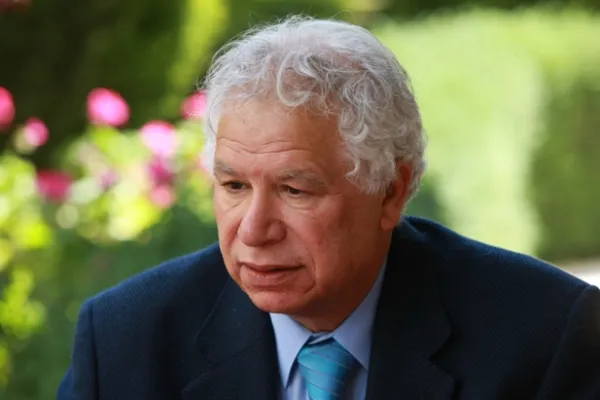
For Palestinians, exile is not simply the physical act of being removed from their homes and their inability to return. It is not a casual topic pertaining to politics and international law, either. Nor is it an ethereal notion, a sentiment, a poetic verse. It is all of this, combined.
The death in Amman of Palestinian poet, Mourid Barghouti, an intellectual whose work has intrinsically been linked to exile, brought back to the surface many existential questions: are Palestinians destined to be exiled? Can there be a remedy for this perpetual torment? Is justice a tangible, achievable goal?

The cornerstone of every social structure is its belief system, and those who control and benefit the most from the system have one primary job: Keep its myths and scapegoats viable.
That explains the emergence, in recent weeks, among right-wing politicians and media hacks, of a truly bizarre and unexpected scapegoat: the evil windmill!
In the wake of the winter storm that shut down the Texas power grid and deprived much of its population of electricity, warmth and drinkable water, these hacks and pols have been desperate to divert public awareness from basic facts, such as the utter failure of the state’s deregulated power grid to winterize and remain functional in difficult weather, and — ultimately far worse — the looming ecological collapse caused in large part by ongoing fossil fuel extraction and consumption.

With all the media hoopla last week about the Perseverance rover, frequently unreported was that its energy source is plutonium—considered the most lethal of all radioactive substances—and nowhere in media that NASA projected 1-in-960 odds of the plutonium being released in an accident on the mission.
“A ‘1-in-960 chance’ of a deadly plutonium release is a real concern—gamblers in Las Vegas would be happy with those odds,” says Bruce Gagnon, coordinator of the Global Network Against Weapons and Nuclear Power in Space.
Indeed, big-money lotteries have odds far higher than 1-in-960 and routinely people win those lotteries.
Further, NASA’s Supplementary Environmental Impact Statement (SEIS) for the $3.7 billion mission acknowledges that an “alternative” power source for Perseverance could have been solar energy. Solar energy using photovoltaic panels has been the power source for a succession of Mars rovers.

Undaunted, the pandemic can’t stop the Pan African Film Festival and in that immortal show biz tradition, the show must go on! Albeit virtually, as this year in order to stay cinematically safe, America’s largest and best yearly Black-themed filmfest since 1992 is moving online and starting later than usual, kicking off on the last day of Black History Month. 2021’s 29th annual Pan African Virtual Film + Arts Festival is taking place from Feb. 28 – March 14.
Co-directors Royal Kennedy Rodgers and Kathy McCampbell Vance’s Hollywood’s Architect: The Paul R. Williams Story is a nonfiction biopic about the African American talent who rose to become the so-called “Architect of the Stars” when Jim Crow was still the scourge of the land. Born 1894 in L.A., Paul Revere Williams’ real-life story, overcoming adversity, is remarkable, even if it is unremarkably told in this conventionally albeit professionally made documentary.

 or decades, The New Yorker has set a high bar for journalistic excellence.
Graced by its signature brand of droll, sophisticated cartooning, the magazine’s exquisitely edited screeds have reliably delivered profound analyses of the world’s most pressing issues.
But in a breathless, amateurish pursuit of atomic energy, the editorial staff has leapt into a sad sinkhole of radioactive mediocracy.
The latest is Rebecca Tuhus-Dubrow’s shallow, shoddy “Activists Who Embrace Nuclear Power,” yet another tedious plea that we learn to love the Peaceful Atom.
For at least a century, countless scientific pioneers have exposed the murderous realities of nuclear radiation. Legendary researchers like Marie Curie, Alice Stewart, Rosalie Bertell, Helen Caldicott, John Gofman, Ernest Sternglass, Thomas Mancuso, Karl Z. Morgan, Samuel Epstein, Robert Alvarez, Arnie Gundersen, Amory Lovins, and others have issued vital warnings.

Undaunted, the pandemic can’t stop the Pan African Film Festival and in that immortal show biz tradition, the show must go on! Albeit virtually, as this year in order to stay cinematically safe, America’s largest and best yearly Black-themed filmfest since 1992 is moving online and starting later than usual, kicking off on the last day of Black History Month. 2021’s 29th annual Pan African Virtual Film + Arts Festival is taking place from Feb. 28 – March 14.
The sixties cliché that “the personal is political” is strikingly true in Tamara Mariam Dawit’s Finding Sally. When the Ethiopian-Canadian director/writer stumbles – at the ripe old age of 30! – upon the fact that her father and his siblings had another sister she’d never even heard of, Tamara sets out to piece together the puzzle to find out why her Aunt Sally had been missing from the picture for decades. The documentarian’s filmic voyage of discovery turns out to be much more than a merely personal journey, as Sally’s disappearance from the scene takes Tamara down the path to the revolutionary politics that engulfed Ethiopia in the 1970s.

Undaunted, the pandemic can’t stop the Pan African Film Festival and in that immortal show biz tradition, the show must go on! Albeit virtually, as this year in order to stay cinematically safe, America’s largest and best yearly Black-themed filmfest since 1992 is moving online and starting later than usual, kicking off on the last day of Black History Month. 2021’s 29th annual Pan African Virtual Film + Arts Festival is taking place from Feb. 28 – March 14.

Undaunted, the pandemic can’t stop the Pan African Film Festival and in that immortal show biz tradition, the show must go on! Albeit virtually, as this year in order to stay cinematically safe, America’s largest and best yearly Black-themed filmfest since 1992 is moving online and starting later than usual, kicking off on the last day of Black History Month. 2021’s 29th annual Pan African Virtual Film + Arts Festival is taking place from Feb. 28 – March 14.
Director/co-writer Lazaro Ramos’ award winning Executive Order exemplifies what I love most about PAFF: This festival gives movie buffs the opportunity to see films – often from far-flung destinations around the globe – that we might otherwise never have the chance to watch. Often these are worthy, well-made productions that PAFF is also giving access and a foothold to at Los Angeles, arguably the world’s capital of cinema (although not necessarily the capital of “world cinema” per se).