
Local
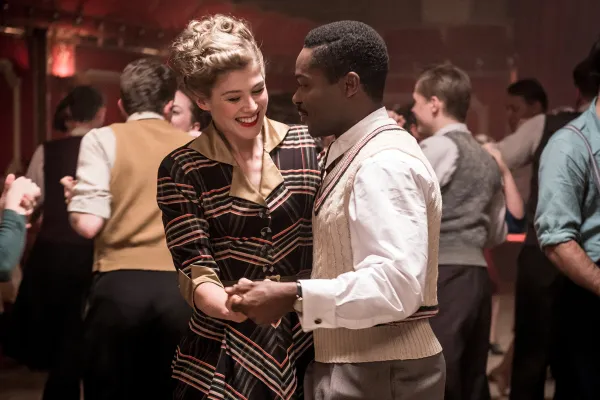
Even though its subject matter is completely different, I can’t help comparing A United Kingdom to 2016’s Hidden Figures.
Both films uncover an obscure chapter in the history of racial injustice. And both films are fascinating and enlightening despite the fact that neither is quite as good as it could be.
A United Kingdom is directed by Amma Assante, who also helmed 2013’s Belle, the story of a mixed-race woman who struggled to find love and gain equality after being raised among the aristocracy in 18th-century England. In Assante’s new film, romance also plays a role, but it’s only one part of a complex tale involving political intrigue, colonial exploitation and the early days of South African apartheid.
When young Londoner Ruth Williams (Rosamund Pike) meets an English-educated African named Seretse Khama (David Oyelowo) in 1947, it’s clearly love at first sight. Ruth literally can’t take her eyes off this handsome stranger, and he becomes equally entranced. The two know their respective families won’t approve of an interracial romance, but they immediately make arrangements to meet again.

“Everyone’s Name was Muslim” – Lauryn Hill 1998
At 9:45 pm on a Tuesday, I sat in a Palace Theater chair. People were at the theater to see their favorite singer, Ms. Lauryn Hill. The men who were present were on a very wise weeknight Valentine’s related date. Women were dressed up like it was a special occasion to be in a theater on a school/work night.
On stage, the deejay played a mixture of Marvin Gaye, Chance the Rapper and current club bangers. I thought playing Chance was apt because I spent years describing him as all three of the Fugees wrapped into one human.
At 9:58 pm, Lauryn Hill’s full band took the stage. At 10:03 pm, we were on all of our feet singing along to “Everything is Everything” off the 1998 musical masterpiece, “The Miss-Education of Lauryn Hill.”
Between the choruses of “What Will Be/Will Be” leading into “Father Forgive Them/They Know Not What That Do?” there was a transcendence of the tension created from not my president’s desire to scapegoat the humans from past imperialist actions to divide America with the malicious intent of utilizing misunderstanding and ignorance for transgressions of greed.
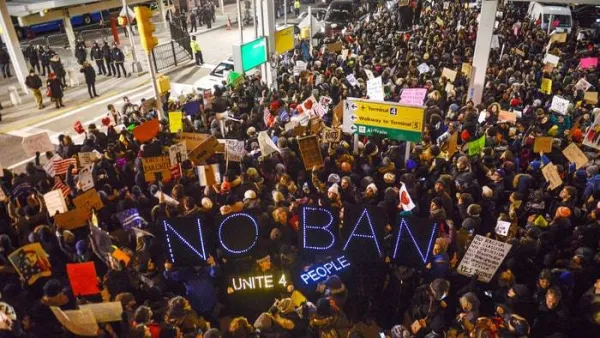
Thurs, March 2, 7-8:30pm, St. Stephen’s Episcopal Church, 30 W. Woodruff Ave.
Discussion on the recent attacks on immigrants and refugees and the growing resistance. We will examine how the US has played a key role in the destabilization of the seven countries included in Trump’s racist Muslim Ban and the mass profit that is made off private deportation centers.
iso.columbus@gmail.com.
https://www.facebook.com/events/381506618908833/
isocolumbus.weebly.com

The Well, located in the southeastern outlier of central Ohio city of Lancaster, is a fantastic gem that rivals the best of local socially just dining experiences. The Well gives careful consideration of where and how the food they serve is produced (non-GMO, organic, locally sourced), and prepare it with nutrient dense and deliciously creative, and yet familiar flavor combinations. The menu is predominantly vegan or veganizeable, entirely gluten-free, low to no sugar, low to no oil, and includes probiotic rich foods.
The atmosphere, energy and food speak to wellness, with their consideration for the various health concerns and sensitivities people may have. They have even attempted to mitigate potential contamination of chemicals and plastic by using all glass, and metal food service products (even stainless steel straws) and bio-degradable to-go containers. If you are traveling southeast of Columbus during the work week, you must stop in here.
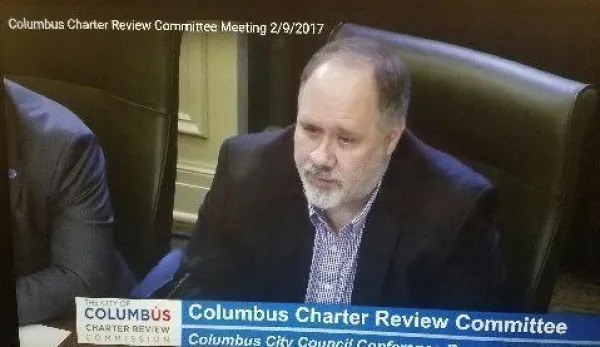
Why did Bryan Clark, who managed the anti-Issue 1 campaign last year, have a seat at the table at Columbus Charter Review Committee meetings? Last year Clark, chief policy advisor for Columbus Mayor Andrew Ginther, took a leave of absence from the mayor’s office to manage the campaign against Issue 1, the citizens’ initiative proposing an expanded City Council with district representation.
Issue 1 was defeated at the Aug. 2 special election. Many activists believed that Issue 1 lost because of an expensive propaganda campaign by the opposition full of blatant distortion about how large Council would get and the costs to taxpayers if Council expanded.
Clark was among several city employees who made repeated presentations at the Charter Review Committee’s 12 meetings. He was continually at the table in front of them to answer questions and make comments. He and J. Edward Johnson, city council’s director of legislative affairs, were so involved with the committee’s final recommendations that one member suggested calling it “The Clark-Johnson Plan.”

Alcohol is a big problem on college campuses and underage drinking is a major slice of the problem. The connection between excessive alcohol consumption and violence and sexual assault is well established.
Ohio State University has its share of student drinking issues, as have most U.S. colleges. When OSU decided to sell beer to students at football games last season, it needed a public relations gimmick to cover over a dubious decision.
So athletic director Gene Smith and his minions came up with the following story line: We'll use some of the beer profits to hire more OSU police officers.
It turns out that the first season of beer peddling netted the athletic department over $1 million. Recently, OSU held a PR fest to announce the hiring of more police with the beer money.
Last time I checked the OSU athletic department's annual revenue was $167 million and it was turning a tidy profit of $13 million. Smith could put $1 million a year into hiring more police any time he wants to and hardly miss it.
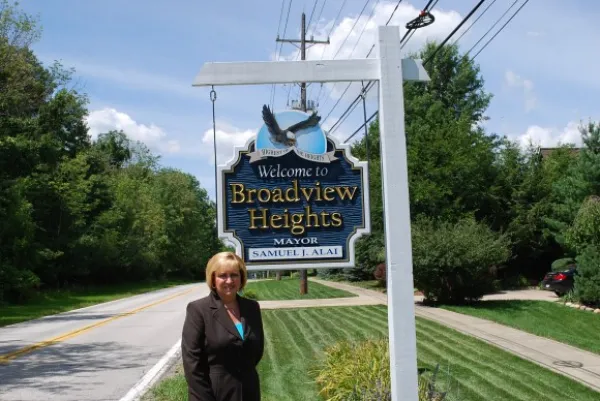
Freep Hero: Tish O’Dell and CELDF
The Free Press hero is Tish O’Dell, who campaigned for and won a Community Bill of Rights that banned fracking in Broadview Heights, Ohio. O’Dell and her group, the Community Environmental Legal Defense Fund (CELDF) have helped 28 communities including Columbus fight to protect clean air and water as a right. There will be a CELDF “Community Rights for Social Justice” conference at the Northwood-High building in Columbus Saturday, March 4. CELDF is making civil disobedience a democratic and civic duty.
The Free Press Salutes

What may be America's most dangerous, decrepit and disastrous nuke is facing Judgment Day. And it could cost you both your money and your life. The infamous Davis-Besse reactor, near Toledo, is at the breaking point. It is poised to lose hundreds of millions of dollars for its owners and Ohio rate payers. So, of course, the "free enterprise" Republican legislature is poised to give those nuke operators a massive bailout. To the tune of more than $4 Billion (that's not a typo).
Natural Gas is cheaper. New gas plants far in excess of DB are under construction. Ohio has tremendous wind resources, far in excess of anything we will ever need and far more than it would take to replace DB. Thanks to spectacular technological advances in recent years, that wind power—along with new solar panels—is cheaper, safer, cleaner and more reliable than the nuke, and would create thousands of jobs beyond the few hundred at Davis-Besse.
In February, Columbus City officials announced a massive giveaway to a major developer to build upscale housing at Easton. The city and school district will forego a total of $68 million in property taxes over the next thirty years. In return, The Georgetown Co. will make a total of $5.75 million in contributions toward development in the Linden area – $4.25 million of which will be repaid to them using a tax increment financing district, or TIF. The deal also requires Georgetown to create a total of 500 full-time, non-retail jobs over the next 11 years. Ostensibly the income tax revenue from these jobs would offset a portion of the lost property tax - but the penalty for missing the goal is only $100,000 per year.
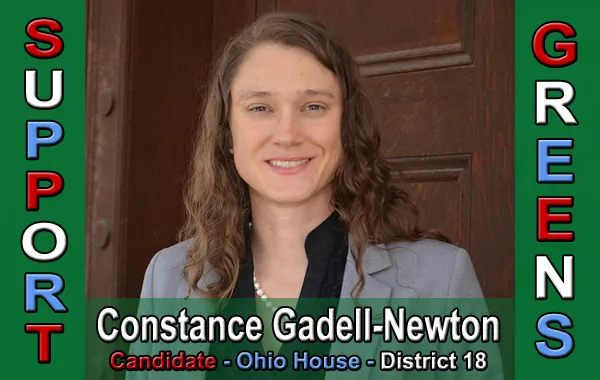
Tuesday, February 28, 6-9pm
Kafe Kerouac, 2250 N. High St.
Learn more about the Green Party and the 10 key values.
Meet and greet Green Party current, prospective and past candidates.
Get involved! Learn about upcoming Green Party activities and how to help with campaigns.
Celebrate Connie's Birthday! Come and talk some politics with the Green Party state co-chair on her birthday.
This event is being hosted by Committee to Elect Connie Gadell Newton