
THE G-20 IN PITTSBURGH
by Tom Over 9-23-09
<br><br>
On Tuesday, Sept 22, activists from Philadelphia, New York City, Pittsburgh and other cities held a mock funeral procession to demand better policies for addressing the AIDS pandemic, a day ahead of the arrival of delegates for the G-20.
<br><br>
The approximately 50 participants in the New Orleans-style funeral march drew a mix of interest, irritation, and amusement from onlookers in the business district of downtown Pittsburgh.
<br><br>
At the head of the funeral march where pallbearers carried a cardboard coffin, a man shouted into a microphone while someone else carried a portable amplifier, “when people with AIDS are under attack, what do we do ?” and marchers shouted in unison, “fight back!”
<br><br>
Amidst the early afternoon bustle of an weekday, the demonstrators repeated this call-and-answer and similar chants as the funeral march made its way around the perimeter of the David L. Lawrence Convention Center, the site of the G-20 Summit later this week.
<br><br>
Erica Goldberg works with ACT UP Philadelphia. She said global health is not on the agenda of the G-20 Summit.
“One of the things that some of the G-20 nations have promised us is funding for the global fund to fight, TB, malaria, and HIV/AIDS. This is all really important, especially if we want to meet the United Nations’ Millennium goal of eradicating these diseases by 2015. As of right now, this won’t be met. We have to hold our leaders accountable. They are the ones making decisions for the poorer countries,” Goldberg said.
<br><br>
She commented on the timing of the demonstration. “We wanted this to be the first thing they (the G-20 delegates) see. They’re coming here tomorrow. We’re holding them accountable. This needs to be on the agenda.”
<br><br>
She said AIDS activists chose Sept 22, two days before the official start of the G-20 Summit, and one day before the arrival of the delegates, so as to not have to compete with other protests. Also, she said the AIDS activists figured there would be less of a chance of conflict with police if they staged their protest earlier in the week.
<br><br>
“We hope that this will hit the papers tomorrow, that it’s the first thing they see when they walk in, that they have this on their conscience and know we’re not going away,” Goldberg said. She urges people to contact legislators about supporting the Global Fund to Fight AIDS, Tuberculosis, and Malaria.
“President Obama, as much as I love him, went back on his promise to fulfill the funding,” Goldberg said.
<br><br>
She commented on how drug companies factor into all of this. “ Medication does not need to be this expensive. They can definitely lower their prices. We have big drug interests lobbying to prevent AIDS medication from getting” to developing nations.
<br><br>
Goldberg said debt cancellation for developing nations is a factor that comes into play.
“When you don’t cancel debts of nations and they have to pay back loans to the IMF and the World Bank, they won’t have the funds necessary for getting AIDS medication, or they might get the medication but can’t pay the health professional because of their debt.
<br><br>
She said vested interested motivated by huge profits stand in the way of doing a better job of addressing tuberculosis, malaria, and HIV/AIDS. “We have the power, the ability, and the medication.”
World News
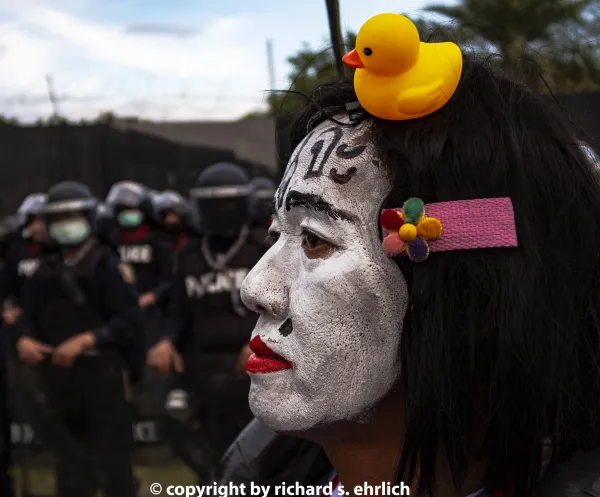
BANGKOK, Thailand -- Coup-maker Prayuth Chan-ocha hopes his snappy new promise -- "no coup again" -- will get him re-elected prime minister in May and end worries that the U.S.-trained military will topple the next government if the polls go against them.
Prime Minister Prayuth dissolved Parliament's elected half, the 500-seat house of representatives, on March 20, three days before its four-year tenure expired.
The Election Commission then had to choose an election date within 45-60 days, and selected May 14.
Prliaent's 250 junta-appointed senators remain unchanged.
"There should be no coup again," the now-Caretaker Prime Minister Prayuth recently told reporters.
"If any serious conflict occurs again [after the election], I don't know how to solve it because I have nothing to do with it now."
Coups, cannabis, and corruption are the biggest issues nationwide facing candidates for prime minister and parliament.
Some analysts wonder if the military will launch a coup if the next government does not satisfy them and their cronies among the elite's conservatives and old money.
BANGKOK, Thailand -- Coup-maker Prayuth Chan-ocha hopes his snappy new promise -- "no coup again" -- will get him re-elected prime minister in May and end worries that the U.S.-trained military will topple the next government if the polls go against them.
Prime Minister Prayuth dissolved Parliament's elected half, the 500-seat house of representatives, on March 20, three days before its four-year tenure expired.
The Election Commission then had to choose an election date within 45-60 days, and selected May 14.
Parliament's 250 junta-appointed senators remain unchanged.
"There should be no coup again," the now-Caretaker Prime Minister Prayuth recently told reporters.
"If any serious conflict occurs again [after the election], I don't know how to solve it because I have nothing to do with it now."
Coups, cannabis, and corruption are the biggest issues nationwide facing candidates for prime minister and parliament.
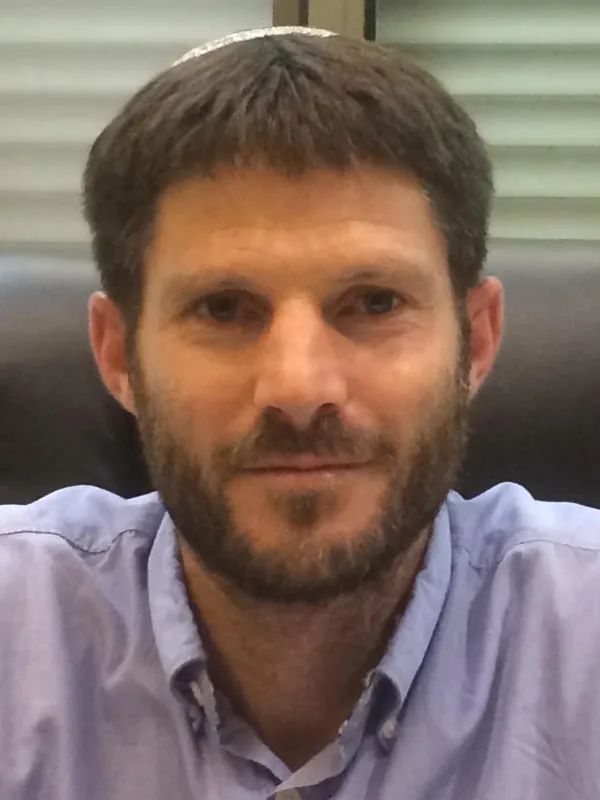
By his own admission, Israel’s new Finance Minister Bezalel Smotrich is a “fascist homophobe”. This declaration, which he made on January 16, should be enough to accentuate the violent nature of the new political concoction created by Israeli Prime Minister Benjamin Netanyahu last December.
Though Smotrich is not the only politician in Netanyahu’s cabinet with a track record of violence, both real and rhetorical, he is a special case. Unlike his boss, Smotrich does not feel the need for doublespeak or occasional diplomacy.
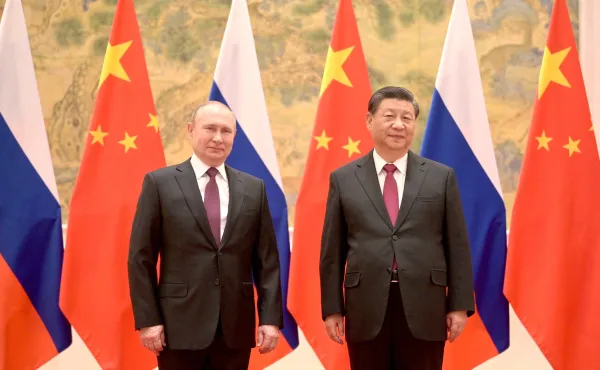
The final exchange, caught on camera between visiting Chinese President Xi Jinping and his Russian host and counterpart, Vladimir Putin, sums up the current geopolitical conflict, still in its nascent stages, between the United States and its Western allies on the one hand, and Russia, China and their allies, on the other.

The scene of Israeli Ambassador, Sharon Bar-Li, along with other Israeli delegates, being escorted out of the opening ceremony of the African Union Summit in Addis Ababa, Ethiopia, on February 18, was historic. The very moment that was meant to crown twenty years of Israeli diplomacy on the African continent, in a few seconds, turned to represent Israel’s failure in Africa.
Unable to fathom the breakdown of its diplomatic and political efforts, Tel Aviv responded to Bar-Li's removal by waging a war of words against African countries, accusing them of spearheading a campaign aimed at blocking Israel's observer status.

As hundreds of thousands, throughout Israel, joined anti-government protests, questions began to arise regarding how this movement would affect, or possibly merge, into the wider struggle against the Israeli military occupation and apartheid in Palestine.
Pro-Palestine media outlets shared, with obvious excitement, news about statements made by Hollywood celebrities, the likes of Mark Ruffalo, about the need to “sanction the new hard right-wing government of (Israeli Prime Minister Benjamin) Netanyahu”.

That was the summary of a news report published on the homepage of the pro-Israel group, UK Lawyers for Israel (UKLFI).


BANGKOK, Thailand -- A former wartime British spy in Afghanistan and Pakistan for Britain's Secret Intelligence Service (SIS), also known as MI6, says he regrets disguising himself as a foreign correspondent but is proud of his espionage among mujahideen guerrillas during "the last act of the Great Game" in Central Asia.
After spying from early 1981 until the end of 1983 -- during British Prime Minister Margaret Thatcher's administration -- John Fullerton became a career foreign correspondent and editor for Britain's Reuters news agency for 20 years, based in Hong Kong, New Delhi, Beirut, Nicosia, Cairo, and London.
Mr. Fullerton's work as a spy among Afghan mujahideen guerrilla groups was to help "the U.K. discriminate between the effective and ineffective resistance leaders," he said in an interview.
"When I told SIS (Secret Intelligence Service) I planned to apply to Reuters, they made it abundantly clear they could have no further contact," said Mr. Fullerton, 74, now living in Glasgow, Scotland.
He retired from Reuters in 2003.
