
Global

I would like to announce the publication of a book, which discusses the relationships between water and life. The book may be freely downloaded and circulated from the following link:
http://eacpe.org/app/wp-content/uploads/2021/04/Water-by-John-Scales-Av…
The United Nations' World Water Day
On its home-page for World Water Day the United Nations points out the following facts:
“Today, 1 in 3 people live without safe drinking water.
“By 2050, up to 5.7 billion people could be living in areas where water is scarce for at least one month a year.
“Climate-resilient water supply and sanitation could save the lives of more than 360,000 infants every year.
“If we limit global warming to 1.5 degrees C above pre-industrial levels, we could cut climate-induced water stress by up to 50%.
“Extreme weather has caused more than 90% of major disasters over the last decade.

BANGKOK, Thailand -- President Biden's announced withdrawal from
Afghanistan will be the second time since 1989 that the U.S. retreats
from that country -- and twice after years of boosting war but losing
control over Islamist insurgents.
When previously enthusiastic, then-Senator Joe Biden arrived in Kabul
in January 2002 in response to 9/11, he voiced a gung-ho call for U.S.
military involvement.
"Make it clear, I'm not talking about [international] peace keepers.
I'm not talking about [U.N.] blue helmets. I'm talking about people
who shoot and kill people," the senator told reporters on January 12,
2002, standing in front of the embassy in a cold, clear, bone-dry
winter breeze.
"I'm talking about people who are a bunch of bad asses who will come
in here with guns, and understand that they don't have to check with
anybody before they return fire.
"I am talking about pursuers. I'm talking about a tough, rough,
militarily controlled -- no 'sign-off by' -- no diplomatic requirement
to determine whether they can return fire.

Start: Thursday, May 06, 2021 • 1:00 PM • Eastern Daylight Time (US & Canada) (GMT-04:00)
End: Thursday, May 06, 2021 • 2:30 PM • Eastern Daylight Time (US & Canada) (GMT-04:00)
Host Contact Info: David, david@worldbeyondwar.org

Basically, Derek Chauvin was convicted of enforcing the status quo. Because his behavior was caught on video — his knee on George Floyd’s neck, oh my God, choking him to death — and looked so disturbing to most of the public, official American “justice” had to take some sort of action.
He became a scapegoat.

 his year’s Earth Day summit (April 22) and Joe Biden’s pledge to halve American carbon emissions by 2030 come with the 35th commemoration (April 26) of the Chernobyl catastrophe.
Together they evoke atomic power’s epic failure in at least 80 different ways:
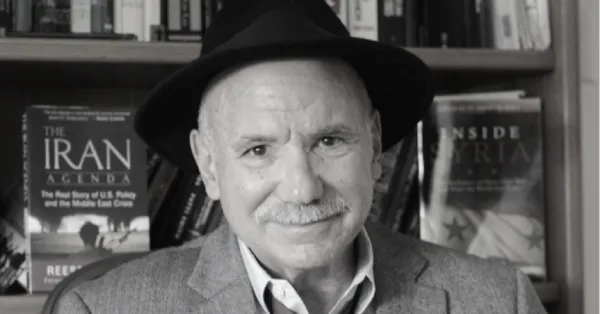
When Reese Erlich died in early April, we lost a global reporter who led by example. During five decades as a progressive journalist, Reese created and traveled an independent path while avoiding the comfortable ruts dug by corporate media. When people in the United States read or heard his reporting from more than 50 countries, he offered windows on the world that were not tinted red-white-and-blue. Often, he illuminated grim consequences of U.S. foreign policy.
The first memorable conversation I had with Reese was somewhere over the Atlantic Ocean on the way to Iraq in September 2002—as it turned out, six months before the U.S. invasion. He was one of the few journalists covering a small delegation, including Congressman Nick Rahall and former Senator James Abourezk, which the Institute for Public Accuracy sponsored in an attempt to establish U.S.-Iraqi dialogue and avert the looming invasion.
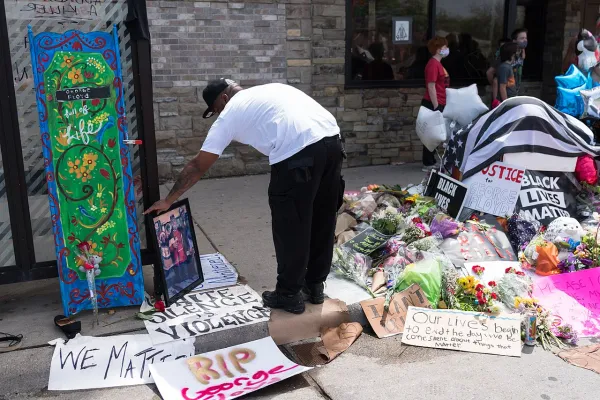
The annual Academy Awards ceremony – wherein a pack of swag bag schlepping celebs clad in brand name couture pat themselves on the back on live TV, while thanking their agents, hair stylists, managers, makeup artists, etc. – is set for Sunday, April 25. To be fair, a number of films competing for those coveted golden statuettes do have artistic excellence and/or social significance. The 1960s/70s New Left is ready for its close up, with the Black Panther-themed Judas and the Black Messiah and The Trial of the Chicago 7, about the antiwar movement, each nominated for six Oscars, including for Best Picture. Time, a timely meditation on African Americans and our criminal (in)justice system, is contending for Best Documentary.
When Democrats were handed the U.S. Congress in 2006 to end the war on Iraq, and they escalated it in order to “oppose” it in the 2008 elections, it’s possible some of them were not being completely forthright and respectful toward you, their loyal supporters.
When the Democratic legislature in California passes single-payer healthcare whenever it can count on a Republican governor to veto it, but never during Democratic governorships, or when the U.S. Congress ends the war on Yemen when it can count on a Trump veto but not when Biden is in, it’s possible that certain politicians’ expressions of concern for people lacking healthcare or people lacking bomb-free skies are less than completely sincere.
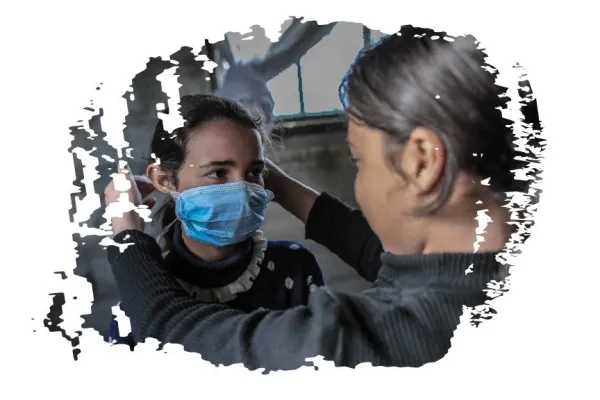
COVID-19 cases in Palestine, especially in Gaza, have reached record highs, largely due to the arrival of a greatly contagious coronavirus variant which was first identified in Britain.

Let’s use up the planet and bless the future with its corpse.
If politics involved speaking the truth, those words could well be the core slogan of mainstream politicians and their media cohorts, with the purpose of the election process (you know, democracy) being, simply, to choose the specific ways in which we continue exploiting the planet and ignoring the consequences.
Should we destroy the rainforests quickly or slowly? How much should be invest in the next generation of nuclear weapons and — come on! — when do we get to use them to protect our freedoms? We can’t afford to save the planet but we can definitely afford to kill it. But let’s do it carefully and responsibly.
There’s an alternative to this thinking, but I’m not sure when or how it will gain sufficient political and economic traction in today’s world to have an impact: to change official thinking and basic assumptions about the nature of reality. This alternative emerges from wisdom at the core of human consciousness, which the “developed” world chose to abandon and forget in millennia past. It’s often referred to these days as indigenous thinking, but it doesn’t belong in a museum.