
Human Rights
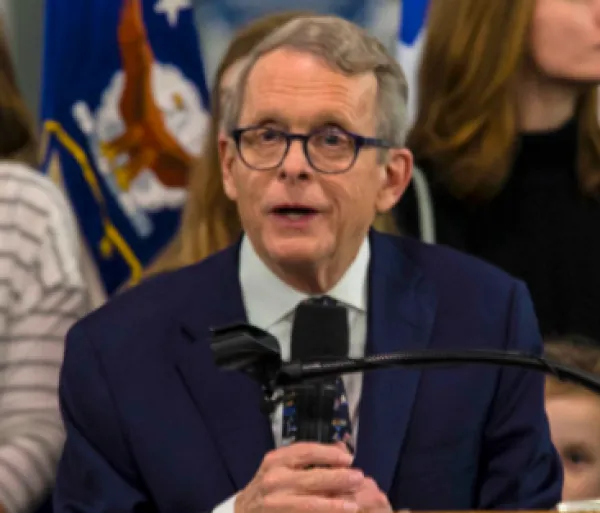
Planned Parenthood of Greater Ohio denounced Gov. Mike DeWine’s cuts to Medicaid as Ohio continues to grapple with the effects of the COVID-19 pandemic. During a press conference Tuesday afternoon, Gov. DeWine announced that more than $200 million in state budget cuts will come from Medicaid funding for the remainder of the 2020 fiscal year, while leaving the $2.7 billion rainy day fund untouched.
Statement from Iris E. Harvey, President & CEO of Planned Parenthood of Greater Ohio:
“Slashing Medicaid funding at any point in time is irresponsible and dangerous. Doing so now, while many Ohioans are reeling from the effects of COVID-19 and in need of preventive health care, is heartless. This move will disproportionately impact communities that are already medically underserved, who already stand at a greater risk of harm from COVID-19, and who depend on Medicaid to access health care. We call on Gov. DeWine and the legislature to reconsider this path.”
As a provider of health care services, Planned Parenthood of Greater Ohio sees over sixty thousand patients annually across its Ohio health centers, nearly 4 in 10 of whom use Medicaid.
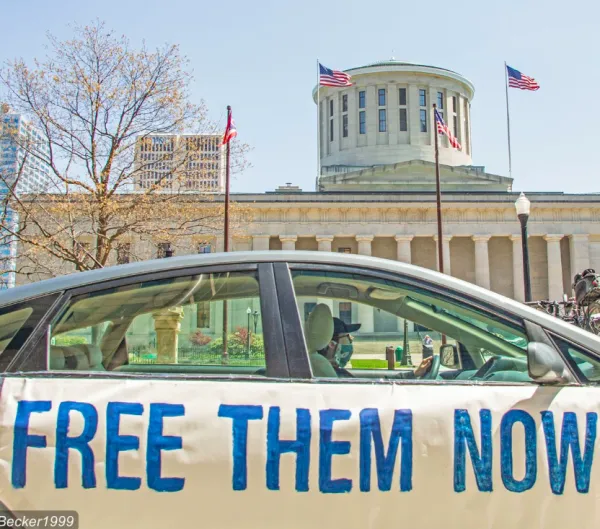
Over the weekend, ten inmates at the Morrow County Jail tested positive for COVID-19. The jail is one of two ICE contracted detention centers in Ohio.
Most, if not all are immigrants held on civil immigration charges for ICE. On Friday night, the ACLU of Ohio sued ICE, demanding the release of medically-vulnerable immigrants currently detained in Butler and Morrow Counties.
Said Lynn Tramonte, Director of the Ohio Immigrant Alliance, “Doctors have been telling government officials to reduce jail populations to avoid mass outbreaks, and no one in charge in Ohio listened. For weeks, inmates at the Morrow County Jail have been warning family members and friends about the filthy conditions, lack of soap and PPE, and frequent transfers of people into and out of the jail. They felt like sitting ducks for the disease. And now their worst fears have come true.

Jorgé is an American citizen, but this doesn’t mean he’s unaware of how cold and demanding some gringos from the middle of Ohio can be.
Jorgé, who asked not to use his real name, told the Freep he works for FedEx but said “they are not taking this COVID thing seriously.” He has asthma so “I’m not going in.”
Jorgé’s landlord told him and his roommates rent was due on April 1st. Knowing his tenants may not make rent, this Grove City landlord said they could set up a payment plan – but only after they provide bank statements, a letter from their employer saying they were laid off, documentation they are not receiving any government assistance, and agree to a credit check.
“As for that part, we told him no one is going to be able to do that for you,” said the 20-something who’s active with local left-leaning progressive groups. “These people are more concerned for their investors than the people they build their livelihoods on.”
It’s one thing to be 20-something and white in conservative-leaning Ohio (Trump land) during the pandemic – than 20-something and Hispanic. Then take that a step further: Hispanic and undocumented.

No one needs to tell the Freep how bad some Ohio State off-campus landlords can get. Their uncaring and second-class treatment of students and non-students alike has been well-documented for decades.
So, it’s no surprise one of the biggest off-campus property managers and owners sent out the following email late last month to hundreds of tenants:
“We understand that some of our tenants have lost hours at work due to working on campus. However, rent is still expected by the 1st of every month and late fees will still apply. Please do not call the office or email us about this since everyone is still expected to pay rent in a timely fashion.
PS. Please refrain from flushing any items other than toilet paper.”
The Freep would like to name the off-campus property management team that sent this to their tenants, but according to its owner they have been receiving death threats.
Who’s worse than an OSU campus slumlord?
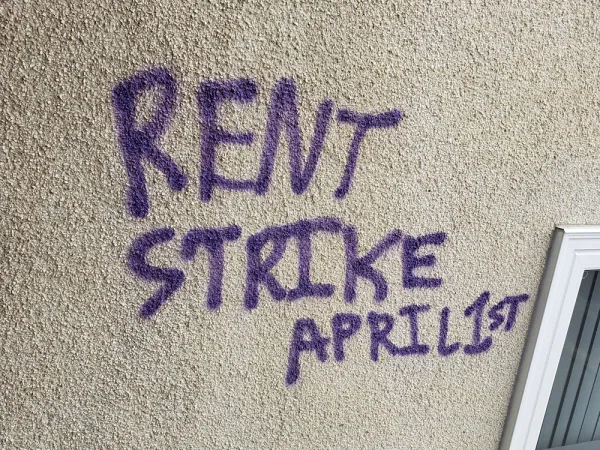
Any OSU campus slumlord demanding rent be paid April 1st, and also threatening to raise rents because they fear a large number of their tenants will be unable to pay.
A “Rent Strike” for the forthcoming months is looming at home and abroad.
Rightfully so, our government has sent us home and shuttered many places of employment. The state’s unemployment website keeps crashing on many applicants.
In Columbus, where so many jobs barely pay the bills month-to-month, many local tenants simply won’t have the funds to pay their rent. A disaster in the making – as if we need to tell you what the skipping record keeps repeating.
Even if a surge of homelessness is staring our community in the face, Columbus tenants posting on the Rent Strike Ohio Facebook pageare saying many local landlords have made it abundantly clear in letters: Rent will be due on April 1st or face eviction when courts re-open.
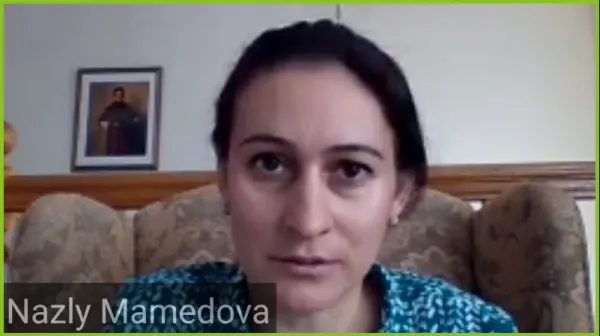
Professionals who work on the front lines of protecting the rights of people held in Ohio detention centers, jails, and prisons are calling for swift action to prevent COVID-19 outbreaks.
“U.S. immigration detention facilities are the perfect arrangement to cause an explosion of COVID-19 cases,” said Dr. Laura Chambers-Kersh, a family physician based in Beavercreek. Detainees live in “cramped, overcrowded quarters with limited access to basic preventive measures like soap and water, hand sanitizer, and the ability to social distance,” she said in a March 24 press conference.

Are you reading the Free Press online while "sheltering in place?" It's astonishing how fast life changed. Governor DeWine listened to the science of epidemiology and to Ohio Public Health director, Amy Acton, now a local shero for her knowledge and empathy. Instantly, the 24 hour news cycle was gifted with a hydra-headed crisis and a mission to tell the stories and their impacts on our elections, the economy, health care, self care, poverty, food access, energy use - our way of life, really, here, in other states, and in countries around the world.
Business as Usual: Interrupted! A virus, smaller than a bacteria, invisible without an electron microscope, whose relatives cause the common cold and influenza, is so contagious that a global pandemic now threatens our way of life. Perhaps only for a matter of months if we are able to flatten the rising curve of infections, but the aftermath is hard to predict. As Yogi Berra put it, "It's tough to make predictions, especially about the future."

The urgent need for a vaccine
Public health experts say that if the COVID-19 epidemic is not successfully contained, it could become a global pandemic, perhaps spreading to 80% of the world's population. With a 1% mortality rate, this would mean that 70 million people would die of the disease. With a 2% mortality rate, the total number of deaths would be twice that number, 140 million people. Comparable numbers of people have died in the tragic wars and pandemics of the past. There is a serious danger that it might happen again.
Perhaps the best way to avoid such a tragedy would be to quickly develop an inexpensive and effective vaccine against the COVID-19 virus, and to distribute it very widely, free of charge, with the support of government funds. The most promising techniques for doing so, in my opinion, are the methods of monoclonal antibodies and gene-splicing.
Monoclonal antibodies
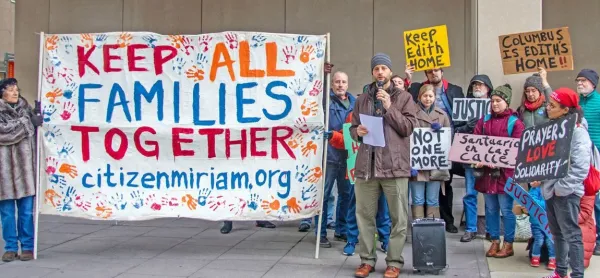
Calling on Sherrod Brown
There was an organized commotion outside Senator Sherrod Brown’s office on High Street on January 29 to call attention to National Sanctuary Action Day. A few dozen people from the support group of Miriam Vargas, who is currently in Sanctuary in a Columbus church, joined together to amplify the voices of people living in Sanctuary around the country and to urge the Senator to meet with them.
The protestors held a banner that said “Keep All Families Together,” and gave speeches calling for the local legislators to take action in support of undocumented people. Miriam has questions she wants answered by Senator Brown: What is the senator doing in Congress to push for immigration reform? How can they build a path forward toward legal residence for all people currently in Sanctuary?
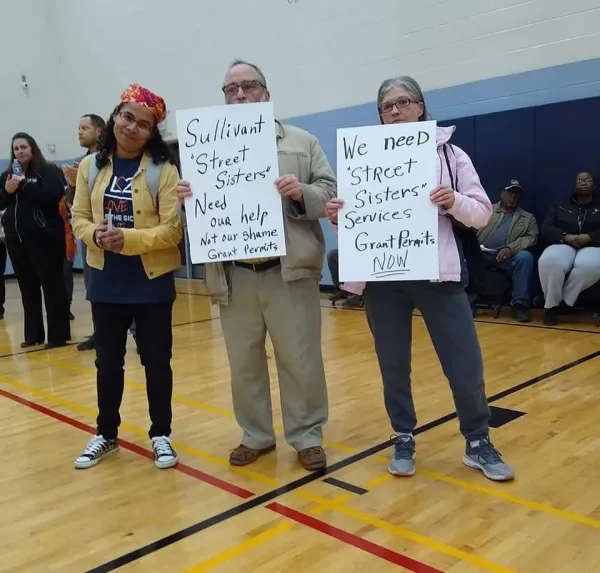
Martin Luther King said, “Injustice anywhere is a threat to justice everywhere.”
1DivineLine2Health (1DL2H), a grassroots community 501(c)3 nonprofit organization, was denied the purchase of a house to be used as a Drop-In Center for the Street Sisters on Sullivant Avenue who are often murdered, raped and beaten. Currently the City does not want to issue the permits for the house that was donated to 1DL2H and is demanding 13 different construction items to be completed before allowing the building to be used as a drop-in center.
On the week of Dr. Martin Luther King Jr.’s birthday, Mayor Ginther came to the Hilltop to give his gratuitous speech to roll out the Hilltop Envision plan and ignored the picketing of 1DL2H supporters. Last year, the mayor walked away three times from me when I implored him to exercise his authority and help the west side human trafficking victims. He gave the usual shrug-off, telling me “Someone will get back to you.”