Anti-War

“Peace” clubs in U.S. schools are likely to teach that a local bully is afraid and in need of help. They are much less likely to teach that about entities involved in the actual subject of peace (meaning the absence of war), such as — to take the example momentarily most prominent in U.S. propaganda — North Korea.
“Ignorance about the Korean war,” writes Blaine Harden, “has . . . led to the cartoonish ahistorical understanding many Americans still have of contemporary North Korea. They know that a family of clownish-looking dictators named Kim has created a hermit state armed with nuclear weapons. They know that it is wildly belligerent toward the United States. But most do not know that the fears of North Korea’s isolated citizens are firmly rooted in history: they are afraid that Americans might once again raze their country. Thanks to the bombs and napalm dropped by the U.S. Air Force during the Korean War, the Kim family is able to stoke anti-American hatred and perpetuate its rule, all while telling a terrifying, fact-based story that most Americans have never heard.”

I spoke recently at a conference on America’s war party where afterwards an elderly gentleman came up to me and asked, “Why doesn’t anyone ever speak honestly about the six-hundred-pound gorilla in the room? Nobody has mentioned Israel in this conference and we all know it’s American Jews with all their money and power who are supporting every war in the Middle East for Netanyahu? Shouldn’t we start calling them out and not letting them get away with it?”
It was a question combined with a comment that I have heard many times before and my answer is always the same: any organization that aspires to be heard on foreign policy knows that to touch the live wire of Israel and American Jews guarantees a quick trip to obscurity. Jewish groups and deep pocket individual donors not only control the politicians, they own and run the media and entertainment industries, meaning that no one will hear about or from the offending party ever again. They are particularly sensitive on the issue of so-called “dual loyalty,” particularly as the expression itself is a bit of a sham since it is pretty clear that some of them only have real loyalty to Israel.
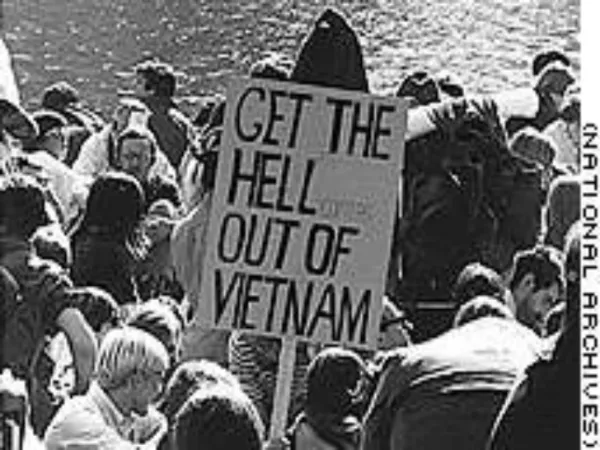
“From Ia Drang to Khe Sanh, from Hue to Saigon and countless villages in between, they pushed through jungles and rice paddies, heat and monsoon, fighting heroically to protect the ideals we hold dear as Americans. Through more than a decade of combat, over air, land, and sea, these proud Americans upheld the highest traditions of our Armed Forces.”
OK, I get it. Soldiers suffer, soldiers die in the wars we wage, and the commander in chief has to, occasionally, toss clichés on their graves.
The words are those of Barack Obama, five-plus years ago, issuing a Memorial Day proclamation establishing a 13-year commemoration of the Vietnam War, for which, apparently, about $65 million was appropriated.
“There are no good options,” Brian Williams said the other night on MSNBC, launching a discussion about North Korea with the implication that war — maybe nuclear war — is the only solution to the problem it represents.
We’ve been cradling our own suicide for seven decades. The baby’s eyes open . . .
When politicians are feeling the heat, they start a war and their popularity goes up even if the war is unnecessary or completely ridiculous. Donald Trump, the presidential candidate who promised that he would not take the nation into another Middle Eastern war, did so when he launched a fifty-nine cruise missile barrage against a Syrian Air Base even before he knew for sure what had happened on the ground. It was totally stupid but proved to be popular, even among talking heads and Congressmen, some of whom described his action as “presidential” in the best sense of the word.
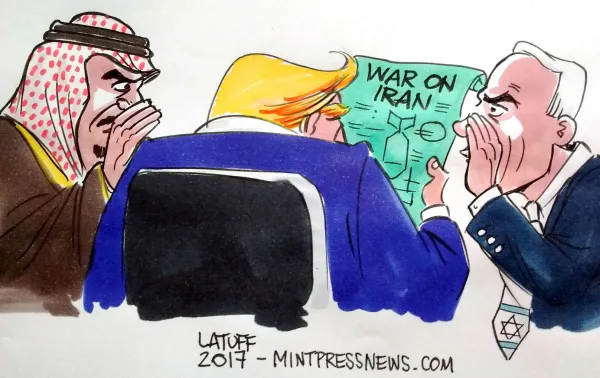
Something extraordinary has happened in Washington. President Donald Trump has made it clear, in no uncertain terms and with no effort to disguise his duplicity, that he will claim that Tehran is cheating on the nuclear deal by October—the facts be damned. In short, the fix is in. Trump will refuse to accept that Iran is in compliance and thereby set the stage for a military confrontation. His advisors have even been kind enough to explain how they will go about this. Rarely has a sinister plan to destroy an arms control agreement and pave the way for war been so openly telegraphed.
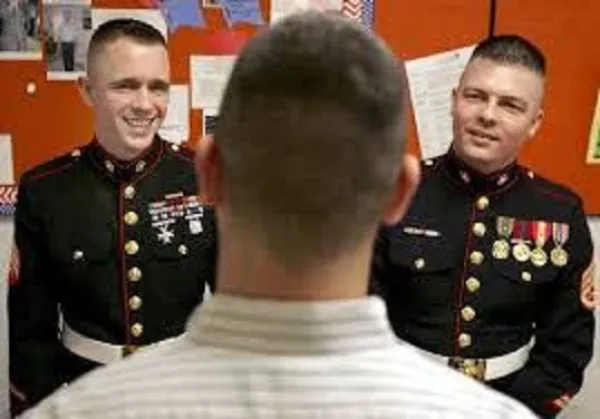
Ominous developments in three states this summer – Oregon, Texas, New Jersey, and one city – Chicago, provide a glimpse into the Pentagon’s new playbook to recruit soldiers from high schools across the country. In brief, the military has been engaged in a robust lobbying campaign to lower academic standards to make it easier to recruit youth.
New recruits have long been required to hold a high school diploma or a GED certificate. This requirement is a major impediment to finding enough soldiers to meet annual targets, but even when struggling students barely manage to graduate, the Pentagon has developed a plan to marshal more of them into the military.

BANGKOK, Thailand -- After the U.S. sold weapons to Thailand worth $1
billion during the past decade, this year's $261 million in U.S. arms
deals will strengthen the current coup-installed military government
against political opponents and Islamist separatists, symbolizing
President Trump's unconcern for human rights, according to analysts
and dissidents.
"Please understand, the government does not throw state money into
just buying military hardware and weapons as some people claim," coup
leader Prime Minister Prayuth Chan-ocha said on July 11 defending the
armed forces' expansion and increased spending.
Buddhist-majority Thailand purchased weapons from the U.S., China,
South Korea, Russia Ukraine, Israel, Sweden, Italy and elsewhere
during the past 10 years under military and civilian governments.
Purchases include tanks, helicopters, armored vehicles, patrol
vessels, submarines, combat aircraft and other armaments.
"Thailand has no real national security enemies. Internal security