
Anti-War
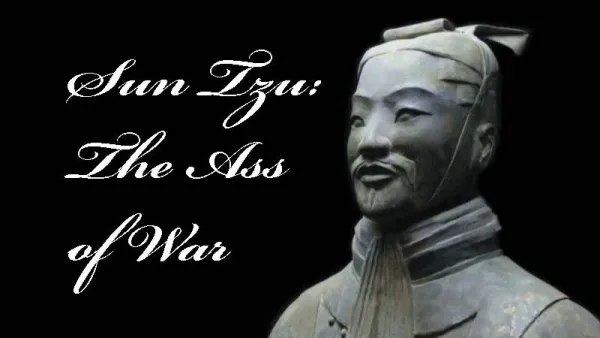
Sun Tzu, whose book, The Art of War, was written some 2,500 years ago during a period of constant war, and popularized in the West some 100 years ago (just in time for industrialized warfare), is the leading example of what’s wrong with digging up ancient platitudes as guides for action today in the areas of war and peace.
“That the impact of your army may be like a grindstone dashed against an egg — this is effected by the science of weak points and strong.”
This “wisdom” provides nothing to the modern warmonger on his own terms, and even less to the advocate for peace; yet it’s imagined to be relevant to both, to create common ground for both, and to embody deep timeless meaning.
“But a kingdom that has once been destroyed can never come again into being; nor can the dead ever be brought back to life.”
Read that solemnly as if discovering amazing new insights. If you can, you are a better war artist than I.

We’re supposed to think that the United States is threatened for no reason by irrational subhuman monsters arising out of the less important bits of the earth found beyond U.S. borders.
We’re supposed to think that the bigger the U.S. military is, and the more places it’s based in around the world, the better it can counter those monsters.
We’re supposed to think that other nations don’t have this sort of problem or depend on this sort of solution because the United States does it for them.
We’re supposed to think that selling and giving weapons to the rest of the world makes the world safer.
We’re supposed to think that arms dealing and militarism are economically beneficial.
We’re supposed to think that helping people would cost more, economically, than killing them.
We’re supposed to think that U.S. wars kill few people, most of them soldiers.
We’re supposed to think that wars happen on things called battlefields.
We’re supposed to think that genocide is something different from war and can be prevented with war.
We’re supposed to think that war has always been present in human existence and always must be.
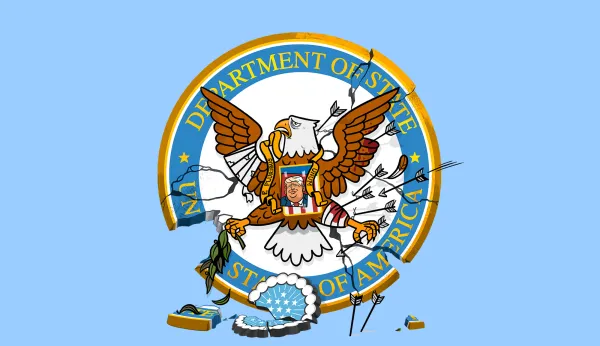
The Stop the War Coalition has just published a short summary of what’s wrong with foreign policy, going through a partial list of current wars one by one.

NATO’s recent provocative decision to build up its military forces across Europe by sending four new multinational battalions to Lithuania, Latvia, Estonia and Poland, comes at a time of great turmoil and intense questioning of global security with new forces for both good and evil straining to make their mark on the course of history. This weekend, at the Vatican, Pope Francis held an international conference to follow up on the recently negotiated treaty to prohibit the possession, use, or threat of use of nuclear weapons leading to their complete elimination which was negotiated in the UN General Assembly this summer by 122 nations, although none of the nine nuclear weapons states participated. Honored at the conference were members of the International Campaign to Abolish Nuclear Weapons (ICAN) which worked with friendly governments to hold nuclear weapons unlawful, and has recently been awarded the 2017 Nobel Peace Prize for its successful efforts.

Exactly at the 11th hour of the 11th day of the 11th month, 99 years ago, people across Europe suddenly stopped shooting guns at each other. Up until that moment, they were killing and taking bullets, falling and screaming, moaning and dying. Then they stopped, on schedule. It wasn’t that they’d gotten tired or come to their senses. Both before and after 11 o’clock they were simply following orders. The Armistice agreement that ended World War I had set 11 o’clock as quitting time.
http://worldbeyondwar.org/peace-studies-can-help-end-wars
Remarks at Peace and Justice Studies Association Conference in Birmingham, Alabama, October 28, 2017.
Thank you for inviting me. Can everyone who thinks that war is never, and can never be, justified please raise your hand. Thank you. Now if you think every war is always justified. Thank you. And finally all the moderates holding the balanced subtle middle ground: some wars are justified. Thank you. You may not be surprised to hear that this room is not typical of this country. Typical is for absolutely everyone to pile into that last group.
The relationship between peace and war is clearly not understood by the U.S. public as along the lines of that between alive and dead. Peace and war are things people imagine can coexist.
Let’s read a New York Times editorial from Monday:
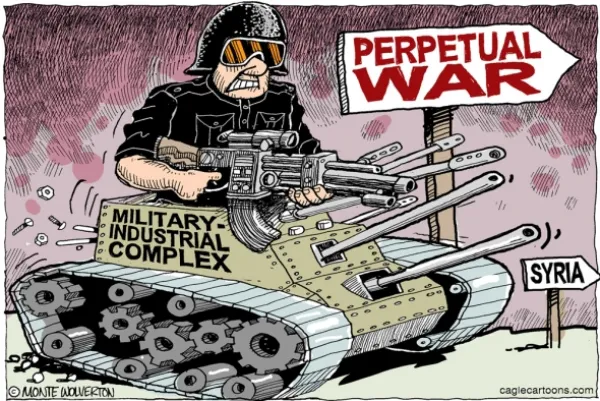
“The United States has been at war continuously since the attacks of 9/11 and now has just over 240,000 active-duty and reserve troops in at least 172 countries and territories. While the number of men and women deployed overseas has shrunk considerably over the past 60 years, the military’s reach has not. American forces are actively engaged not only in the conflicts in Afghanistan, Iraq, Syria and Yemen that have dominated the news, but also in Niger and Somalia, both recently the scene of deadly attacks, as well as Jordan, Thailand and elsewhere.”
That’s a big “elsewhere” that includes Libya, Pakistan, the Philippines, etc.
“An additional 37,813 troops serve on presumably secret assignment in places listed simply as ‘unknown.’ The Pentagon provided no further explanation. There are traditional deployments in Japan (39,980 troops) and South Korea (23,591) to defend against North Korea and China, if needed,”

America’s endless war quietly moves across the broken nations of the world. Every so often, U.S. soldiers die, as four Green Berets did several weeks ago in . . . Niger.
And the news was more about the adequacy of presidential condolences to the families of the slain soldiers than the point of our military presence there, i.e., why they died. An official sentiment was uttered by White House press secretary Sarah Huckabee Sanders on Oct. 5:
“Our thoughts and prayers are with the families and friends of the fallen service members who made the ultimate sacrifice in the defense of the freedoms we hold so dear.”
They died for a cliché. This is the best the country could offer, but it’s hardly surprising, much as it rips the grief and the outrage wide open. They died in defense of no one’s freedom except those who wage and profit from endless war, and the fake media fuss over the nature of their condolences simply further shields this fact from public view.
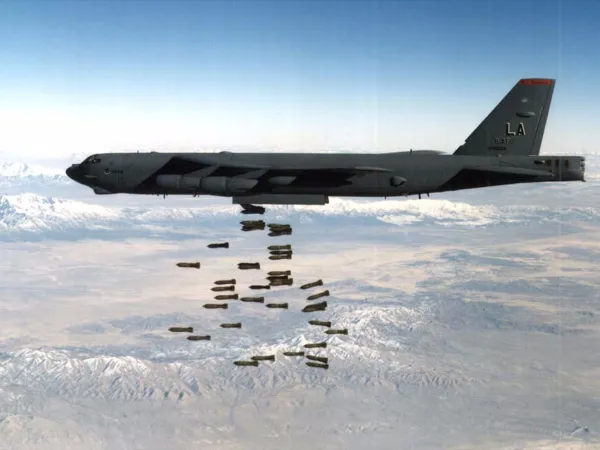
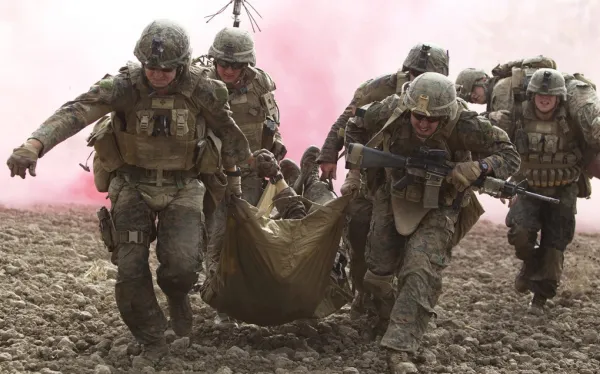
The Afghanistan War documentary by Ken Burns III may someday be set for release in Spring 2074.
Or maybe not. The peace movement in the U.S. made Vietnam, rather than Korea, a topic for Burns. The peace movement is struggling to make people in the United States aware that the war on Afghanistan even exists, much less that it is entering its 17th year — making it something that people who still don’t recognize Native Americans as full humans call “the longest U.S. war.”
If there ever is such a PBS account of Vietghanistan, it will no doubt steer clear of the illegality, the lasting damage, and the wisdom of those who rightly opposed the crime before it began and all the way through. Yet such a film’s content will likely be so awful, and depict such evil madness, clearly counterproductive on its own terms, that some people will finally catch on.
Or we could skip to the future and just watch War Machine with Brad Pitt right now, which gets a lot of it right.