
The Free Press is bringing back a Reviews section after some absence. We hope to review plenty of events around town. Check back frequently and if what\'s going on is any good.
Arts & Culture
Image
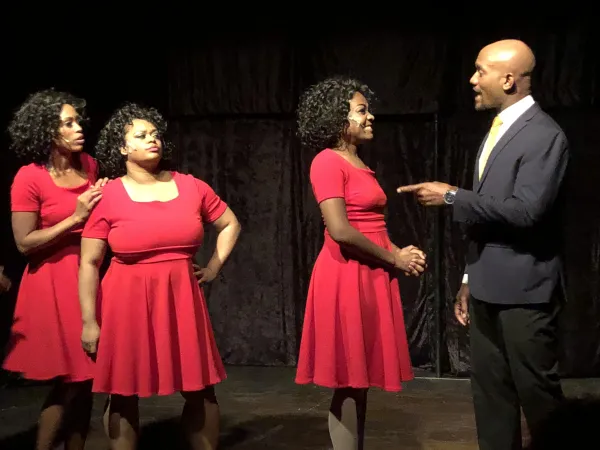
Director/choreographer Tor Campbell’s rendition of Dreamgirls is an extremely exciting, energetic version and vivid vision of the beloved musical that opened on Broadway in 1981 and onscreen in 2006. With a cast of dozens (including five performers who been part of national Broadway tours), the almost three hour production pulsates with vibrant dancing, singing and live music played by a quartet.
The play, of course, appears to be suggested by actual Motown and other major musical acts, in particular the Supremes, here called the Dreamettes then the Dreams, and finally as Deena Jones (the sultry Shaunte Massard, whose stage credits include Fiddler on the Roof and Ain’t Misbehavin’) & the Dreams. James “Thunder” Early, aka “Jimmy,” seems to be a cross between James Brown with a dash of Little Richard is played mostly for laughs by the scene stealing, charming Chad Ra’shun, who provides comic relief and kinetic pyrotechnics.
Image
It never fails to amaze (and amuse) me how movies mirror reality and are emanations of the collective psyche and/or motion picture prophecies. Just days after the premiere of The First Purge, about a race war aimed at exterminating African Americans in Staten Island, a Black Staten Island resident - Congolese immigrant Patricia Okoumou - heroically climbed the Statue of Liberty on July 4 to protest the racist Trump regime’s cruel purging of refugees, seekers of asylum and other immigrants.
Image
Trivia Pursuit Question of the Review: What great film director tried to adapt Theodore Dreiser’s “An American Tragedy” in the early 1930s?
One of the best things that theater and film can do is take us long and ago and far away to experience actual historical events and figures. An excellent case in point is William Manus’ WWII-era set Their Finest Hour: Churchill and Murrow, which co-stars Michael Karm as the Prime Minister, Tyler Cook as the CBS broadcaster and Chantelle Albers as Pamela Churchill Harriman. This drama, which brings alive the Battle of Britain and real life personages, is on the boards in L.A. at the Brickhouse Theatre through July 22.
Image
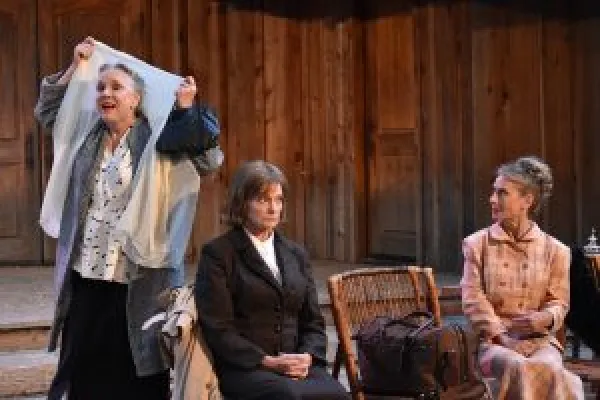
Noël Coward meets John Osborne in Enid Bagnold’s mid-1950s The Chalk Garden. This funny yet pointed two-acter set in an upper crust country house in Sussex, England is sort of somewhere between a Victorian era drawing room comedy and those British class conscious “Kitchen Sink” dramas that emerged mid-century in the UK.
To be sure, there is lots of witty repartee between the wannabe grand dame Mrs. St. Maugham (Ellen Geer), her (on- and offstage) daughter Olivia (Willow Geer), granddaughter/daughter Laurel (Carmen Flood), and the other dramatis personae. Although it may not be as enraged as Osborne’s classic Look Back in Anger, there is also a strong undercurrent of class conflict in Bagnold’s not-so-genteel play. (Both works emerged around the same time, although Bagnold, who was 64 when she wrote Chalk and had married into the upper class, had more regard for tradition - if not an unswerving allegiance to it.)
Image
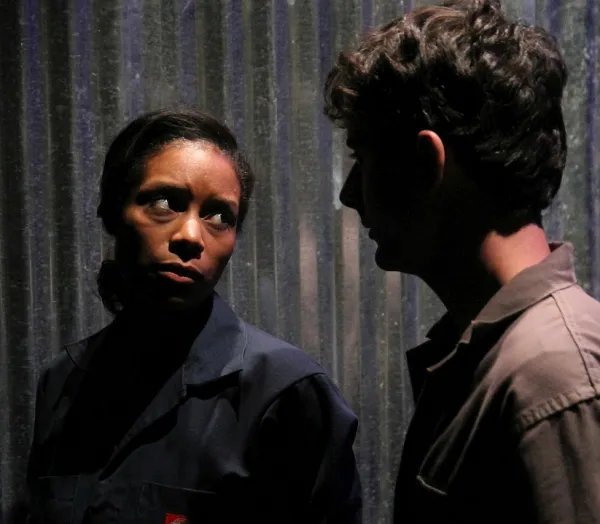
Naomi Wallace’s genre (and gender) blending Slaughter City is a cross between a Clifford Odets type of play about the working class and a Rod Serling TV episode set in “a fifth dimension beyond that which is known to man… as vast as space and as timeless as infinity… the middle ground between light and shadow, between science and superstition, and it lies between the pit of man's fears and the summit of his knowledge… the dimension of imagination.”
Indeed, imagine Waiting for Lefty combined with the Twilight Zone and you’ll get a sense of this two-acter presented by the Coeurage Theatre Company. Slaughter City takes place (mostly) circa 1991 in a meat packing plant. In its depiction of and concern for assembly line workers and union issues, Slaughter is in the vein of the Proletarian Dramas by people’s playwrights such as Odets, John Howard Lawson, Marc Blitzstein and Bertolt Brecht. Slaughter’s dialogue refers to the Industrial Workers of the World, scabs, the horrendous 1911 Triangle Shirtwaist Factory fire, strikes and other blue collar subjects Joe Hill, Paul Robeson or Woody Guthrie might have sung ballads about.
Image
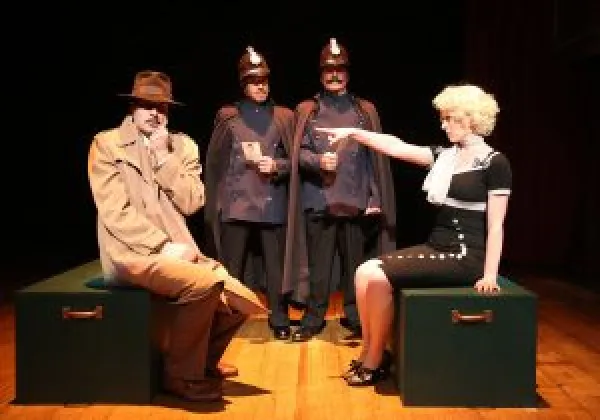
Review Fun Fact: “Mr. Memory” was based on an actual vaudeville-like act.
You don’t have to be the British music hall savant “Mr. Memory” - or a man who knew too much - to remember that Alfred Hitchcock was nicknamed “the Master of Suspense.” But if Hitch had directed the Patrick Barlow stage adaptation of The 39 Steps - which toured England and scored the Olivier Award for Best New Comedy in 2007 then ran on Broadway for two years - instead of his spy movie of the same name, the famed British movie director might have been called “the Master of Silliness.”
Image
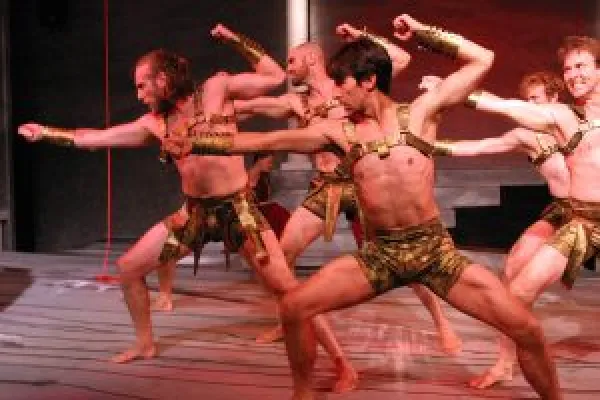
“Updated” and “re-imagined” versions of classics often misfire but like the transformation of Romeo and Juliet into West Side Story Eduardo Machado’s reworking of Aristophanes’ Lysistrata is one of the best. With Lysistrata Unbound, the Cuban playwright has transformed the comedy into a Greek tragedy for our own militarized times, but in doing so definitely retains the spirit - if not the letter - of Aristophanes’ biting 411 BCE satire, Just as Spike Lee did in Chi-Raq, his 2015 anti-gun, anti-gang violence adaptation of Lysistrata.
Image
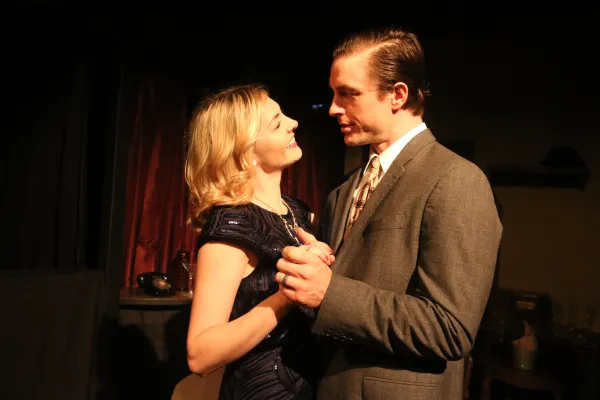
Trivia Pursuit Question of the Review: What movie ends with the song “We’ll Meet Again” and what happens when this WWII era song is heard?
One of the best things the dramatic arts can do is to transport us through time and space to long ago and far away and to bring back to life actual figures and historical events. Williard Manus’ Their Finest Hour: Churchill and Murrow does this and much more with his fine two hour two-acter, four-hander mostly set during the Battle of Britain. For in addition to resurrecting legendary CBS broadcaster Edward R. Murrow (Tyler Cook) and famed British Prime Minister Winston Churchill (Michael Karm), Manus tosses Murrow’s mistress Pamela Churchill Harriman (carnally reincarnated by seductive Chantelle Albers) into the heady mix, proving that the personal is not only political, but historical as well.
Image
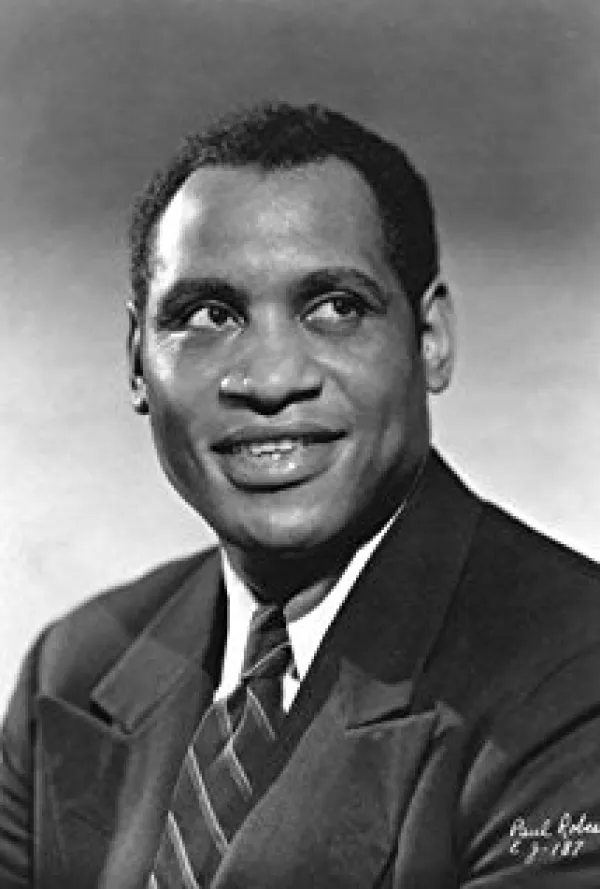
K.B. SOLOMON, the renowned Paul Robeson re-enactor, performs at the next Marxist Movie Series screening: Native Land.
This classic 1942 pro-union, anti-racist, anti-fascist docu-drama was the final film by the leftist collective Frontier Films and of Paul Robeson, born April 9, 1898. Fed up with Hollywood’s celluloid stereotypes of Blacks, Robeson quit the movies. But before doing so, the iconic African American athlete/singer/actor/activist narrated and sang “American Day” and “Dusty Sun” in the independently produced, anti-KKK Native Land.
Native Land was directed by two of the New Deal era’s top progressive filmmakers, Frontier Films’ Leo Hurwitz and Paul Strand. Both were cameramen for 1936’s The Plow That Broke the Plains and worked on 1936’s Redes (aka The Wave, about poor Mexican fishermen), and the 1937 Spanish Civil War documentary Heart of Spain. Hurwitz directed the 1948 doc about racism, Strange Victory.
Image
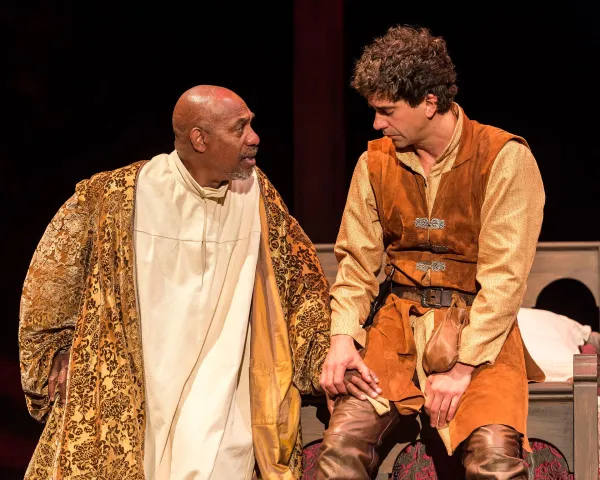
In his Los Angeles theatrical debut in Shakespeare’s Henry IV Tom Hanks proves he is as talented a stage actor as he is on the screen in Saving Private Ryan, Forrest Gump, The Post, etc. Wearing (I hope for Rita Wilson’s sake) a fat suit, bearded and with long flowing grayish/ whitish hair, Hanks - almost unrecognizable as the portly, comic character Sir John Falstaff - not only opened the epic about England’s power struggles but rescued the play during a “medical emergency.”
When the action during the first act of this Shakespeare Center of Los Angeles production was interrupted due to an ailing theatergoer, Hanks took to the boards, good-naturedly waving his sword at viewers, “ordering” them back into their seats and so on. Hanks’ improvisational panache saved the moment and in that hallowed show biz tradition, eventually the show went on, performed under the stars at the West L.A. V.A. Campus’ Japanese Garden. (Although the delay added time to the play’s already three hour-plus length, putting me in mind of the title of Orson Welles’ 1966 Falstaff film Chimes at Midnight).