
Your source for alternative media coverage of the 2008 election alongside the 2004 elections and the related voter irregularities in Ohio.<br><br>Additional articles about the elections by <a href=http://www.freepress.org/columns/display/3>Bob Fitrakis</a> and <a href=http://www.freepress.org/columns/display/7>Harvey Wasserman</a> are in the <a href=http://www.freepress.org/columns>columns</a> section.
<br><br>
Those interested in contributing statistical skills to the project may want to contact <a href=mailto:truth@freepress.org>The Free Press</a> and <a href=http://uscountvotes.org target=usvotes>uscountvotes.org</a>.
Election Issues
Image
In the lead-up to the November 3 referendum on pot legalization in Ohio, reputable mainstream polls show it winning.
Then, amidst the usual “glitches” that distinguish the Buckeye State’s electronic elections, it officially failed by a 2:1 margin.
The outcome is a virtual statistical impossibility. But it fits a pattern that has made Ohio elections infamous since the 2004 “selection” of George W. Bush over John Kerry.
As in 2004, this year’s balloting was supervised by a Secretary of State with a heavy partisan stake in the outcome.
In 2004, the presidential voting was supervised by J. Kenneth Blackwell, who simultaneously served as the co-chair of Ohio’s Committee to Re-Elect Bush and Cheney.
In 2015, the general voting was supervised by Jon Husted, who vehemently opposed pot legalization and threatened legal action against the sponsors of the referendum.
Image
Official vote counts in Ohio indicate a major defeat for the nation’s first corporate-sponsored marijuana legalization referendum.
But it’s complicated.
And the ultimate issue is far from settled, as cannabis supporters are looking to 2016 to finally make pot legal here.
Amidst the usual “glitches” in vote counting, the state election apparatus says Issue 3 was defeated by about 2:1. Ohio’s electronic voting machines usually “break down” somewhere in the state during a major election, and the reporting of this year’s results were subjected to the expected delays.
Issue 3 was supported by a commercial cartel that spent $25 million pushing a plan to profit from legal marijuana sales.
For a full pre-election discussion of the issue, listen to:
http://prn.fm/solartopia-green-power-and-wellness-hour-10-29-15/
Image
When you are lazy, ignorant and not willing to do research – accuse your more-informed opponents of being “conspiracy theorists.” A recent Columbus Dispatch editorial utilized this technique in its defense of Ohio’s antiquated and easily hacked voting apparatus.
The Dispatch, with few facts or statistics, stated that, “Secretary of State Jon Husted claims ‘…Ohio’s current voting equipment should be in fine shape through the 2016 election.’” In a subhead, the Big D also claimed “Transparent bipartisan approach should head off conspiracy theorists.”
Here are some points to consider.
In 2005, highly-regarded scholar Tracy Campbell published Deliver the Vote: A History of Election Fraud, and American Political Tradition 1742-2004. The book makes a solid case detailing that election fraud is the norm throughout U.S. history.
Image
A revitalized federal commission on election oversight invites public input just as a major national study predicts massive problems in 2016 because of outmoded election tabulation software.
The much-embattled and belittled U.S. Election Assistance Commission wants public comments to help guide its work following appointment in January of three commissioners and renewed funding after GOP congressional critics sought to shut it down.
 Meanwhile, U.S. localities face a crisis in tabulating votes accurately and securely because many of them are using outdated software that can fail or even be hacked. That’s according to America’s Voting Technology Crisis, a study by the Brennan Center, which announced its findings last month at the National Press Cluband in an Atlantic Magazine article.
Image
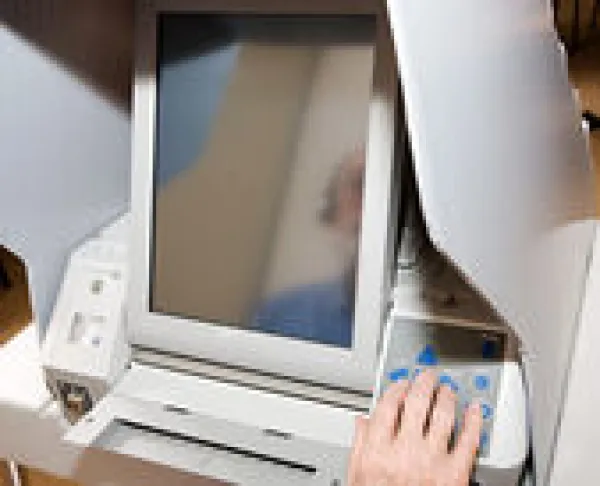
COLUMBUS, Ohio — The offices in a former Kohl’s department store here look inconsequential enough — linoleum floors, fluorescent lights and cookie-cutter furniture. But what happens in this strip mall, and other equally nondescript settings nationwide, could in fact be crucial to the struggle over America’s voting laws and apparatus — a struggle that may go a long way toward determining the outcome of next November’s presidential election.
The Franklin County Board of Elections moved to the north side of this capital city last year after using the site in 2012 to accommodate the rush of people who cast their ballots during Ohio’s early voting period. But that early voting policy is still not set in stone — its duration and details have been stretched and squeezed repeatedly over the past few years by both state law and court order, part of a bitter clash between Democrats and Republicans over access to the ballot, electoral integrity and resources.
Image
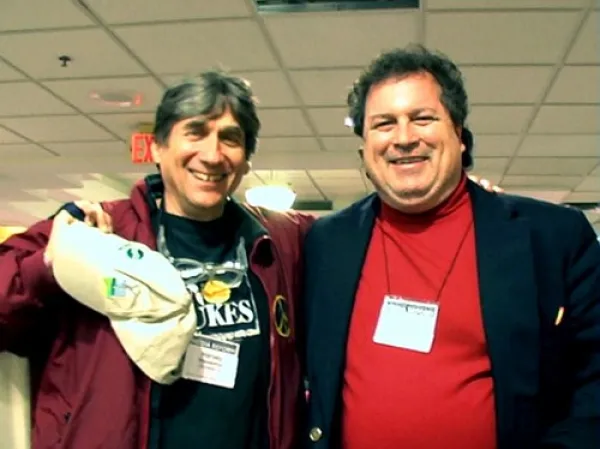
Progressive Radio Network's Solartopia Green Power & Wellness Show
Three solid hours on election theft and what to do it before the GOP steals another one in 2016:
http://prn.fm/solartopia-green-power-and-wellness-hour-why-hillary-cant-win-07-14-15/
http://prn.fm/solartopia-green-power-and-wellness-hour-why-hillary-cant-win-part-2-07-21-15/ http://prn.fm/solartopia-green-power-and-wellness-hour-why-hillary-cant-win-part-3-07-28-15/ For a good time, see Pete Seeger, Dar Williams, David Bernz & the Rivertown Kidz sing "SOLARTOPIA!" at www.solartopia.org
Image
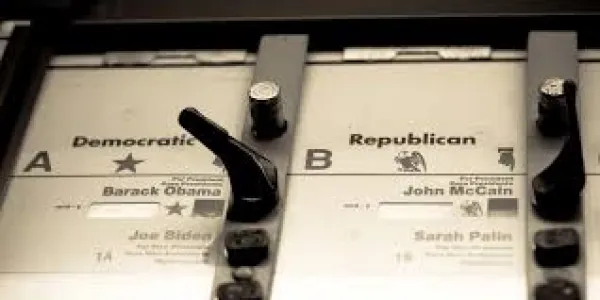
The way our electoral process now stands, electronic voting machines guarantee a Republican victory in 2016.
No matter what she does, Hillary Clinton—-or any other Democratic nominee—- cannot be elected without a fundamental change in the basic mechanics of how our votes are cast and counted.
It is a profoundly disturbing reality that casts a long shadow over all that’s wrong with our electoral system, no matter who one favors for public office.
Just 15 years after the theft of the 2000 election, the Democrats have finally begun to talk about voter rights and various methods to guarantee public access to the polls.
But for a non-Republican to win the White House next year, two virtually impossible things must happen: the Democrat must win by absolutely indisputable margins far beyond simple majorities—-10% or more—- in the key states whose electronic tallies will swing the Electoral College.
Image
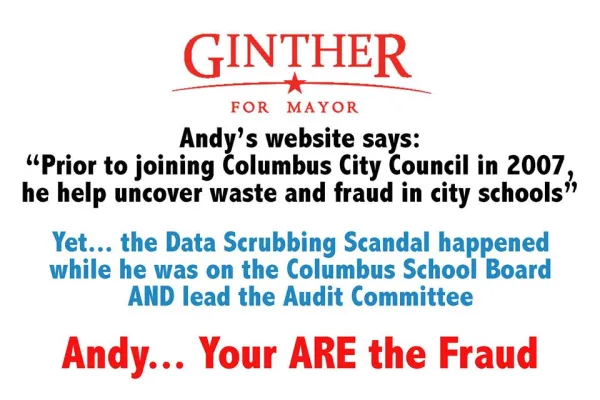
Columbus elector Jonathan C. Beard today filed an elections Complaint seeking to end false campaign statements being made by Columbus mayoral candidate Andrew Ginther and his surrogates. My Complaint, filed with the Ohio Elections Commissions, alleges multiple violations of ORC 3517.21, which bars false statements to promote or oppose candidates in elections for public office. I believe the state of Ohio has a compelling interest in enforcing honest political debate, and have asked for that result.
Image
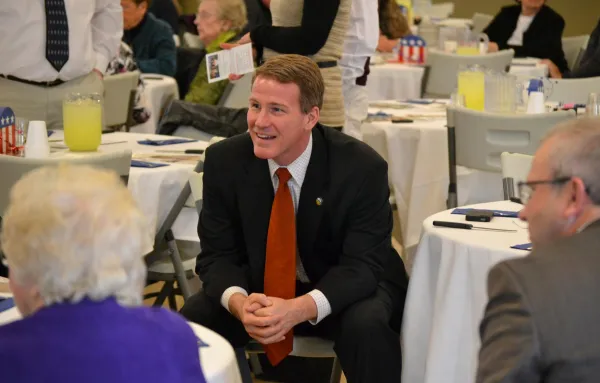
Federal Judge Michael Watson, fearing democracy might break out in Ohio, upheld a Republican state law that makes it virtually impossible for minor parties to get on the ballot. Judge Watson sided with Ohio's Republican Secretary of State Jon Husted, who argued that if minor political parties were treated as they are in other democracies, it would add "additional cost" and would cause “the risk of overcrowded ballots and frivolous candidates."
The United States, recently rated last in election integrity among the world's 76 long-standing democracies, is the only democracy that has a two-party system. America's two-party system is often referred to as "American Exceptionalism." Every other democracy has three or more political parties.
The Green Party of Ohio stands alone as the only ballot-qualified minor party in the Buckeye State.
Image
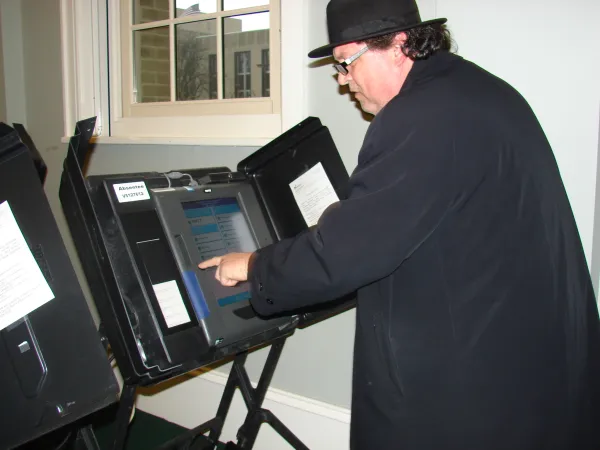
Over fourteen hundred international election experts gathered data last year and pronounced the United States last in election integrity among long-standing democracies. On a 100-point scale, the U.S. received an integrity rating of 69.3 percent -- one notch ahead of the narco-drug state Colombia at 69.1 percent and just behind the nearly-narco-drug state of Mexico at 69.8 percent, neither country with a long-standing democracy.