
Your source for alternative media coverage of the 2008 election alongside the 2004 elections and the related voter irregularities in Ohio.<br><br>Additional articles about the elections by <a href=http://www.freepress.org/columns/display/3>Bob Fitrakis</a> and <a href=http://www.freepress.org/columns/display/7>Harvey Wasserman</a> are in the <a href=http://www.freepress.org/columns>columns</a> section.
<br><br>
Those interested in contributing statistical skills to the project may want to contact <a href=mailto:truth@freepress.org>The Free Press</a> and <a href=http://uscountvotes.org target=usvotes>uscountvotes.org</a>.
Election Issues
Image
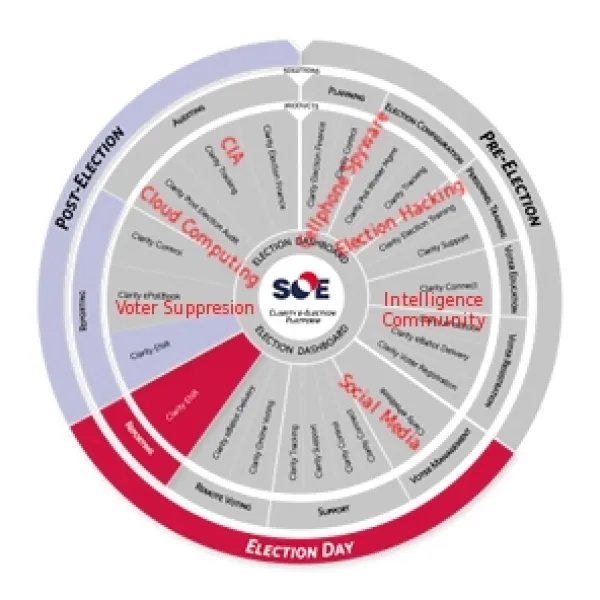
Free Press readers may be familiar with Scytl, the promoter of online and mobile voting, and their apparent connections to the intelligence community. Renewed research into Scytl has revealed new connections to the intelligence community, new market positioning, and new opportunities for both personalized surveillance and electronic election fraud.
Scytl's 2012 entry into the American election market occurred through the purchase of SOE software, a Tampa based manufacturer of election management and reporting software known as the Clarity suite. Scytl initially maintained essentially a front address in Virginia while digesting SOE during the the 2012 election cycle. Since then there has been a pattern of SOE rebranding and reorganizing itself along with a merger and new set of strategic partnerships.
Image
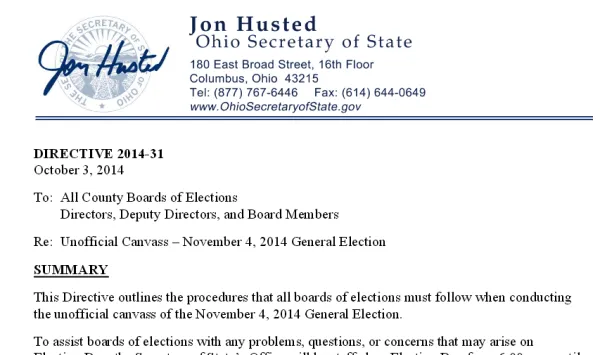
On October 3, Ohio Secretary of State Jon Husted issued a directive that no longer requires county boards of elections to send precinct-by-precinct level data to his office in time-based increments on Election Day. The new requirement is to provide their county’s “summary results” only, instead of individual precinct-by-precinct data.
On October 2, the Columbus Free Press published an article entitled “What’s up with Ohio’s election night reporting system? Nobody really knows what happens on Election Day” by Bob Fitrakis and Gerry Bello. The article pointed out that an existing Ohio Secretary of State directive had very specific requirements for county boards of elections to send precinct-by-precinct data starting once their first precinct reported, and continuing on a time schedule of every 15 minutes, 30 minutes or by the hour.
Image
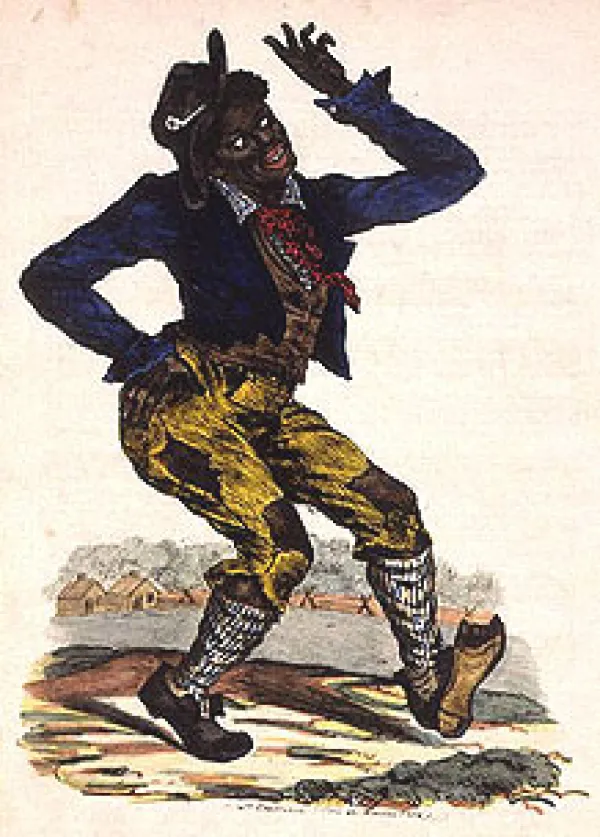
Jim Crow is already the big winner in this year’s election.
The corporate elite needs him to gouge the planet, wage perpetual imperial war and rule the rest of us.
So the voting rights of millions of student, elderly, black, Hispanic and other citizens are being lynched.
Which may now decide control of the US Senate, many state legislatures...and the White House in 2016.
The corporate-Christian right has long used the drug war to disenfranchise millions of citizens of youth and color. Gay and reproductive rights, feminism and the politics of hate have mobilized Christian crusaders to flood the polls for the GOP.
But we have turned the corner on the culture war. With the winding down of marijuana prohibition, widespread gay rights victories and more, Republicans now need the outright destruction of democracy itself to win an election:
Image
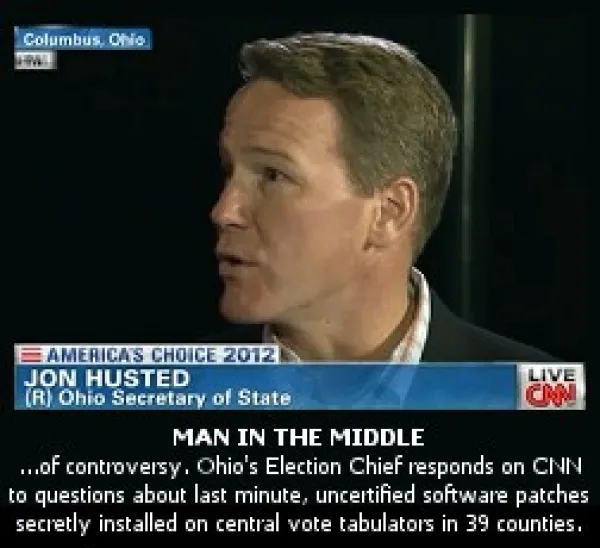
Will precinct-by-precinct, 15 minute-by-15 minute election night results that are available only to the Ohio Secretary of State Jon Husted, compromise the security of the statewide election?
In Ohio’s notorious 2004 presidential election, called by pollster Lou Harris “one of the most corrupt in U.S. history,” one of the signs of election tampering was the impossible results flowing from precincts in Republican rural Ohio. In Cyde, Ohio they initially reported 130 percent voter turnout.
In Perry County, one precinct came in at 120 percent, another at 114 percent. In Miami County, the Concord Southwest precinct claimed 679 out of 689 voters cast ballots overwhelmingly for Bush. They later admitted to The Free Press that only 549 people signed into the polls and that the other votes had been the result of bad computer tallies.
Now with Ohio’s new election night reporting system it is easier than ever to stack the deck and bring in the cybervote at the precinct level.
Secretary of State’s strange secret software patches suspected purpose to steal election
Image
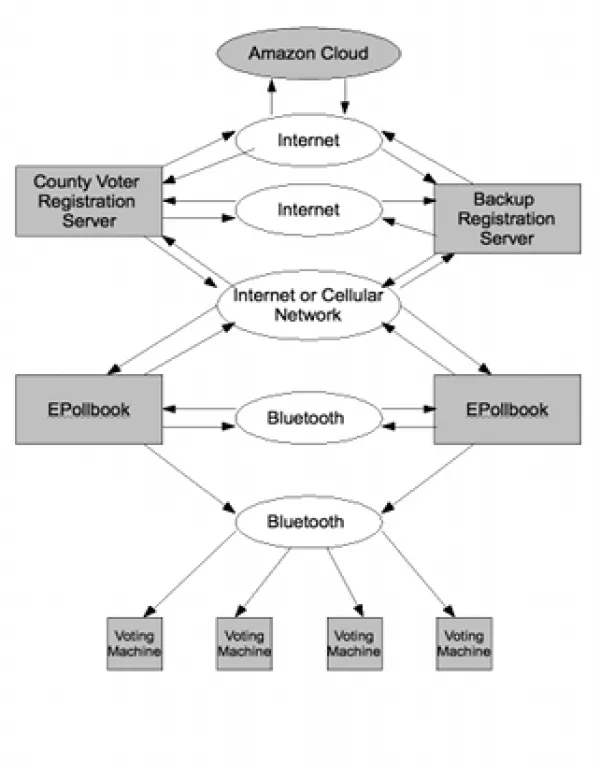
While some attention is focused on the risks inherent in placing untested software patches on county election tabulators, another election technology is being aggressively deployed throughout Ohio. That technology, the e-pollbook, appears to reduce lines at the polls, increase convenience and be a more modern way to verify voter identity and precinct location. The technology as deployed brings with it new possibilities for tampering with elections and whole new vectors for cyber attack.
What is most alarming is the potential for this technology to compromise the secrecy of the ballot. E-pollbooks could allow people with access, from election officials and private contractors to Ohio Secretary of State John Husted, to know how you voted.
Image
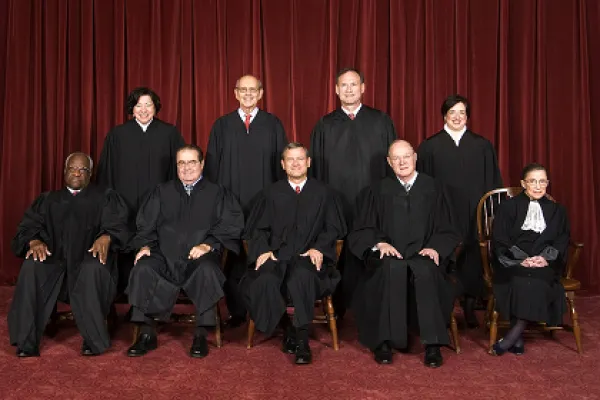
The United States Supreme Court, in a 5-4 decision, allowed Ohio’s notoriously racist voting laws to remain in place during the 2014 election. Ohio Secretary of State (SoS) Jon Husted has embraced the new Jim Crow policy of limiting access to the polls by poor, elderly and black voters.
Husted, under a twisted version of “equality” has limited Ohio’s nine major urban areas to having only one early voting site each, guaranteed to create long lines as it did in the 2004 and 2012 elections. In 2008, then-SoS Jennifer Brunner allowed the Franklin County Board of Elections to establish five early voting centers in the greater Columbus area.
Last week, the U.S. Sixth Circuit Court of Appeals upheld federal Judge Peter Economus’ historic ruling protecting African American voting rights in Ohio. In a September 4, 2014 opinion, Economus held that the actions of Ohio Secretary of State Jon Husted violated both the equal protection clause of the 14th Amendment and the Voting Rights Act of 1965 by erecting illegal barriers to keep minorities and the poor from voting in the Buckeye State.
Image
The U.S. Sixth Circuit Court of Appeals upheld federal Judge Peter Economus’ historic ruling protecting African American voting rights in Ohio. In a September 4, 2014 opinion, Economus held that the actions of Ohio Secretary of State Jon Husted violated both the equal protection clause of the 14th Amendment and the Voting Rights Act of 1965 by erecting illegal barriers to keep minorities and the poor from voting in the Buckeye State.
Husted’s attack on voting right proceeded under the guise of fighting “voter fraud.”
Economus noted, “The state’s argument about reducing fraud did not withstand logical scrutiny.”
As the New York Times stated, “There has been no in-person voter fraud documented in the country.”
Republican Secretary of State Husted is up for re-election this year, and in order to increase his chances he came up with a variety of measures that directly suppress minority and poor voters. His opponent, State Senator Nina Turner (D-25), is a black female and an outspoken voting rights activist.
Image
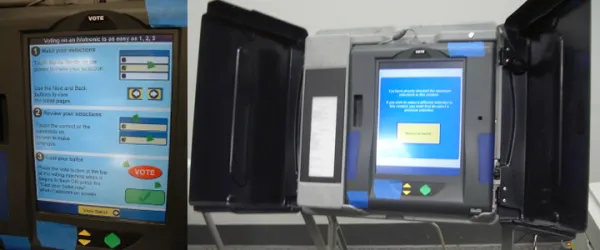
On September 11, the Electronic Privacy Information Center (EPIC), a major beltway advocacy group, filed suit against the Department of Defense (DoD) for withholding records on security testing of electronic voting systems for use by overseas service members. EPIC has requested the security reports in July under the Freedom of Information Act (FOIA).
The suit alleges that the DoD had no intention of disclosing the test results as it had publicly promised to do to Congress nearly 2 years previously. The United States District Court for the District of Columbia had affirmed EPIC's status as news media for the purposes of access to information and fee waivers after they won a previous suit against the DoD in 2003.

Image
The Green Party is fighting for its political life in Ohio. The gerrymandered, Republican-controlled state legislature outlawed all minor parties in Ohio in 2013 while both the Libertarian and Green Parties were in the middle of the petition drives for their gubernatorial candidates. Neither the Libertarians nor the Greens achieved ballot status by submitting signatures. While the Libertarian Party sued to maintain ballot status and lost in federal court, the Green Party invoked a seldom used state law that allows a statewide candidate to gain ballot status by getting 500 write-in votes.
The initial canvas of precincts showed the Green Party with 766 write-in votes for their gubernatorial candidate. The number, according to the Ohio Secretary of State’s website, has now dwindled to 628 votes. By state law, all county boards of elections must certify their vote total and forward it to the Secretary of State’s office by May 27. The Secretary of State must post the actual results 30 days after the May 6 election.