
Your source for alternative media coverage of the 2008 election alongside the 2004 elections and the related voter irregularities in Ohio.<br><br>Additional articles about the elections by <a href=http://www.freepress.org/columns/display/3>Bob Fitrakis</a> and <a href=http://www.freepress.org/columns/display/7>Harvey Wasserman</a> are in the <a href=http://www.freepress.org/columns>columns</a> section.
<br><br>
Those interested in contributing statistical skills to the project may want to contact <a href=mailto:truth@freepress.org>The Free Press</a> and <a href=http://uscountvotes.org target=usvotes>uscountvotes.org</a>.
Election Issues
Image
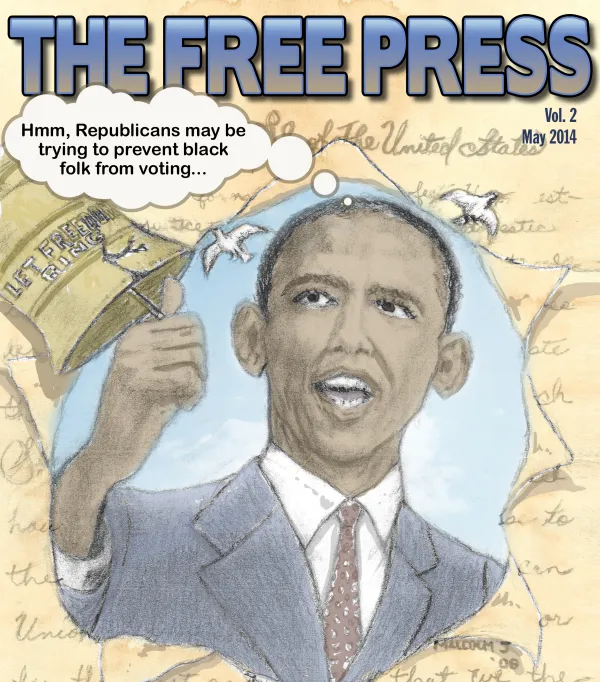
President Barack Obama has suddenly concluded that the Republicans don’t really like democracy. (http://www.nytimes.com/2014/04/12/us/politics/criticizing-gop-obama-says-the-right-to-vote-is-threatened.html?_r=0)
The GOP, he says, is doing all it can to deny the vote to women, the poor, people of color, young people and millions more in the 99%: “Across the country, the Republicans have made it harder, not easier, to vote.”
Welcome to the twilight of American elections.
Such shenanigans have been with us since the 1790s heydays of Elbridge Gerry, father of gerrymandering (so named because the districts he drew looked like salamanders).
But a whole new level of bought, rigged and stolen elections has re-defined American politics since 2000, when George W. Bush stole the big one from Al Gore, and 2004 when he did it again to John Kerry.
Let us count some of the ways:
1) Stripping Voter Registration:
Image
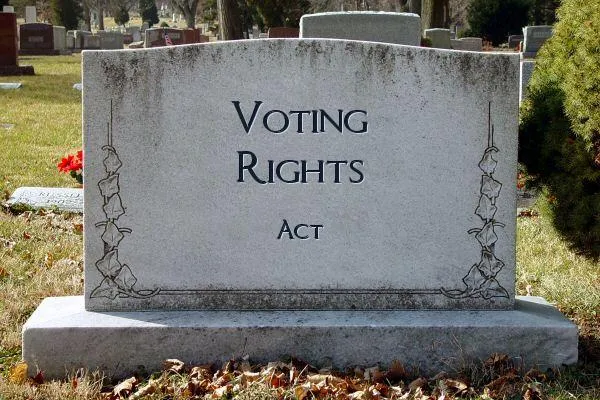
In 1965, the United States finally became a democracy. The minimal standard for a democracy is that there are at least two political parties, the entire adult population has the right to vote, and the vote is fairly counted.
The Voting Rights Act of 1965 finally enforced the right of black Americans to vote, primarily in the states of the old Confederacy. Historically, blacks had been subject to impediments to voting ranging from lynching, beating and intimidation – to paying a poll tax, passing a literacy test, and subjected to “whiteonly” primaries.
So extreme was the racial apartheid in the South that the law created a new job category: armed federal registrars.
Congress’ commitment to the Voting Rights Act has been overwhelming and steadfast. In 2006, the U.S. House of Representatives renewed the Voting Rights Act by a vote of 39033, and by a vote of 980 in the U.S. Senate.
Image
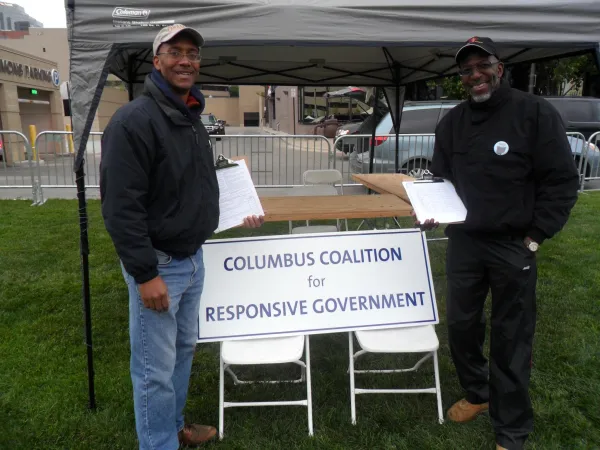
Earlier this week, the Columbus Coalition for Responsive Government filed new petitions seeking a campaign finance reform law for Columbus elections for Mayor and City Council.
Image

Convicted felon Tom Noe, former Lucas County (Toledo) Republican Party chairman, stole $13.7 million in the so-called “Coingate” scandal during the Voinovich and Taft administrations. Major daily newspapers in Ohio such as the Toledo Blade and the Columbus Dispatch are finally getting around to pondering: Why has there been no investigation and final report from the Ohio Inspector General’s office on this important scandal?
A Blade editorial asks the key question: “What is the state trying to cover up?”
Let us explain it to them.
Why there’s no report on the Coingate scandal is because it intersects with money –laundering into a presidential campaign and Voinovich’s ties to organized crime.
Tom Noe was northwest Ohio's “Mr. Republican” and a close Bush/Rove crony. He served two years for illegal money laundering into the 2004 Bush/Cheney campaign. He is now serving an 18-year term in state prison for stealing from the state’s Bureau of Workers’ Compensation (BWC).
As owner of Vintage Coins and Cards in Maumee, Ohio, Noe raised more than $100,000 to become a Bush Pioneer/Ranger. But Noe was more than a mere fundraiser.
Image

Thanks to a “Progressive,” a well-connected Democratic attorney and four lockstep election officials, the citizens of Columbus remain stuck paying off four rich Columbus families for the Nationwide Arena debt and Columbus City elections will not be as open to independent candidates as it could be with public financing.
At a Monday, February 3 hearing, the Franklin County Board of Elections voted 4-0 to keep two petitions off the ballot that could have rescinded the Arena bailout and provided publicly funded Columbus elections.
A century ago, the Progressive Era was coming to an end. But its legacy of citizen initiatives lived on for another century. In the period from 1901 to 1914 there was a tremendous push for municipal reform. At the heart of it were city and state charters that allowed people the right to vote on major public policy issues by initiating an ordinance, a law or a constitutional amendment.
In 1914, Columbus adopted a new charter that gave its citizens the right to initiate and legislate their own policies and take on what were often corrupt municipal political machines.
That Progressive Era democratic legacy is now over.
Image
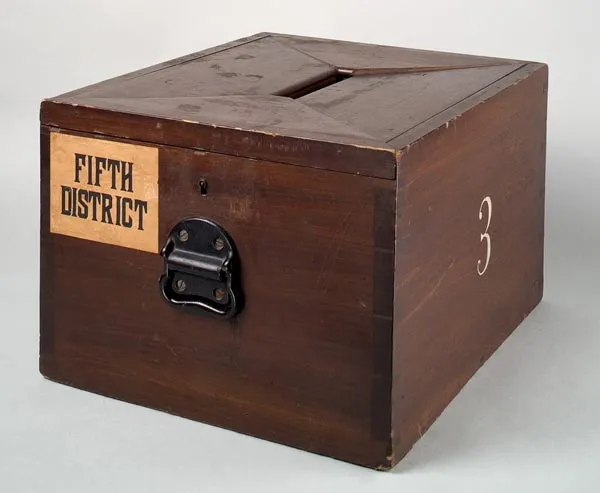
Not since the abolitionists and suffragists rocked Ohio’s politics in the 19th and 20th centuries has a movement in the Buckeye State been so essential to human rights. The announcement last week that Ohio’s Legislative Black Caucus, aided by civil rights advocates, is backing The Voter Bill of Rights as an amendment to the Ohio Constitution is the single most important issue before us in the 21st century. The proposed constitutional amendment would end the massive new Jim Crow purges of poor and black people Ohio has become notorious for in national elections.
The amendment would adopt the approach of the European Union and make voting a Constitutional right. Many Americans are shocked to discover that the right to vote is currently not an enshrined Constitutional right. Voting rights are often limited by the 50 different state governments that administer federal, state and local elections.
The proposed voter bill of rights would assure that all qualified Ohio citizens have a right to cast a ballot, and more importantly, have that ballot counted.
Since the 2004 election, Ohio’s history in purging poor and low income voters has been nothing less than appalling.
Not since the abolitionists and suffragists rocked Ohio’s politics in the 19th and 20th centuries has a movement in the Buckeye State been so essential to human rights. The announcement last week that Ohio’s Legislative Black Caucus, aided by civil rights advocates, is backing The Voter Bill of Rights as an amendment to the Ohio Constitution is the single most important issue before in the 21st century. The proposed constitutional amendment would end the massive new Jim Crow purges of poor and black people Ohio has become notorious for in national elections.
The amendment would adopt the approach of the European Union and make voting a Constitutional right. Many Americans are shocked to discover that the right to vote is currently not an enshrined Constitutional right. Voting rights are often limited by the 50 different state governments that administer federal, state, and local elections.
The proposed voter bill of rights would assure that all qualified Ohio citizens have a right to cast a ballot, and more importantly, have that ballot counted.
The amendment would adopt the approach of the European Union and make voting a Constitutional right. Many Americans are shocked to discover that the right to vote is currently not an enshrined Constitutional right. Voting rights are often limited by the 50 different state governments that administer federal, state, and local elections.
The proposed voter bill of rights would assure that all qualified Ohio citizens have a right to cast a ballot, and more importantly, have that ballot counted.
Image
What do you do if a grassroots citizens' coalition is gaining traction to enact good government reforms? If you're in charge at Columbus City Hall, you challenge the reforms to keep them off the ballot based on procedural and technical issues and you recruit your own “grassroots” organizer to carry water for you.
The Columbus Coalition for Responsive Government filed enough signatures on petitions to place two initiatives on the May 2014 ballot -- a citywide campaign finance reform issue and a call for a vote to repeal the publicly funded Nationwide Arena bailout. The Franklin County Board of Elections has indicated that the legal system has typically supported allowing initiatives on the ballot, indicating that any legal or technical issues should later sorted out in court.
One of the challenges to the initiatives points out that one warning sentence was not printed in red ink at the top of each petition. It was instead printed in black. Printing the sentence in red is not required by the city charter, only at the state level.
Image
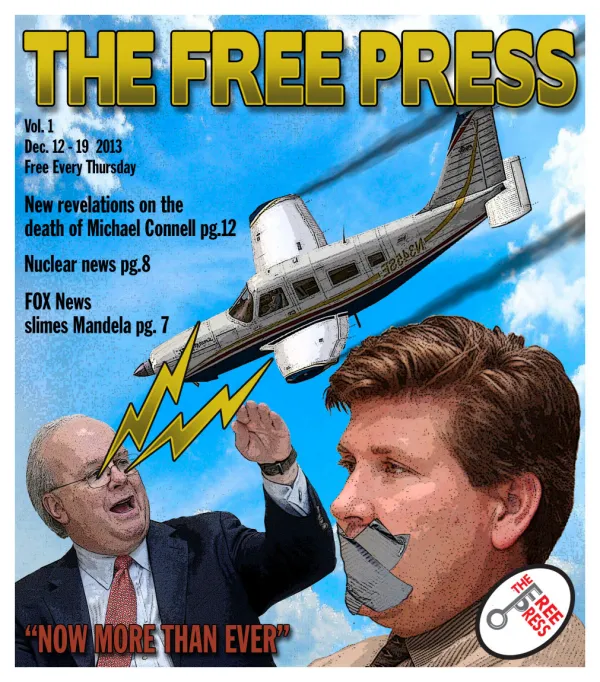
The Free Press has uncovered crucial documents that shed light on Connell’s mysterious death as the fifth anniversary of his tragic accident approaches. The document reveals that then-Ohio Secretary of State J. Kenneth Blackwell had signed a legal Statement of Work (SOW) contract with Connell for IT work on the infamous Election Night 2004, when Kerry unexpectedly lost when exit polls showed him winning
Connell and Blackwell agreed fourteen months prior to the 2004 election that Connell would have “remote monitoring capabilities” to the computer counting Ohio’s presidential vote. That means Blackwell planned more than a year in advance for Connell’s private partisan external third party company and a subcontractor to have unfettered secret access to Ohio’s 2004 vote tally.
Diebold: the controversial manufacturer of voting and ATM machines, whose name conjures up the demons of Ohio’s 2004 presidential election irregularities, is now finally under indictment for a “worldwide pattern of criminal conduct.” Federal prosecutors filed charges against Diebold, Inc. on Tuesday, October 22, 2013 alleging that the North Canton, Ohio-based security and manufacturing company bribed government officials and falsified documents to obtain business in China, Indonesia and Russia.
Diebold has agreed to pay $50 million to settle the two criminal counts against it.
Diebold has agreed to pay $50 million to settle the two criminal counts against it.