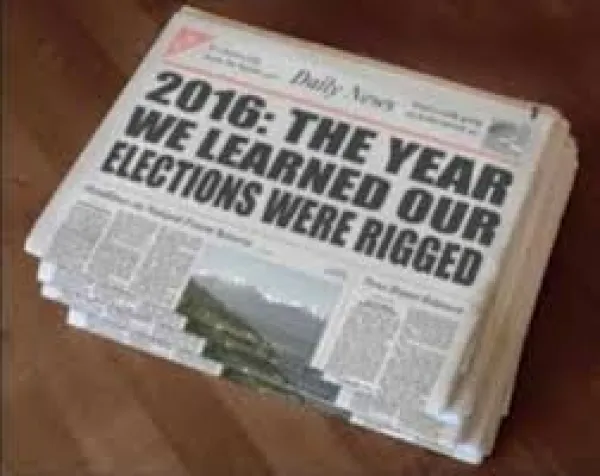
Peace

November 11 is Armistice Day / Remembrance Day. Ninety-eight years ago, on the 11th hour of the 11th day of the 11th month of 1918, fighting ceased in the “war to end all wars.” People went on killing and dying right up until the pre-designated moment, impacting nothing other than our understanding of the stupidity of war.
Thirty million soldiers had been killed or wounded and another seven million had been taken captive during World War I. Never before had people witnessed such industrialized slaughter, with tens of thousands falling in a day to machine guns and poison gas. After the war, more and more truth began to overtake the lies, but whether people still believed or now resented the pro-war propaganda, virtually every person in the United States wanted to see no more of war ever again. Posters of Jesus shooting at Germans were left behind as the churches along with everyone else now said that war was wrong. Al Jolson wrote in 1920 to President Harding:
“The weary world is waiting for
Peace forevermore
So take away the gun
From every mother’s son
And put an end to war.”

A new poll from an unlikely source suggests that the U.S. public and the U.S. media have very little in common when it comes to matters of war and peace.
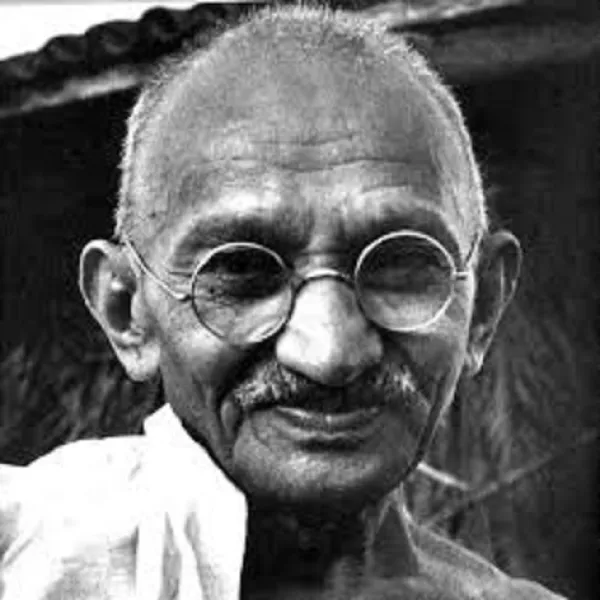
As most of the world ignores or hypocritically celebrates the 147th birthday of Mohandas Karamchand Gandhi on the International Day of Nonviolence on 2 October, some of us will quietly acknowledge his life by continuing to build the world that he envisioned. When asked for his message for the world, Gandhi responded with the now famous line 'My life is my message' reflecting his lifelong struggle against violence.
Gandhi's life was dotted with many memorable quotes but one that is less well known is this: 'You may never know what results come of your actions but if you do nothing there will be no results'.
Fortunately, there are many committed people who have identified the importance of taking action to end the violence in our world – whether it occurs in the home or on the street, in wars, as a result of economic exploitation or ecological destruction – and this includes the courageous people below. These people have identified themselves as part of the worldwide network, now with participants in 96 countries, committed to ending violence in all of its forms. I would like to share their inspirational stories and invite you to join them.

My remarks are related to the problem of media as a factor in the war system but not focused primarily on that. I have experienced first hand as a journalist and as an author how the corporate news media hews to a set of well-delineated lines in the coverage of issues of war and peace that systematically block out all data that conflict with those lines. I’d be glad to talk about my experiences especially in covering ran and Syria in Q and A.
But I am here to talk about the larger problem of the war system and what is to be done about it.
I want to present a vision of something that has not been discussed seriously in many, many years: a national strategy to mobilize a very large segment of the population of this country to participate in a movement to force the retreat of the permanent war state.
I know that many of you must be thinking: that is a great idea for 1970 or even 1975 but its no longer relevant to the conditions we face in this society today.

The United States government recently gave more than a million dollars to the family of one victim it had killed in one of its wars. The victim happened to be Italian. If you were to find all the Iraqi families with any surviving members who had loved ones killed by the United States it might be a million families. A million times a million dollars would be enough to treat those Iraqis in this respect as if they were Europeans. Who can tell me — raise your hand — how much is a million times a million?
That’s right, a trillion.
Now, can you count to a trillion starting from one. Go ahead. We’ll wait.
Actually we won’t wait, because if you counted one number per second you would get to a trillion in 31,709 years. And we have other speakers to get to here.
Maybe half a million dead, half a country — 10 million people — displaced from their homes, jettisoned onto the mercy of the world.
Welcome to war. Welcome to Syria.
This is a conflict apparently too complex to understand. The U.S. brokered a ceasefire with Russia, then proceeded to lead a bombing strike that killed 62 Syrian troops, injured another hundred — and gave tactical aid of ISIS. Later it apologized . . . uh, sort of.
“Russia really needs to stop the cheap point scoring and the grandstanding and the stunts and focus on what matters, which is implementation of something we negotiated in good faith with them.”
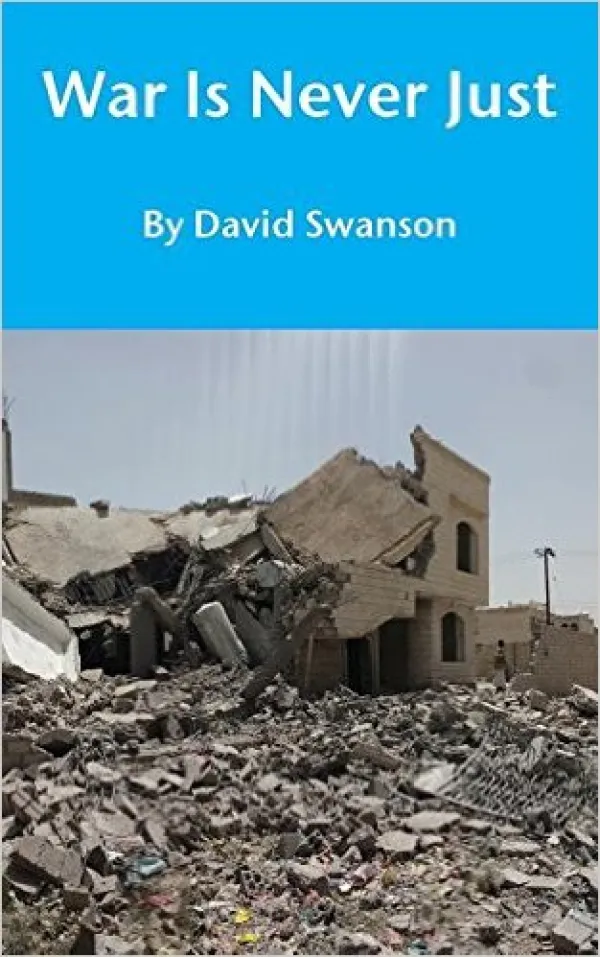
Several weeks back I was invited to speak this coming October at a U.S. university on ending war and making peace. As I often do, I asked whether the organizers couldn't try to find a supporter of war with whom I could debate or discuss the topic, thus (I hoped) bringing in a larger audience of people not yet persuaded of the need to abolish the institution of warfare.
As had never happened before, the event organizers not only said yes but actually found a war supporter willing to take part in a public debate. Great! I thought, this will make for a more persuasive event. I read my future interlocutor's books and papers, and I drafted my position, arguing that his "Just War" theory could not hold up to scrutiny, that in fact no war could be "just."
Rather than planning to surprise my "just war" debate opponent with my arguments, I sent him what I had written so that he could plan his responses and perhaps contribute them to a published, written exchange. But, rather than respond on topic, he suddenly announced that he had "professional and personal obligations" that would prevent his taking part in the event in October. Sigh!

There is a long history of anti-war and peace activism. Much of this activism has focused on ending a particular war. Some of this activism has been directed at ending a particular aspect of war, such as the use of a type of weapon. Some of it has aimed to prevent a type of war, such as 'aggressive war' or nuclear war. For those activists who regard war as the scourge of human existence, however, 'the holy grail' has always been much deeper: to end war.
There is an important reason why those of us in the last category have not, so far, succeeded. In essence, this is because, whatever their merits, the analyses and strategies we have been using have been inadequate. This is, of course, only a friendly criticism of our efforts, including my own. I am also not suggesting that the task will be easy, even with a sound analysis and comprehensive strategy. But it will be far more likely.