
Peace
The last time a Clinton tried to get into the White House, his campaign motto was "It's the economy, stupid!"
If you engage with peace organizations, you will very quickly be told repeatedly that nobody gives a damn about distant mass murder, and that consequently a smart organizer will talk to them about something local, such as the local impact of the financial burden of war, or perhaps the militarization of the police, or local recruitment, or local environmental damage from military bases, etc., but mostly the financial cost.
The reasoning behind all such thinking is that people are often busy, overworked, overstressed, concerned with their day-to-day struggles, etc., and so, while some of them might occasionally also take a mild interest in the affairs of others in distant corners of the globe, virtually everyone can be appealed to using local community concerns and, in particular, economic concerns related to their own needs and greed.
The evidence that this line of thinking misses something includes the following:
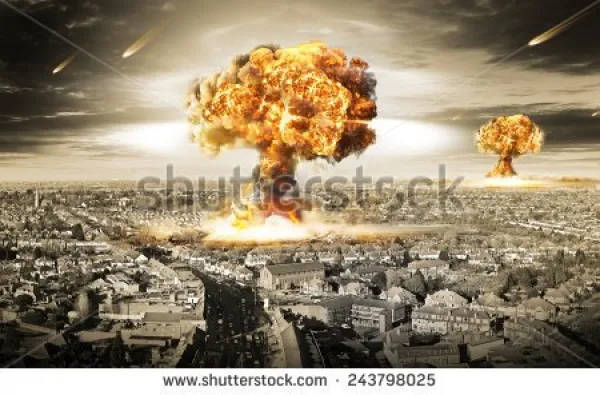
 ormer Bill Clinton cabinet member Perry perceives a danger that none of this year’s presidential wannabes have paid much if any attention to. The most recent candidate to make nuclear arms a central issue was Congressman Dennis Kucinich in 2008. President Obama has played both sides of the nuclear dilemma: rounding up and securing nuclear materials around the world, but also modernizing and miniaturizing American nuclear weapons to make them more “usable.” These days, no one in leadership – or aspiring to leadership – seems committed to actually making the world any safer from nuclear catastrophe.
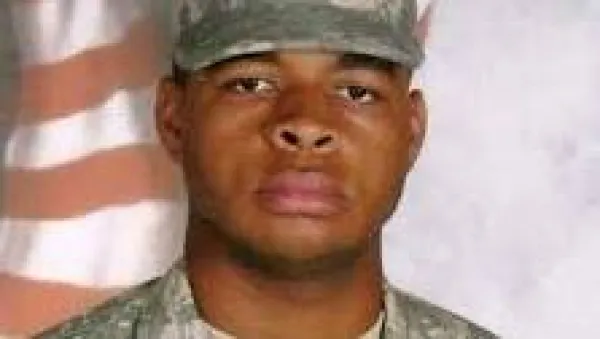
There’s Mars, the god of war, perched in a parking garage in Dallas, annihilating the enemy with utter impunity. Mars, you sicko! Just listen to President Obama:
“By definition, if you shoot people who pose no threat to you — strangers — you have a troubled mind. What triggers that, what feeds it, what sets it off, I’ll leave that to psychologists and people who study these kinds of incidents.”

I’ve just ended two weeks visiting cities in four regions of Russia. The one question that was asked over and over was, “Why does America hate us? Why do you demonize us?” Most would add a cavaet– “I like American people and I think YOU like us individually but why does the American government hate our government?”
This article is a composite of the comments and questions that were asked to our 20 person delegation and to me as an individual. I do not attempt to defend the views but offer them as an insight into the thinking of many of the persons we came into contact in meetings and on the streets.
None of the questions, comments or views tell the full story, but I hope they give a feel for the desire of the ordinary Russian that her country and its citizens are respected as a sovereign nation with a long history and that it is not demonized as an outlaw state or an “evil” nation. Russia has its flaws and room for improvement in many areas, just as every nation does, including for sure, the United States.
New Russia Looks Like You-Private Business, Elections, Mobile Phones, Cars, Traffic Jams

Mark Rudd, who chaired Columbia University’s Students for a Democratic Society chapter and co-led the celebrated 1968 student revolt there and co-founded the ultra-left Weatherman, recently took part in a talkback following Home/Sick, a drama about the Weather Undergroundwhich is being presented at Los Angeles’ Odyssey Theatre through July 3. The “Your Brain is a Bomb: A Revolutionary Conversation Series” that followed four Home/Sick performances (see: www.assemblytheater.org/talkback) also featured ex-SDS member and historian Jon Wiener, host of a KPFK radio program and The Nation’s weekly podcast.
This Fourth of July, U.S. war makers will be drinking fermented grain, grilling dead flesh, traumatizing veterans with colorful explosions, and thanking their lucky stars and campaign contributors that they don't live in rotten old England. And I don't mean because of King George III. I'm talking about the Chilcot Inquiry.

Mikhail Gorbachev and Barack Obama have radically different views on what is involved in doing away with nuclear weapons.
Reading Gorbachev's new book, The New Russia, is a bit disappointing, but it contains some key insights. It may also be a cure for insomnia; it's no page turner. It's part decades-long diary and travelogue, part petty self-aggrandizement (by someone in no need), and part ill-informed conservatism.
Gorby claims that Obama "honoured his promise to withdraw from the conflicts in Iraq and Afghanistan." In fact, both are still raging, the never completed withdrawal from Iraq fell wildly short of the campaign-promise schedule, and Obama actually promised to escalate in Afghanistan, which he did, tripling the U.S. presence and making that war primarily his own in terms of deaths, days, and dollars. The fact that smart well-informed people abroad, like Gorbachev, fall for common U.S. myths is an indication of how very difficult foreign relations can be.

In what's being called the worst mass killing by the United States in the past six months, numerous mentally disturbed individuals, with the extensive backing of a well-financed terrorist organization, and support from a growing circle of allied gang members, have gruesomely slaughtered 1,110 to 1,558 innocent men, women, and children.
This incident, which has left shocked and speechless a handful of people who've heard and thought about it, took place between December 1, 2015, and May 31, 2016, during which interval the killers got off 4,087 airstrikes, including 3,010 over Iraq and 1,077 over Syria.
Aiding and abetting the slaughter, and now also being sought by law enforcement, are France, the United Kingdom, Belgium, Netherlands, Australia, Denmark, and Canada. In what is widely understood as an appeal for judicial mercy, Canada has expressed remorse. None of the other alleged perpetrators has done so. Several have openly acknowledged their participation, including by displaying the gang symbol of a U.S. flag tattooed on their glutei maximi.

The most likely way to die in a U.S. war, by far, is to live in the country that the United States is attacking. But the most likely way in which a U.S. participant in a war will die is by suicide.
There are a couple of widely observed top causes of hundreds of thousands of U.S. troops returning from recent wars deeply disturbed in their minds. One is having been near an explosion. Another, which has been around longer than explosions have, is having killed, having nearly died, having seen blood and gore and suffering, having imposed death and suffering on innocents, having seen comrades die in agony, exacerbated in many cases by having lost faith in the sales pitch that launched the war -- in other words, the horror of war making.

“Look, nuclear should be off the table. But would there be a time when it could be used? Possibly, possibly . . .”
This is — who else? — Donald Trump, flexing, you might say, his nuclear trigger finger in an interview with Chris Matthews, who responds in alarm:
“OK. The trouble is, when you said that, the whole world heard it. David Cameron in Britain heard it. The Japanese, where we bombed them in ’45, heard it. They’re hearing a guy running for president of the United States talking of maybe using nuclear weapons. Nobody wants to hear that about an American president.”
“Then why,” Trump shoots back in all his politically incorrect, rattle-the-establishment naïveté, “are we making them? Why do we make them?”
Uh . . .