
Global
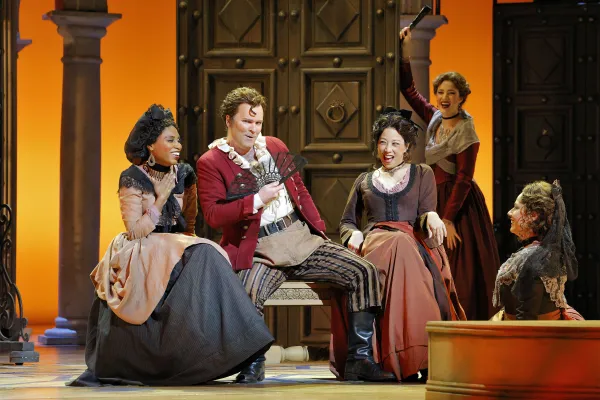
From global broiling to plagues to wars at Ukraine and the Middle East to mass expulsions/ Exoduses of civilians from Gaza and Nagorno Karabakh to the homeless epidemic to the rising scourge of domestic fascism and beyond, our beleaguered planet is reaching the boiling point. What’s a human to do? Aside from a worldwide socialist revolution to bring about an international workers’ paradise, I have another suggestion (if not a solution) as to how to cope with these mounting crises: Go see/hear Gioachino Rossini’s 1816 The Barber of Seville at LA Opera.





BANGKOK, Thailand -- Buddhist-majority Thailand's new prime minister flew to Palestinian-friendly Malaysia and reached out to other Muslim nations amid hopes for the release of 19 impoverished Thai laborers held by Hamas, who already slaughtered 30 Thais during the assault in Israel.
Weeping families in bleak rural Thai villages said their ill-fated relatives went to Israel to pay off family debts or upgrade their meager existence.
Relatives in Thailand went to local shrines and conducted ceremonies mixing Buddhist, Hindu, and animist beliefs, hoping for metaphysical help for their trapped loved ones and the deceased.
"We have a lot of debts, and working abroad pays better than in Thailand," said worried Kanyarat Suriyasri, after hearing her husband Owat Suriyasri, 40, was seized as a hostage.
Mr. Owat has labored in Israel since 2021, stacking shekels to build a house in Thailand for Ms. Kanyarat and their two kids.
"I would hug him and say: 'I've missed you, I won't let you anywhere far away again'," she told Agence-France Presse.

According to its mission statement, “AFI FEST… showcase[es] the best films from across the globe to captivated audiences in Los Angeles. With a diverse and innovative slate of programming, the film festival presents a robust lineup of fiction and nonfiction features and shorts… along with panels and conversations featuring both master filmmakers and new cinematic voices.” The American Film Institute’s annual film fete, which includes up to 141 productions this year, is taking place at the TCL Chinese Theatre (that iconic movie palace formerly known as Grauman’s Chinese Theatre with stars’ cement footprints in its famed courtyard), the nearby TCL Chinese 6 Theatre and right across the boulevard El Capitan Theatre, all conveniently located near one another on Hollywood Blvd.’s fabled “Walk of Fame.”


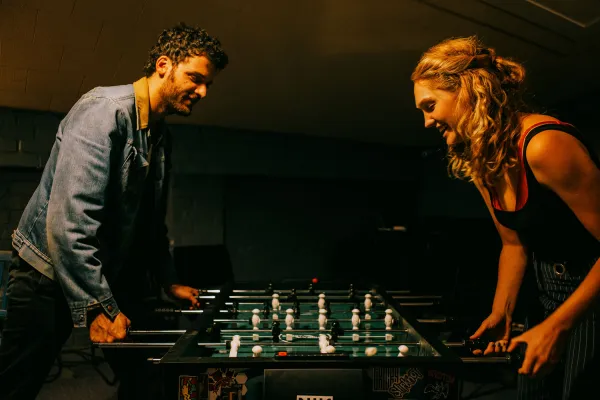
Writer/director Tim Venable takes off the gloves in Baby Foot, a searing three-hander that bravely dramatizes the struggle to overcome addiction at a recovery center. Alexis (Hope Lauren) is completing the 90th and final day of her treatment program and preparing to reenter the big, bad world-at-large when she encounters (the unfortunately named) Blackie (Daniel Dorr) on the very night he is admitted to the three-month-long sobriety ordeal. Throughout the 75-ish minute one-act play sparks fly, as this boy-meets-girl story with a cleverly concocted premise unfolds in the offbeat setting of a rehab facility located somewhere in deepest, darkest Los Angeles.