Global
“At school he was told he would never write . . .”
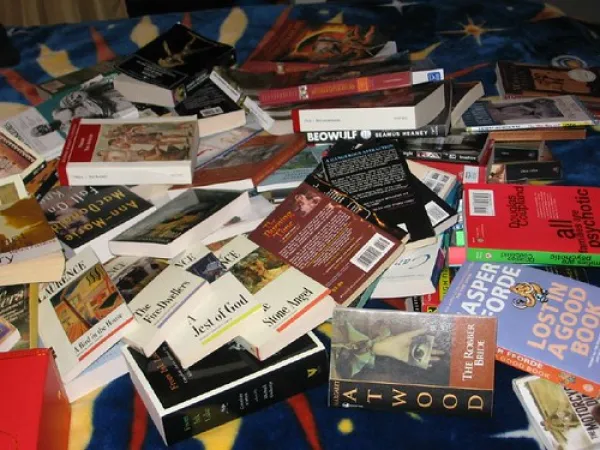
Here was a kid – here was a man – who refused to listen to the authorities, and refused to be anything but fully human. And yeah, he could write. His spelling may have been iffy, but he could write. His name was Taro Joy. He drowned three years ago, in Bali, where he was living, at age 48 – but thanks to his mother, Penny (quoted above) and the rest of his family, his words and thoughts and deep reaches into the collective soul live on. They have just put out a book of his lifetime of writings, a book of his prose and poems: The Tao of Taro.
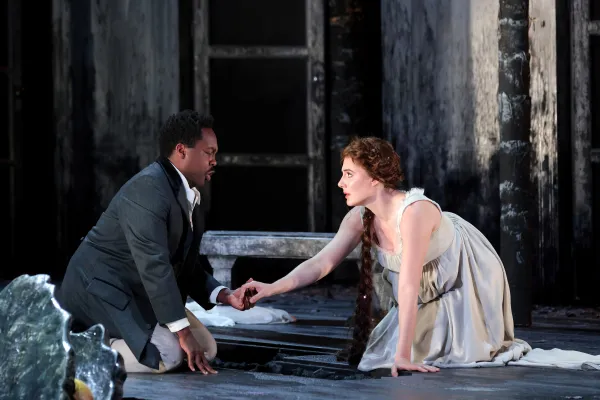
In French composer Claude DeBussy’s Pelleas et Melisande, while out hunting Prince Golaud of Allemonde (Iowa bass-baritone Kyle Ketelsen) stumbles upon Melisande (California soprano Sydney Mancasola) in the forest. They’re both lost and by the time the next scene takes place, we learn they have married. The couple have moved into King Arkel’s (Italian bass Ferruccio Furlanetto) castle, where Melisande proceeds to spend an inordinate amount of time with Golaud’s half-brother, Pelleas (Chicago baritone Will Liverman).
Golaud suspects that his wife is having an affair with his half-brother and, shall we say, complications ensure. Are they, or aren’t they? To this reviewer, the whole premise of the plot is senseless, unless Meilsande and Pelleas are indeed having a sexual relationship.
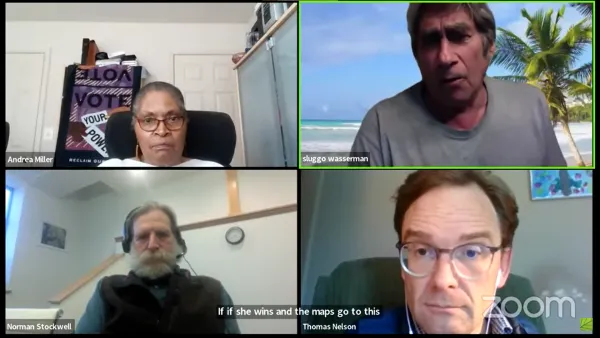
Our GREE-GREE #132 foreshadows the major victory in Wisconsin’s critical state Supreme Court race that is being widely ranked as “the most important election of 2023.”
We hear from ANDREA MILLER of the Center for Common Ground, NORM STOCKWELL of Progressive.org, and THOMAS NELSON of grassroots Wisconsin on the coming of what would be a huge victory for the Progressive movement.
We know as you’re listening to this that the left-leaning “Judge Janet” Protasiewicz won this crucial judgeship by a substantial margin. She beat a MAGA Republican.
So if you want to know how this happened, listen in to the powerful views of a critically important trio of organizer/activists who helped make this progressive victory happened.
We then turn to BRYNN TANNEHILL and her uniquely brilliant systemic presentation on the national assault against the rights and freedoms of trans Americans.
Among much more, Brynn tells us that “gun rights” stalwarts who NEVER want to limit gun ownership now want to make it illegal for trans citizens to own a gun.[IN OUR SECOND HOUR, FOR NEXT WEEK:
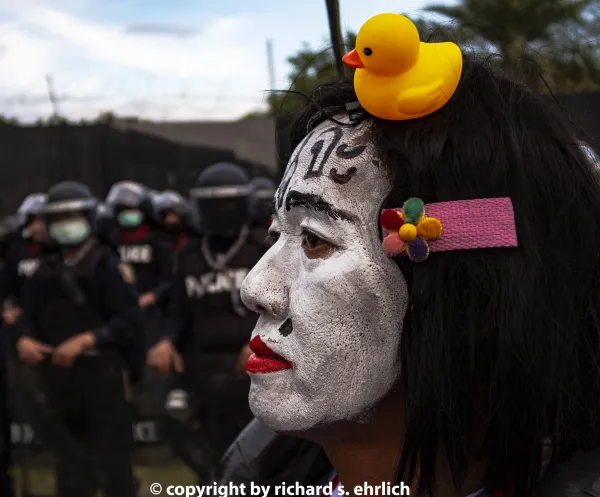
BANGKOK, Thailand -- Coup-maker Prayuth Chan-ocha hopes his snappy new promise -- "no coup again" -- will get him re-elected prime minister in May and end worries that the U.S.-trained military will topple the next government if the polls go against them.
Prime Minister Prayuth dissolved Parliament's elected half, the 500-seat house of representatives, on March 20, three days before its four-year tenure expired.
The Election Commission then had to choose an election date within 45-60 days, and selected May 14.
Prliaent's 250 junta-appointed senators remain unchanged.
"There should be no coup again," the now-Caretaker Prime Minister Prayuth recently told reporters.
"If any serious conflict occurs again [after the election], I don't know how to solve it because I have nothing to do with it now."
Coups, cannabis, and corruption are the biggest issues nationwide facing candidates for prime minister and parliament.
Some analysts wonder if the military will launch a coup if the next government does not satisfy them and their cronies among the elite's conservatives and old money.
BANGKOK, Thailand -- Coup-maker Prayuth Chan-ocha hopes his snappy new promise -- "no coup again" -- will get him re-elected prime minister in May and end worries that the U.S.-trained military will topple the next government if the polls go against them.
Prime Minister Prayuth dissolved Parliament's elected half, the 500-seat house of representatives, on March 20, three days before its four-year tenure expired.
The Election Commission then had to choose an election date within 45-60 days, and selected May 14.
Parliament's 250 junta-appointed senators remain unchanged.
"There should be no coup again," the now-Caretaker Prime Minister Prayuth recently told reporters.
"If any serious conflict occurs again [after the election], I don't know how to solve it because I have nothing to do with it now."
Coups, cannabis, and corruption are the biggest issues nationwide facing candidates for prime minister and parliament.

The phrase 'fake news' continues to be deployed routinely in US politics. In a polarized political atmosphere, both Republicans and Democrats distrust media organizations affiliated with opposing parties. This means that most of what is uttered or written by CNN is 'fake news' for Republicans, and much of what appears in Republicans-affiliated media is 'fake news' for Democrats.
The phrase is now so prevalent and has multiple meanings to the point that it is impossible to agree on a common definition. Even 'fact checking' organizations or news desks contribute to the troubling phenomenon of 'fake news' by selectively fact-checking news and information affiliated with one side of the political aisle, while ignoring the other.
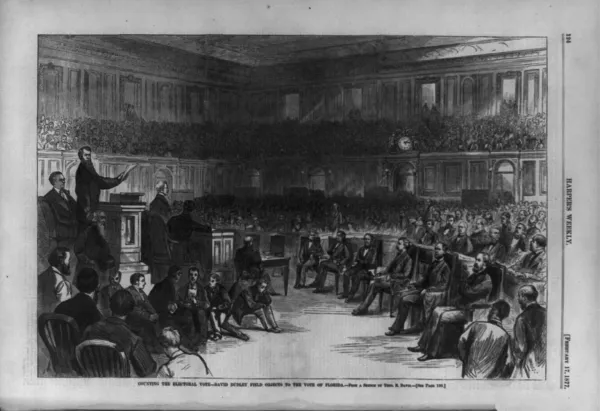
Today (4/1/23) The Wall Street Journal had as a front-page article on its REVIEW section titled “How Florida Became America’s GOP Hot Spot.” Written by several authors, it is a magnificent gloating piece celebrating GOP electoral accomplishments and becoming one of the major hubs of conservative heavyweights in the nation.
Florida not only has living in it the two top Republican presidential candidates but has also many other luminaries of the conservative world. The article to its credit recognizes that Florida once was one of the nation’s biggest swing states, but that now it is solidly conservative.
They give credit to the vibrancy and creativity of conservative thinking in the state. I say hogwash. The reason that the Republican Party enjoys such reputation has much to do with the betrayal of Democratic economic principles by the Democratic Party leadership in the last few years.
Yesterday the US Senate repealed the Iraq 2002 ‘Authorization for the Use of Military Force’ (AUMF), in which, at the behest of the Bush Administration, the U.S. licensed itself to attack the people of Iraq, and, with a fusillade of pressure-packed, hysteria driven lies, dragged along a tricked-up international “coalition of the willing.”
The 2002 AUMF, now otherwise known as an official, categorical, murderous lie, passed twenty years ago, by a Senate vote of 77-23.
Yesterday’s repeal basically said: ‘We repeal the AUMF.’ That’s it. No explanation in the bill as to why. No preamble which recited the litany of lies which Congress bought lock, stock and two smoking barrels. The deaths of one million innocent Iraqis didn’t rate so much as a mention in the repeal.
No apology was made to the people of Iraq. No apologies to the families of dead and injured U.S. soldiers. No mention of the war’s on-going cost to U.S. taxpayers, the amount now approaching five trillion dollars.