
Global

Jami Brandli’s Sisters Three has an intriguing, promising premise that is similar to Amy Heckerling’s 1995 Clueless starring Alicia Silverstone and 2011’s From Prada to Nada, which updated and adapted to contemporary milieus Jane Austen’s 19th century novels, respectively, 1816’s Emma and 1811’s Sense and Sensibility. In Sisters Three Brandli locates the real life Brontë siblings, who wrote later in the 19th century than Austen did, in the 21st century.
Adapting the Brontës to the social media era is an inspired idea, and Brandli captures the artsy, antsy, angsty anguish that reportedly troubled the three sisters - and their brother, Branwell, who is a palpable offstage presence in this clever production. The playwright extrapolates from what is known of the siblings’ real lives in her modern day-set 90 minute or so one-acter that takes place on a college campus, although it was not clear to me where - but probably closer to New York than Yorkshire.

Like Nixon in the last days of Watergate, Trumputin has begun to twist in the wind.
Let’s count some ways:
• The mighty GOP stone wall is starting to crack.
• Its only black senator, Tim Scott of South Carolina, helped kill a major Trump court nomination and says he’ll oppose any more avowed racists, pretty much wiping out Donald’s gene pool.
• As Trumputin and the Saudis feast on Jamal Khashoggi, even some Republicans have been sickened by this brazen mafia hit on an established American journalist.
• Enough GOP senators voted to derail funding for the Trumputin/Saudi holocaust in Yemen … a vote that may mark a major turn against the global empire (with special thanks to CodePink!).
• That vote shades the assumption that not enough Republican senators could ever vote to convict in an impeachment trial.
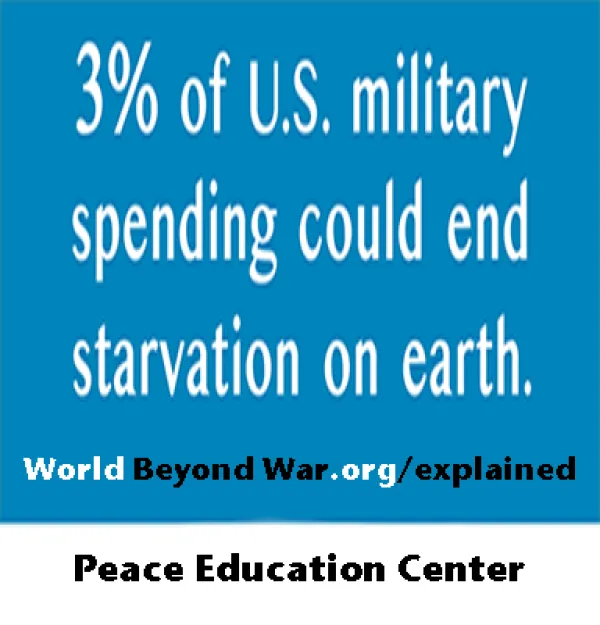
New billboards are going up around the United States and elsewhere opposing war. Some are not going up because the message is deemed unacceptable. Many more are being planned.
This ad at right is going up in various sizes and dimensions around Lansing, Michigan, thanks to the Peace Education Center. We’ll post the details on the billboards pagewhen we have em.
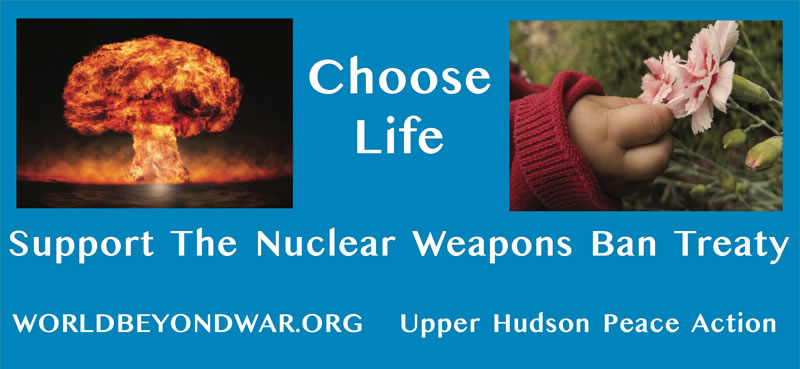
The billboard below is going up for the month of January in Albany, NY — specifically on Erie Blvd. 1,000 ft north of Nott St., thanks to Upper Hudson Peace Action:
This one below is enlightening the good people of Pittsburgh, thanks to WILPF Pittsburgh:
Bryant Welch’s new edition of his book, State of Confusion: Political Manipulation and the Assault on the American Mind, purports to diagnose the mental illness that produces support for and tolerance of Donald Trump in particular, and the Republican Party in general. To some extent it does so, although it’s mostly very familiar stuff, partly excusable because the first edition came out a decade ago. Welch, by the way, deserves credit for opposing participation in torture by the American Psychological Association.
What I find most illuminating in the book is the first-person account of an apparent sufferer of PHSD (Post Hillary Stress Disorder). I imagine that someone unfamiliar with the notion that Fox News lies and that political campaigns exploit bigotry and fears, or someone eager to hear reassuring accounts of how all evil originates among Republicans, would have a very different reaction to the book. My reaction is sympathy for the apparent trauma inflicted on apparently well-off educated people by Hillary Clinton’s defeat, combined with outrage at the hypocrisies and in particular the militarism of Democratic partisanship.
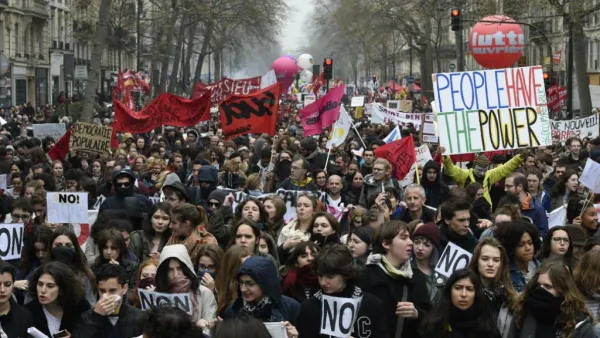
Belgium has joined the list of countries that are rebelling against their elected leadership. Over the weekend the Belgian government fell over Prime Minister Charles Michel’s trip to Morocco to sign the United Nations Migration Agreement. The agreement made no distinction between legal and illegal migrants and regarded immigration as a positive phenomenon. The Belgian people apparently did not agree.

It’s the phrase “border security” that freezes my soul every time I hear it uttered, every time I see it in print — so simplistically obvious, the equivalent of keeping your door locked. Did you ever have your cellphone swiped? If you’re careless about this, you’ll pay the price.
“This is a national emergency,” Donald Trump said. “Drugs are pouring into our country. People with tremendous medical difficulty and medical problems are pouring in, and in many cases it’s contagious. They’re pouring into our country. We have to have border security. We have to have a wall as part of border security.”
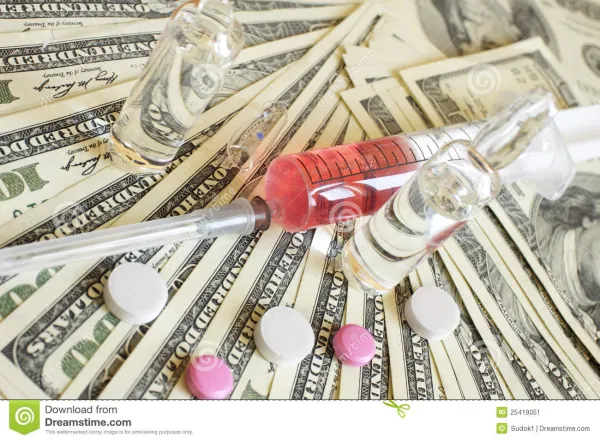
“Investigators on research teams should discontinue the research if, in their judgement, the outcome of the research might turn out to be harmful to the individual.” --- An interpretation of the Declaration of Helsinki: Recommendations for Conduct of Clinical Research
"It is not an acceptable excuse to say: 'I was just following my superior's orders.'" – Principle IV of the Nuremburg Principles
“When an activity raises threats of harm to human health or the environment, precautionary measures should be taken even if some cause and effect relationships are not fully established scientifically. In this context the proponent of an activity, rather than the public, should bear the burden of proof. The process of applying the precautionary principle must be open, informed and democratic and must include potentially-affected parties. It must also involve an examination of the full range of alternatives, including no action.” – Wingspread Statement on the Precautionary Principle, Jan. 1998

While it is now very late in the life cycle of homo sapiens, with extinction now due to consign us to Earth’s fossil record – see ‘Will humans be extinct by 2026?’ – I would like to make a belated pitch for the importance of the human individual and why nurturing each individual’s uniqueness is so important even if it is now probably too late.
‘Why are you writing about this?’ you might ask, adding that many people accept that each one of us is unique, important and deserves the opportunities and support necessary to live a fulfilling life according to our own culture and choices. It is just the sexists, racists, bigots (religious and otherwise), upper class, governments, corporations, members of the global elite, and some other categories of people, as well as many organizations, particularly those that are violent, that do not.
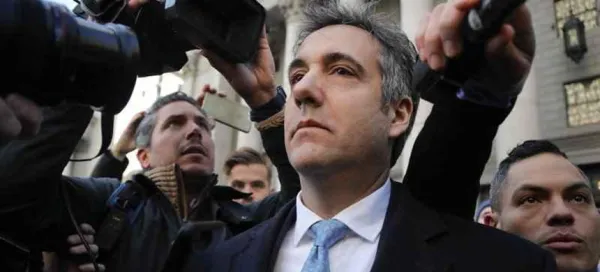
 n the Trumputin world of organized crime, Michael Cohen has committed the ultimate betrayal: he’s helped Robert Mueller prove beyond doubt that don Putin in the Kremlin put his very own bagman into the White House.
Cohen is the ultimate mobster nightmare, the inside attorney who flips. Many a consigliere has died at Mafia hands for far less.
For what might come next, see Jamal Khashoggi, the Washington Post reporter literally butchered by the Saudi branch of the Trumputin oligarchy.
Nixon’s lawyer, John Dean, called Watergate a “cancer on the presidency.” Cohen has confirmed that the “conspiracy theories” about Trump colluding with Putin are an epic understatement.