
Global

he Manchurian Money-Launderer has just kissed every inch of his mafia don’s anatomy.
The Donald has been washing Russia’s mob cash since the 1980s. The constant stream of ruble injections has funded his many bankruptcies.
In 2016, GOP election thieves like Kris Kobach, Jon Husted, Scott Walker, Rick Snyder, Rick Scott (state secretaries of Kansas and Ohio, governors of Wisconsin, Michigan and Florida) and so many more turned Trump’s 3-million-vote loss to Hillary Clinton into a victory for the Russian mob and America’s corporate 0.01%. They’re set to do it again in 2018 and 2020.
The brutal, ruthless Putin is orders of magnitude more savvy and capable than the orange American. Globally, he is the mob boss Don Corleone, lording it over his addled son Fredo.
Amidst Trump’s Helsinki rant storm against US intelligence, Putin admitted he favored Trump in the 2016 election.
In light of Trump’s invitation to hack the Democrats, Putin magnanimously hinted he might allow American legal representatives to listen in while his KGB consiglieres “question” operatives indicted by Robert Mueller for doing what Trump asked them to do.

The Democrats have been in turmoil for the last half century and then some, when they abandoned their racist base and supported the civil rights movement.
Revved up by the spirit of the ’60s, the party began opening itself to further change, even daring to push beyond the financial interests of its controlling oligarchs and declare an opposition to war. “I have no secret plan for peace. I have a public plan,” George McGovern said during his 1972 presidential campaign . . . and that was that. After his crushing defeat, at the hands of Richard Nixon and his “Southern strategy,” the Dems quietly retreated. Their prevailing slogan ever since, whispered subconsciously, has been: We don’t stand for all that much.
The Dems are now Republican lite. They don’t have the will to disrupt anything that seems tried and true — such as, for instance, American exceptionalism and bloated militarism.

Throughout the day before the summit in Helsinki, the lead story on the New York Times home page stayed the same: “Just by Meeting With Trump, Putin Comes Out Ahead.” The Sunday headline was in harmony with the tone of U.S. news coverage overall. As for media commentary, the Washington Post was in the dominant groove as it editorialized that Russia’s President Vladimir Putin is “an implacably hostile foreign adversary.”

July 19-22
Renaissance Columbus downtown hotel
The heart of the annual GeeklyCon is the board game room, Dungeons and Dragons is just one of the dozens of board games available to play with new geekly friends. But there are panel discussions, contests and lots more! Tickets are $90, which includes:
A ticket to the kickoff party (+ drink ticket & food, live show entrance, karaoke, and farewell party)
Hang out in the Game Room with a board game library featuring approx.100+ boardgames
Sign up for a tabletop RPG, or run your own
Access to the Live Show including Drunks & Dragons & More
Access to Panels and Talks throughout the day
Outings including Brewery tours, Boardgame Bars + more
GeeklyCon-wide House Cup games to help you to get to know people.
https://geeklycon.com/collections/tickets/products/geeklycon-2018-basic-ticket
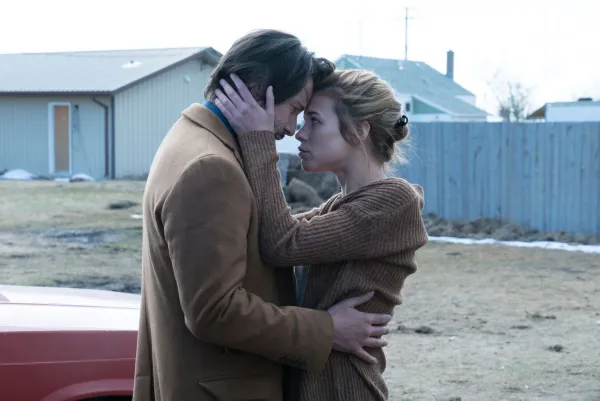
It never fails to amaze (and amuse) me how movies mirror reality and are emanations of the collective psyche and/or motion picture prophecies. Just days after the premiere of The First Purge, about a race war aimed at exterminating African Americans in Staten Island, a Black Staten Island resident - Congolese immigrant Patricia Okoumou - heroically climbed the Statue of Liberty on July 4 to protest the racist Trump regime’s cruel purging of refugees, seekers of asylum and other immigrants.

JULY 10, 2018
The eternal question of U.S. politics rears its ugly ass again: “Why in the hell does anyone ever listen to Alan Dershowitz?”
No court can overturn a Congressional impeachment and conviction. Will somebody at Fox and CNN page the nearest genocidal torture-defending lawyer, who is either Alan Dershowitz or someone joining him on a search for the real O.J. Simpson killer at a five-star restaurant for lunch today, and get Dershowitz a copy of the United States Constitution?
The Constitution gives impeachment to the House and the trial to the Senate with the Chief Justice presiding. It gives the House the “sole” power of impeachment, and the Senate the “sole” power to try all impeachments. That means nobody else, least of all a different branch of government, gets to say anything at all.
The Constitution, pace Dershowitz, does not list all specific offenses that qualify for impeachment.

The weekend of July 7th and 8th witnessed the European peace movement come together in Brussels, Belgium to send a clear message to the world community, “No to war – No to NATO!”
The mass demonstration on Saturday and the No-to NATO counter summit on Sundayrejected American calls for all 29 NATO member states to increase military expenditures to 2% of GDP. Currently, the US spends 3.57% for military programs while European nations average 1.46 percent. President Trump is pressuring NATO members to spends hundreds of billions of additional Euros annually on various military programs, many which involve the purchase of American weapons and the expansion of military bases.
NATO members will meet in Brussels on July 11th and 12th. President Trump is expected to come down strongly on the Europeans while most member states are hesitant to increase military spending.

Remarks Delivered by Pat Elder for World BEYOND War at the No to War No to NATO Summit, Brussels, July 8, 2018
Aren’t there any American flags flying here? Are we going to salute the troops? Pledge allegiance to the flag? No? What kind of empire is this?
A largely ignorant American public is the propane that fires the stove of Trump’s brand of fascism.
An overwhelming majority of the American public is convinced that Trump is a liar who does not “share their values” or “care about people like them.” At the same time, many believe that he can “get things done.”
The neo-liberal order we loathe involves dumbing down the American public to accept 18th century notions of unbridled capitalism. The high school textbooks glorify war and empire. God and the flag and the church and the military and Jesus and America and mom and apple pie are mixed in a kind of patriotic pablum that is fed daily to the masses.

Things fall apart; the centre cannot hold;
Mere anarchy is loosed upon the world
The blood-dimmed tide is loosed, and everywhere
The ceremony of innocence is drowned;
The best lack all conviction, while the worst
Are full of passionate intensity.
– William Butler Yeats, The Second Coming, 1919
 pocalyptic thinking has been with us for a long time, and it sometimes ushers in actual apocalypses, albeit at human scale, without biblical finality. For a century now, the Yeats poem above has served as an increasingly common reference point for those who fear apocalyptic events approaching. Today such fears are varied, the threats are real, and reactions range from crisis-mongering to self-serving denial, making any rational, coherent societal response almost impossible.
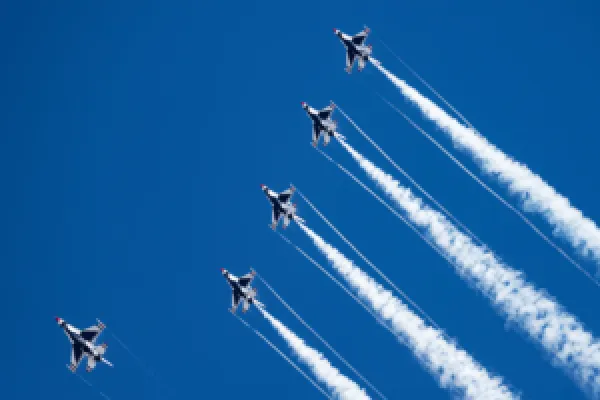
Geoengineering, according to the Royal Society of the United Kingdom, is defined as "the deliberate large-scale manipulation of the planetary environment to counteract anthropogenic (man-made or corporate-caused)climate change" and divides methods into two types: carbon dioxide removal from the atmosphere, and solar radiation management aimed at reducing heat coming in (from the sun)or reflecting more of it out.
I write this week’s Duty to Warn column the day after the biannual Duluthairshow.com (July 7-8, 2018). Sunday evening, over 8 hours after the last the last plane touched down, a heavy thunderstorm partially cleansed the area of some of the toxic aviation fuel residue that contaminated the air, soil and water in the area. The weather during the previous 72 hours however, was perfect, with clear blue skies and 80 degree temps that have persisted now for nearly 4 days. Today, Monday, July 9, the skies continue to be deep blue and clear with actual cumulous clouds.