
Global
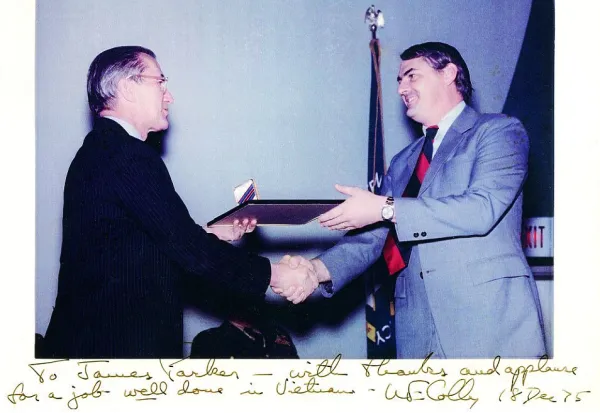
BANGKOK, Thailand -- The U.S. Central Intelligence Agency's belief in
lying Vietnamese spies, "ghosts," "slicky boys" and "marketplace mush"
contributed to America losing its Vietnam War in 1975, according to
James Parker, the last CIA officer to evacuate Vietnam.
When asked in an interview about CIA-run Vietnamese spies who
fabricated information for the CIA's reports during the war, Mr.
Parker, 73, replied:
"Ah, the lying spy syndrome."
When the CIA operates in any country, "you cannot get intel [CIA
intelligence] operatives to stay in a battle zone for more than a
couple of years at a time, so the occupational problems of fabricators
was unavoidable.
"I was in Afghanistan [during] 2010 and 2011," Mr. Parker said,
describing one of his most recent CIA assignments.
"The best intel service there was probably the Israel Mossad,
wouldn't you think? Because they had been operating in that area for
years."
Worldwide, for the CIA, "it's hard to recruit spies, to find them,

 hen was the last time we had a sitting president and a former FBI director calling each other liars? And something like 100 per cent of the population seems to believe that at least one of the accused liars is a real liar. That’s the new American normal.
The Comey circus produced a holiday atmosphere in DC, with bars open for business before the live hearings came on. And the TV audience for the Comey show was an apparently impressive 19 million-plus viewers. But that’s pallid next to the presidential inauguration’s 30 million-plus, or the Super Bowl’s typical 110 million-plus in the US. Here you may insert the appropriate comment about how these numbers reflect American priorities, with football being five times more engaging than a game where the republic is an underdog.
Laughter is a wonderful thing. It’s hard to get too much of it. But there may be something even more valuable — something that you may be better able to grasp than some of your elders.
When you’re able to see a failure in others, it can be an opportunity to spot other similar failures — even those that you may be, in some measure, sharing in.
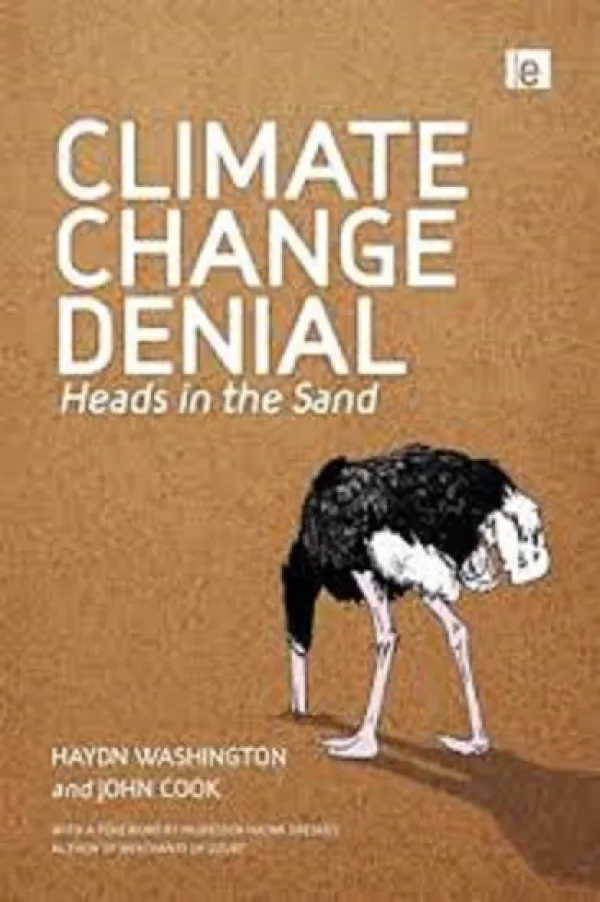
Why do climate deniers deny? No two are identical, but a major factor for many of them seems to be, not an analysis of evidence but loyalty to a worldview. In this worldview it simply cannot be the case that people are destroying the earth. That’s not in the sacred texts. There’s no place for it in many careers or lifestyles designed around extraction, consumption, destruction, and “development” of the world. Accepting the obvious would be harder than denying it. So it is denied, or — by far preferable — simply ignored and avoided.

Donald Trump and New York governor Andrew Cuomo have joined forces in destroying our economy and environment.
While Trump wages global war on the climate, Cuomo demands a statewide bailout meant to keep failed nuke reactors on line until they melt and/or explode, Fukushima-style.
Trump and Cuomo are both apostles of radioactive obsolescence.
The global climate treaty Trump wants to break has been signed by every nation on Earth except Syria and Nicaragua (which wants stronger terms).
Trump is globalizing the US legacy of breaking 800 treaties with indigenous peoples.
Like America’s indigenous tribes, the nations of the world will never trust us again.
Trump has shredded our global standing, as Germany’s Angela Merkel (CEO of the world’s #4 economy) has pronounced us an unreliable trading partner and China (#2) moves to partner directly with the European Union.
As Trump sabotages the dollar, watch him blame our economic death spiral on Muslims, commies, immigrants, and people of color.
Trump’s wedge between the US and Germany is a dream come true for Putin’s petro-mafia.

There has been a lot of media coverage mostly written by Israelis or American Jews regarding Israel’s “victory” fifty years ago during the so-called Six Days War directed against its Arab neighbors but I have yet to see an account that mentions the fate of the U.S.S. Liberty. Nevertheless, the Liberty is not forgotten. This Thursday at noon at Arlington National Cemetery there will be a small gathering for the annual coming together with the survivors and friends of the most decorated ship in the history of the U.S. Navy, a victim of a particularly brutal and unprovoked attack by Israel that has been covered up for half a century by the powers that be in Washington.

BANGKOK, Thailand -- An American Buddhist nun said the U.S. Embassy
rescued her from Thai men who wanted to kidnap her, but they later
allegedly burned down her temple dormitory because she intentionally
disobeys Thai Buddhist clergy by supporting women to become nuns.
Leaura M. Naomi's confrontation earlier this year is the most vivid
example of a wider revolution by women across Southeast Asia demanding
equality to allow female ordinations within Theravada Buddhism.
In Theravada -- the oldest and more conservative of Buddhism's two
main branches -- a male monk's ancient Pali-language title is
"bhikkhu".
A nun is a "bhikkhuni".
About 95 percent of Thailand's population are Theravada Buddhists.
Theravada also exists in Cambodia, Laos, Myanmar, Sri Lanka, India
and Indonesia.
In Thailand many, if not most, families arrange for at least one
young adult son to live in a temple -- perhaps for several days or a
season -- to be ordained as a novice or monk.

BANGKOK, Thailand -- A chubby Thai woman sits on a plastic sheet on
the ground, meticulously hand-sewing colorful wristbrands embroidered
with the words, "CUNT PAIN" "FUCK MY LIFE" "FREE BOOM BOOM" and an
array of similarly poetic declarations.
Other females, wearing the bubbly silver hats of Thailand's
minority ethnic Akha tribe, are selling gaudy gewgaws while stroking
wooden frogs which produce an obnoxious but attention-getting,
croaking sound.
Nearby, giddy foreigners chew fat black scorpions and other fried insects.
Some people are getting tattoos or having their hair braided with
bright plastic beads.
Throbbing and wondrous, Bangkok's amusing Khao San Road flaunts
itself at the swarms of sweaty culture-shocked tourists who are
walking and gawking at their first revelations in Thailand, hours
after arriving by air.
Other travelers are wistfully saying farewell during their last
night in Bangkok before departing to less vivid destinations.
The desperate, decadent touts have seen it all.

In The Putin Interviews, a new series beginning soon on Showtime, Oliver Stone asks Vladimir Putin if he’s ever seen Dr. Strangelove. Putin hasn’t. So, Stone sits him down and shows it to him. Even Vladimir cannot quite keep his poker face. He says the problem depicted in the film, the risk of nuclear holocaust, is accurate but more dangerous now than when the movie was made. Stone gives Putin the DVD case, and Putin opens it to find it empty. “Typical American gift,” he jokes.
Early in the series there’s a good deal on Putin’s personal background, and a good deal of flattery from Stone, but hang on because the interesting questions are coming. Putin’s views on history and current politics are generally consensus views in Russia, but they will largely be new to U.S. viewers.

 ermont, of all places, offers the latest example of how marijuana makes people crazy, the people in this case being the Republican governor and most of the Republican Party. For all the “Reefer Madness” propaganda from governments over the past century, the real madness comes from opponents of marijuana, not its users or proponents.
Vermont governor Phil Scott waited until the last possible moment on May 24 to issue his veto of the 24-page bill (Senate bill S.22) passed by both houses of the legislature (Senate 20-9, House 79-66): An Act Relating to Eliminating Penalties for Possession of Limited Amounts of Marijuana by Adults 21 Years of Age and Older. The bill stops way short of full legalization, treating marijuana like aspirin, but it represents a major shift toward sanity and scientific reality that American populations seem to be slowly insisting that their governments address.
The new movie, War Machine, on Netflix starring Brad Pitt begins as a hilarious and satisfying mockery of General Stanley McChrystal, circa 2009, as well as of militarism in general. Hilarious because of the deadpan sincere idiocy. Satisfying at least to those of us who have been screaming “What are you idiots doing?” for the past fifteen-and-a-half years.
Should we be glad that a Hollywood movie can still be made mocking the murderous malevolence of true believers in militarism, or should we be disturbed that theaters won’t show such movies and they have to end up on Netflix? Should we be glad that a war satire set in Afghanistan didn’t have to wait decades for a different war, in the manner of Mash, or should we be disturbed that most viewers will not know a current war is being mocked because they either believe the war on Afghanistan has ended or they simply can’t keep up with the proliferation of wars?