
Global
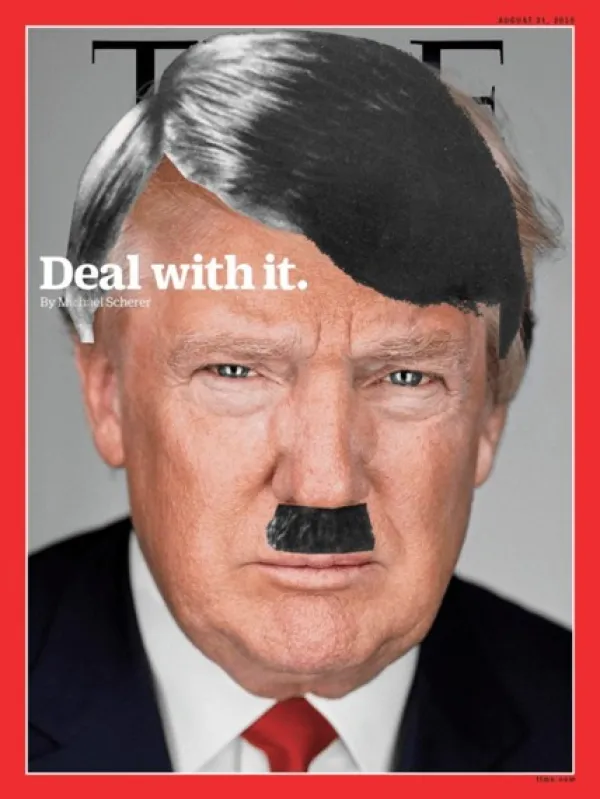
Donald Trump does not always in every way appear to be the sharpest tool in the shed. Yet there is great wisdom to be found in some of his assumptions of stupidity on the part of the rest of us. If I act like a real jackass, he thinks, the media will give me tons of free airtime, and I’ll be nominated. If I pretend to oppose corrupt power, the Democrats will nominate the living embodiment of corrupt power, and I’ll be president. If I cut everything that everybody values out of the budget but move the money to the military, my spineless war-adoring opponents will tie one hand behind their backs before they even try to put up a fight.
Jim Lo Scalzo / Pool image via AP
Last October, three weeks before the presidential election, I wrote an essay for left progressives titled “The Ruling Class’s Hatred of Trump is Different Than Yours.” People on the left, I noted, loathed the white-nationalist, quasi-fascist Donald Trump because of his sexism, racism, nativism, authoritarianism, militarism, “law and order” police-state-ism, anti-intellectualism, his regressive arch-plutocracy, fake populism, climate denialism and promise to “deregulate energy” and thereby escalate the petro-capitalist, greenhouse gassing-to-death of life on earth.
The establishment’s contempt for the orange-haired beast, I noted, was different. The nation’s unelected and interrelated dictatorships of money and empire were perfectly willing to live with most, if not all, of what the left hated about Trump. After all, I reasoned, they’d been backing or tolerating most or all of those terrible things under presidents from both major United States parties for decades.

It is the leakiest of times in the Executive Branch. Last week, Wikileaks published a massive and, by all accounts genuine, trove of documents revealing that the CIA has been stockpiling, and lost control of, hacking tools it uses against targets. Particularly noteworthy were the revelations that the CIA developed a tool to hack Samsung TVs and turn them into recording devices and that the CIA worked to infiltrate both Apple and Google smart phone operating systems since it could not break encryption. No one in government has challenged the authenticity of the documents disclosed.

A recent report from Equality Now titled 'The World's Shame: The Global Rape Epidemic' http://www.equalitynow.org/campaigns/rape-laws-report offered a series of recommendations for strengthened laws to deter and punish sexual violence against women and girls.

Thanks to a recent Wall Street Journal article, I've been hearing from Democratic partisans that President Trump has done something brand n
“In a statement to WikiLeaks, the source details policy questions that they say urgently need to be debated in public . . .”
Let me interrupt this quote from the world’s declassifier in chief, regarding its latest release of impertinent, humiliating and shocking data about the American security state, simply to absorb this statement of the obvious: There is an urgent need for public debate — ongoing public debate — not simply about this or that new revelation gifted to the world by an anonymous whistleblower, but about the very fact that “national security” is a game played in secret, against a mysterious, shape-shifting array of “adversaries.”
Does this game have anything at all to do with either the nation’s security or the safety and stability of the whole planet? Whose interests does it serve? How does secrecy mesh with accountability?
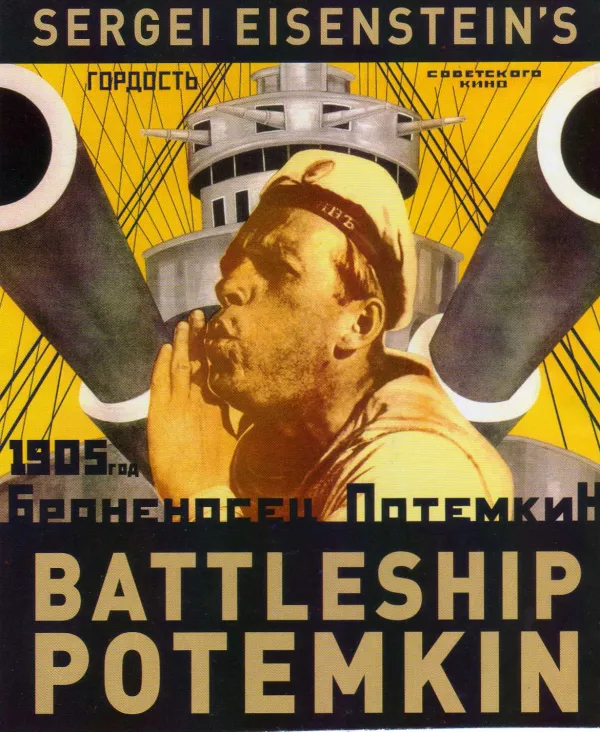
Los Angeles, March 13, 2017 – The Los Angeles Workers Center and HollywoodProgressive.com are co-presenting the revolutionary classic Potemkin.
Based on a true story, Sergei Eisenstein’s 1925 Potemkin is a stirring account of the mutiny by sailors aboard the Battleship Potemkin who refuse to eat maggoty meat and the mass strike by workers supporting them during Russia’s 1905 Revolution is widely considered to be Soviet cinema’s greatest masterpiece. The terrifying Odessa Steps scene encapsulates czarist brutality, while Potemkin’s theme of triumphant solidarity expresses the essence of Russia’s three revolutions, symbolized by pounding waves. (75 minutes.)
What: Battleship Potemkin screening.
When: Friday, 7:30 p.m., March 24, 2017.
Where: The L.A. Workers Center, 1251 S. St. Andrews Place, L.A., CA 90019.
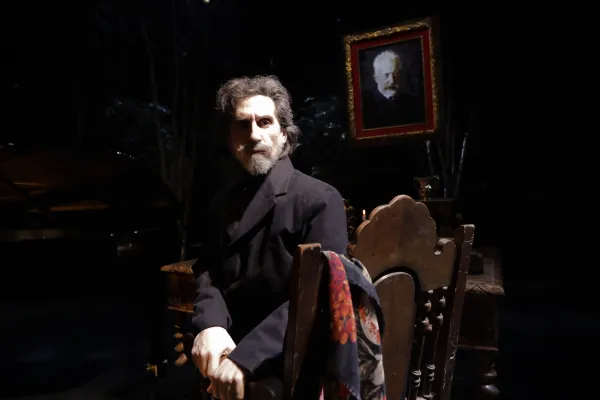
Actor/playwright/musician Hershey Felder’s stock in trade is a musicalized (uh, is that a word? If not, it is now) version of the one-man show. This triple threat dazzles audiences with his live depictions of musicians to the accompaniment of his own virtuoso piano playing. But Felder’s plays are far more than being solely solo concerts. Felder not only regales theatergoers with the sounds of talents such as George Gershwin, but engages auds with his vivid portrayals of the artists, unfolding their private and public lives.
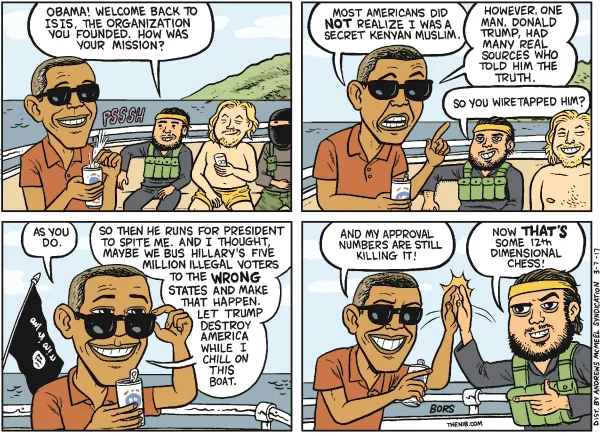
For months now, our country has endured the tacit denigration of American ingenuity. Countless statements -- from elected officials, activist groups, journalists and many others -- have ignored our nation’s superb blend of dazzling high-tech capacities and statecraft mendacities.
Fortunately, this week the news about release of illuminating CIA documents by WikiLeaks has begun to give adequate credit where due. And not a moment too soon. For way too long, Russia has been credited with prodigious hacking and undermining of democracy in the United States.