
Global
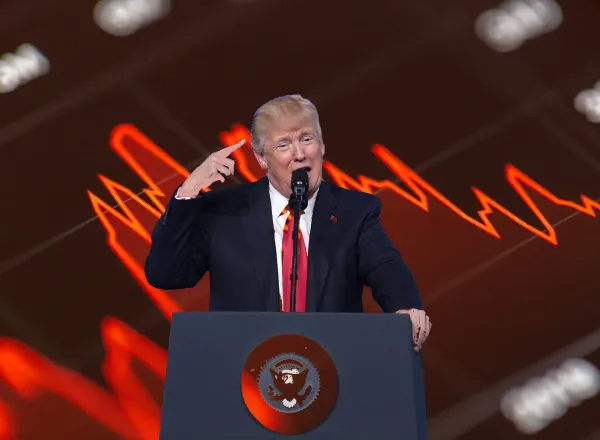
On April 1, Donald Trump startled the world by publicly declaring that he was “absolutely” considering withdrawing the United States from the 77-year-old NATO alliance. Trump’s remarks came only hours after Pete Hegseth, his Defense Secretary, declined to reaffirm the U.S. government’s commitment to NATO’s collective defense.

Almost fifteen months in, fifteen relentless months of chaos, corrosion, and calculated stupidity, and now more than a month into a full-blown war with Iran that has already destabilized global energy, shut down one of the most critical shipping lanes on Earth, and pushed the world to the edge, with billions of people wondering if there was going to be no tomorrow and we’re now supposed to pretend this is strategy? Strategy, my ass.
Is this leadership? No. This is what happens when you hand the controls of a fragile, nuclear-armed world to the pudgy fingertips of a narcissistic arsonist, a sadist’s mindset with a messiah complex. What we’ve witnessed isn’t governance, it’s demolition. Not even a full day before the whole thing started unraveling like one of his bankrupt casinos. Aware that the whole world mocked him, he folded like a lawn chair.
This so-called excursion is a masterclass in stupidity. The Solution? There must be payback. Trump must pay reparations. This is the only solution that makes dollars and sense, the only solution that will affect him. He is his money.

You are at the wrong place at the wrong time. A camera reads your license plate. Another scans your face. A computer cross-references your location against a pattern it has flagged as suspicious. A facial recognition algorithm returns your photo as a possible match to a suspect. A detective, trusting the machine, applies for a warrant. Six officers show up at your door.
This is not science fiction. This is the documented reality of how AI-driven surveillance is being deployed by American law enforcement in 2026 — and three private companies have quietly built the infrastructure making it possible, selling their tools to police departments, federal agencies, and intelligence units across the country with minimal oversight, no federal regulation, and no requirement that any of it be disclosed to the courts, to defendants, or to the public.
The Companies Building The Surveillance State
Three vendors form the backbone of what civil liberties researchers are calling an emerging AI surveillance pipeline in American law enforcement.
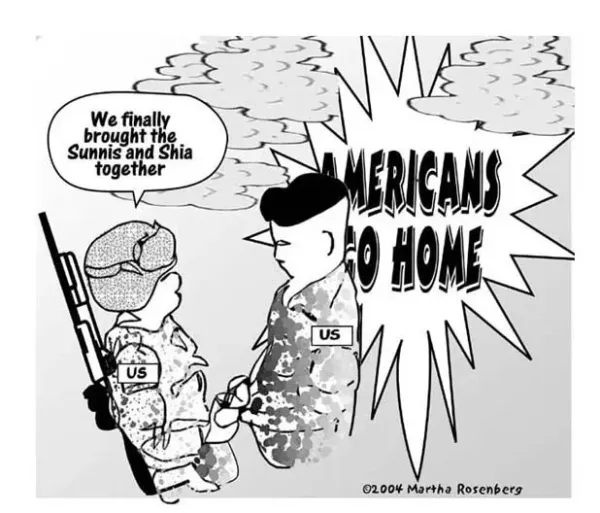
For those who remember the Iraq war, Iran seems like deja vu all over again.
After enduring the “shock and awe” bombing of Iraq in 2003, the late NPR reporter Anne Garrels chronicled her experiences in the best-selling book, Naked in Baghdad and many of her observations seem relevant today.
In a speech at Northwestern University in 2008, she addressed the Abu Ghraib scandal, the dubious government contractor Blackwater, government censorship and the pros and cons of reporters embedding with active military operations.
Casually dressed in a leotard, flowered skirt, ballet flats and bare legs, Garrels also discussed the effect of escalating violence and kidnappings on reporting, everyday life in Iraq and the experience of being a female war reporter.

Overnight on April 3, 2026, the war between the United States and Iran entered a dangerous new phase. An F-15E Strike Eagle was shot down over Iran, with images of its wreckage quickly circulating online. On the same day, an A-10 Warthog was struck by Iranian fire over the Persian Gulf; its pilot managed to reach Kuwaiti airspace and was rescued.
The fate of the second crew member from the downed F-15E remained uncertain. While one pilot was recovered after a seven-hour rescue effort involving U.S. helicopters—one reportedly hit by small arms fire—Washington offered no clear statement on whether the missing airman had been killed, captured, or was in hiding, even as U.S. aircraft continued operations over the crash site.
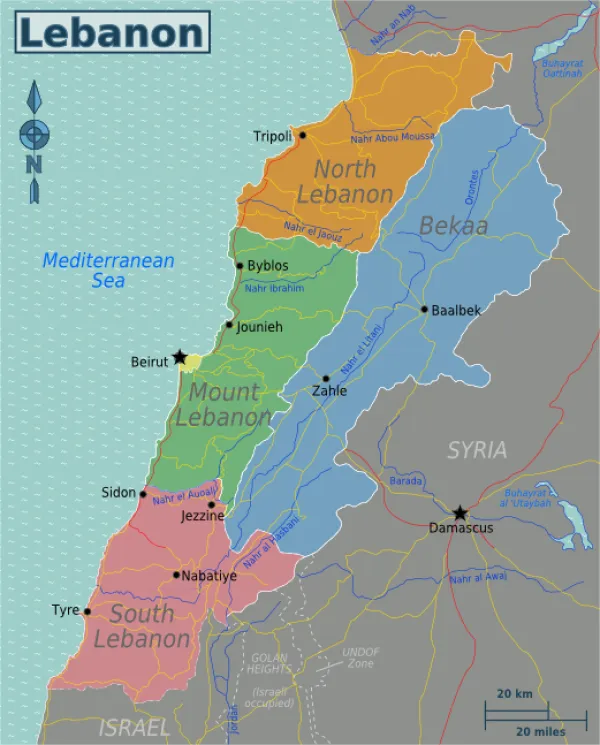
Israel’s latest war on Lebanon is not only being waged from the air. It is being reinforced politically from within, as Beirut moves in step with US-Israeli efforts to isolate Hezbollah and weaken Iran’s negotiating position.
In a previous article, we examined the seven messages that Israeli Prime Minister Benjamin Netanyahu sought to communicate through mass killings in Lebanon.
These messages were aimed at reshaping regional dynamics, asserting deterrence, and forcing new political realities on the ground.
Those massacres have already resulted in hundreds of Lebanese killed and more than a thousand wounded, alongside vast destruction of civilian infrastructure, according to Lebanese civil defense figures.
The scale and intensity of the violence were not incidental, however. They were meant to create urgency, fear, and ultimately, compliance.

It is no secret that the US is experiencing an obesity crisis and many are embracing GLP-1 agonist weight loss drugs. Racial and ethnic minorities on the other hand, and people with low incomes or living in rural areas, still struggle with obesity/type 2 diabetes mellitus and prediabetes, especially when they live in under-resourced and medically underserved communities.
The federal National Diabetes Prevention Program offers a one-year “lifestyle change program“ (LCP) for those at risk with coaching, health guidance and a support group. But even though it is covered by many employers/insurers and a Medicare program, many in the at-risk demographics are not participating. That’s why a recent study in the journal BMC Digital Health is encouraging.
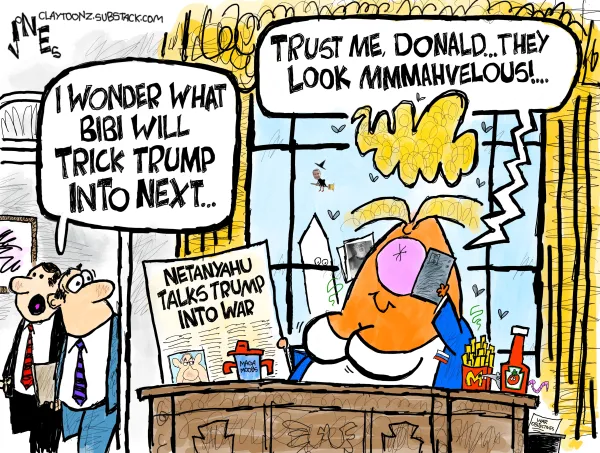
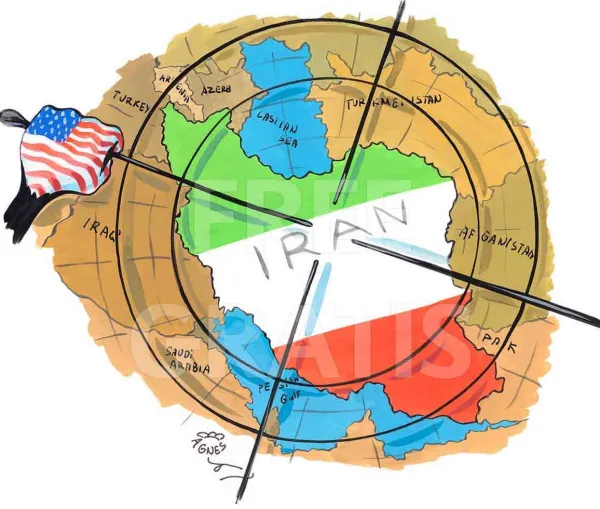
The knives are out—and this time, they are not aimed at Tehran, but at Donald Trump and Benjamin Netanyahu.
Even the ever morally flexible Chris Christie moved quickly. The former New Jersey governor and longtime Republican insider, speaking on CNN, did not merely criticize Trump; he used the moment to indict establishment Republicans for enabling him in the first place. What was once quiet discomfort has now hardened into open political distancing.
CNN, for its part, framed the outcome through a language of selective humanitarian concern—invoking the plight of the Iranian people as victims of their own government, even as it criticized Trump’s failure. The contradiction is telling: a posture of moral superiority that condemns mismanagement, yet stops short of rejecting the underlying logic of war itself. In this framing, aggression is not questioned—only its effectiveness.