
Global

A dozen nations of the world and two US states have officially entered Solartopia.
They all now generate more electricity with renewable sources than they consume.
Coming from Stanford University’s world-renowned engineering professor, Dr. Mark Jacobson, the numbers reflect a global transition away from fossil fuels and nuclear power, toward wind, water and solar (WWS) sources. They are increasingly backed by massive leaps in battery backup while prices drop—all amidst an epic shift from lithium to sodium batteries.
According to Jacobson, Laos (population: 7.87 million) now uses WWS in 257% of the electricity it consumes. It exports the rest. (See Linkedin Article)
In our polarized society, trying to have a productive discussion on the issues of the day is a frustrating experience. And it’s never more frustrating than when the topic is guns.
As soon as the subject comes up, it unleashes a volley of charges and counter-charges so familiar that they simply ricochet around the room without ever finding their mark. In other words, minds remain unchanged.
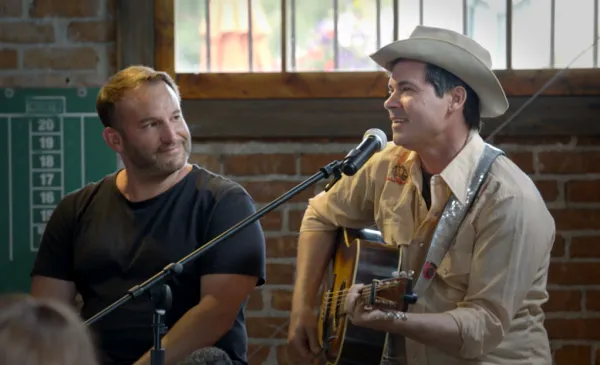
Louder Than Guns, a documentary directed by Doug Pray, is about a musician who’s determined to change that situation.
Ketch Secor is the fiddler and lead singer of the country-bluegrass band Old Crow Medicine Show. Following a March 2023 mass shooting at the Covenant School in his native Nashville, Secor vowed to launch a series of discussions about gun violence at the band’s various tour stops. Since the band’s fans are a diverse group of folks who come together for the music, he figured maybe they could be convinced to come together “for the kids.”
Backing him up in the effort is David Greene, a radio journalist who’s disappointed that gun debates inevitably lead people to cast unfair judgments on those with differing opinions.

Breathe deep, sigh, embrace the next word: W-A-R.
It doesn’t go away. I write about it far too often, and every time I do I feel torn inside . . . even though I remain personally safe from it (at least for now). Words can so easily turn the actions and consequences of war into abstractions, while failing to question why it exists at all. War is simply who we are. This is a hard certainty to shatter. But . . .
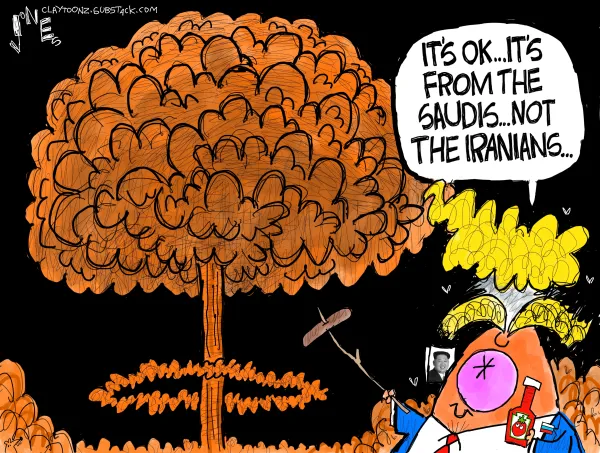
“Nothing exposes the bankruptcy of America’s approach to Iran more clearly than its return to more war as the answer to its own failures.”
So wrote Sina Toossi and Nancy Okail recently in the Nation. Their words start opening a deeper level of understanding, one that I’m groping for. They go on:
“It is tempting to dismiss the war resumption as another example of Donald Trump’s impulsiveness. It is something deeper. Trump is less breaking with America’s approach to Iran than taking it to its logical conclusion.”
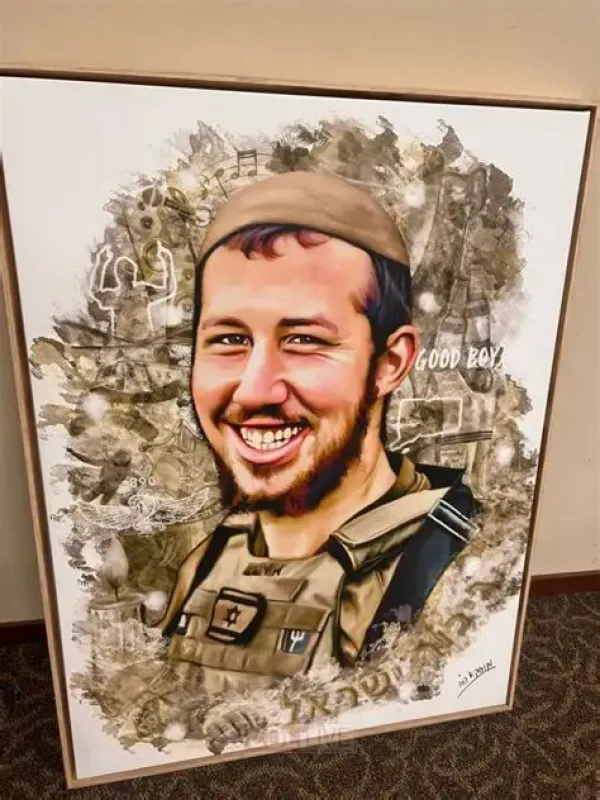
Two U.S.-born soldiers who served in the Israel Death Forces (IDF) have died—one was killed in Lebanon, and the other died by apparent suicide in the United States. Their deaths come amid the continuing regional conflict that began in October 2023.
The war has exacted a devastating human toll. Tens of thousands of Palestinians have been killed in Gaza, including medical personnel, journalists, aid workers, women, and children, according to multiple international organizations and media reports. Israel disputes some casualty figures and argues that Hamas operates within civilian areas.
Approximately 140 Israeli soldiers have reportedly been killed in or as a result of operations in Lebanon since fighting on the northern front began in October 2023. This total includes soldiers killed during cross-border exchanges with Hezbollah as well as later ground operations in southern Lebanon. The precise number varies depending on whether sources include operational accidents and soldiers who later died from their wounds.
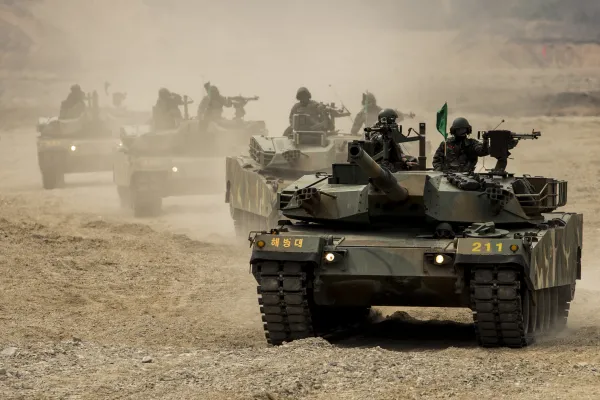
History has a way of humbling great powers. Again and again, militarily superior states enter conflicts expecting rapid victories, only to discover that modern war rewards resilience, adaptation, and endurance as much as firepower. Russia learned this lesson in Ukraine. The United States may now be learning a similar one in Iran.
The comparison is not perfect. Ukraine is a defending itself against invasion, while Iran is a regional power with its own ambitions, proxies, and authoritarian government. The political and moral dimensions of these conflicts are fundamentally different. Strategically, however, the parallels are difficult to ignore.
When Russia launched its invasion of Ukraine in February 2022, President Vladimir Putin expected a swift campaign that would decapitate the Ukrainian government and establish Russian dominance within days. Instead, Ukraine—supported by Western military and financial assistance—proved remarkably resilient. Russia's overwhelming military advantages failed to produce the decisive victory Moscow had anticipated.
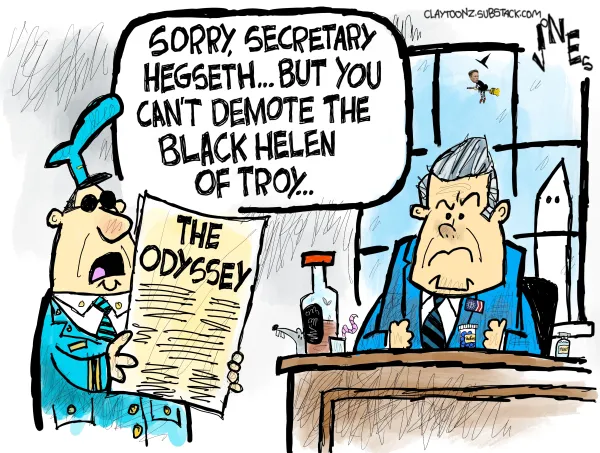
Neither Hot war in the Middle East and ICE war in Middle America are going well, thanks to the US government being pretty much on the wrong side of both of them. It may thus be necessary to steal the upcoming elections and whip up hysteria against our current group of Americans-in-training to distract from, well, the government lacking the consent of the government, or any other legitimacy. And while they’re at it, removing the environment from the path of profit seems like a bold avenue of lunacy.
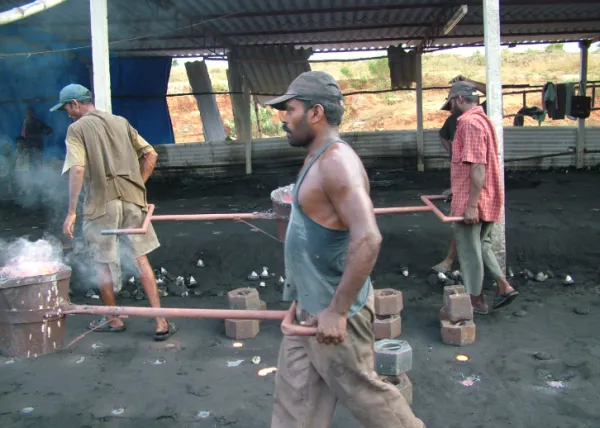
Central Ohio stands on the grounds of manufacturing plants, freight lines, and defense contractors , where generations of Columbus citizens built the city with their hands by working in factories, loading docks, and construction sites long before it was an "innovation hub." However, that legacy is harbouring a hazard often overlooked: asbestos exposure. For decades, this toxic mineral was the go-to material for insulation, machinery parts, and construction—prized for its heat resistance and durability. That widespread use came at a cost: millions of workers and many service members breathed in asbestos dust during much of the twentieth century.
Tuesday, July 21, 7 – 8pm EDT
Zoom
As some of you may be aware, July 16th marks the 81st anniversary of the Trinity Test, the world’s first explosive test of a nuclear weapon which was conducted in New Mexico. While the blast was visible up to 160 miles away, The U.S. government did not warn local communities or people living downwind of the explosion about the test or its lethal effects.
For our July Meetup, we’ll be joined by guest speaker Tina Cordova at the top of the hour (with a Q&A session afterwards). Tina is a seventh-generation native New Mexican and co-founder of the Tularosa Basin Downwinders Consortium, seeking justice for the unknowing, unwilling, and uncompensated victims of the Trinity Test. She was also a guest on the first episode of the Back from the Brink Podcast.
As an accomplished community organizer and nuclear abolition activist, Tina has a great deal of wisdom and insights that you will likely find helpful in your local advocacy and organizing.