
Global
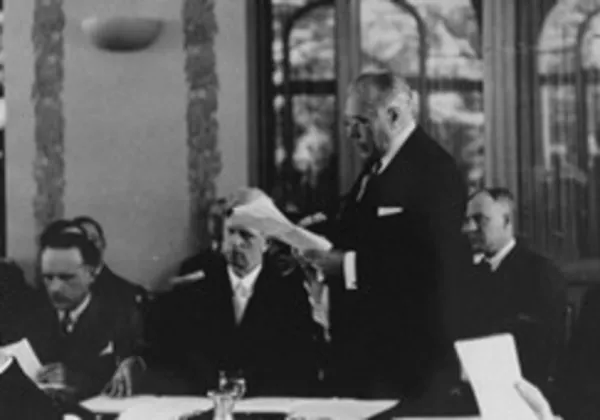
Evian is not just a bottled water company. And the town of Évian-les-Baines in France on the south shore of Lake Geneva is not just a location for luxury hotels. It’s also the location where, in July 1938, the first international effort was ever made (or feigned) to alleviate a refugee crisis.


With the Democratic Party’s “Unity Reform Commission” now history, major political forces are entering a new stage of contention over the future of the party. Seven months after the commission’s first meeting -- and nine months after Hillary Clinton backer Tom Perez won a close election over Bernie Sanders supporter Keith Ellison to become chair of the Democratic National Committee -- the battle lines are coming into focus for next year.
The commission’s final meeting adjourned on Saturday after a few steps toward democratizing the party had won approval -- due to the grassroots strength of progressives. But the recommendations from the commission will go to the Rules and Bylaws Committee, which was one of the DNC decision-making bodies that Perez subjected to a purge two months ago. Now, in the words of Jim Zogby (who was removed from the Executive Committee by Perez), “There are virtually no Bernie supporters on the Rules and Bylaws Committee.”


Like Pavlov's dog, the mainstream media slobbers platitudes every time North Korea launches another test missile. Listening to the blather one would think that once Kim Jong-un has a missile capable of reaching the US, he is going to use it in an unprovoked nuclear attack on the US mainland killing millions of Americans.

While the whole world watches Tuesday’s Alabama US Senate election, race-based battles behind the scenes could decide the outcome.
They focus on likely stripping of voter rolls to prevent African-Americans from casting their rightful ballots , and flipping the electronic outcome should that prove insufficient.
But election protection activists have just won a major court victory that could make electronically flipping the election more difficult. An in-depth feature will follow on that tonight.
The national Democratic Party has poured significant resources into this race. We hope it will provide careful scrutiny on whether legitimate citizens are allowed to vote, and on how the votes are actually counted.
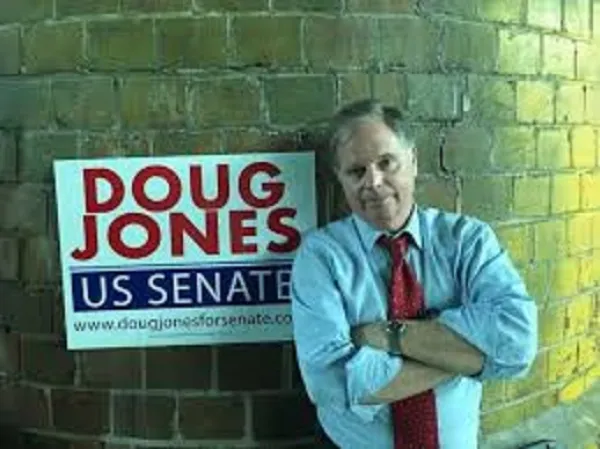
It started with the soft, mellifluous chords of an electric organ in the basement hall of the 16th St. Baptist Church in Birmingham, Alabama two blocks north and east of the 4th Avenue headquarters where the African American organizers and the white suburban volunteers in the Doug Jones for U.S. Senate campaign are working shoulder to shoulder to turn the tide of recent history and elect a progressive, pro-choice Democrat in the Deepest Southern bastion of reactionary Republicanism.
One by one, other parishoners joined in on drums, then sax, then bass, then trumpet, until the two hour service in the historic church was rocking to hymns of joy and praise.
If Jones has a prayer of pulling off an upset victory in the December 12th special election for U.S. Senate in Alabama, it resides in the community halls of African American churches like this one, and in the barbershops that still line the blocks of the former black business district of Birmingham, where Jones' headquarters are located.
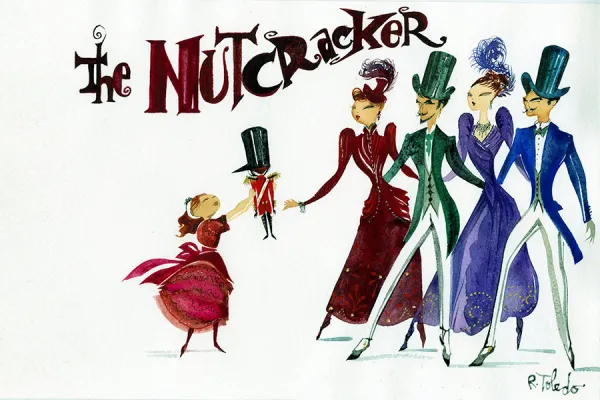
Peter Ilyich Tchaikovsky’s narrative ballet The Nutcracker, based on E.T.A. Hoffmann’s children’s story about magical mice, sugarplum fairies, toy soldiers and dolls that come to life, is a perennial holiday favorite. The Miami City Ballet version, with choreography by the renowned George Balanchine and the Russian composer’s melodic score performed by a live orchestra, remains ideal for the Christmas season for children of all ages.
As youngsters gathered around the Stahlbaums’ lavishly decorated Christmas tree for yuletide greetings in Scene 1, Act I, the stage of the Dorothy Chandler Pavilion was filled with projections designed by Wendall K. Harrington. The graphics continued throughout Scene 2’s childlike dreamland of a fantastical battle between the gigantic Mouse King, a Nutcracker that comes alive and their minions. During the third scene’s lovely winter wonderland sequence it seemed like it was snowing onstage.
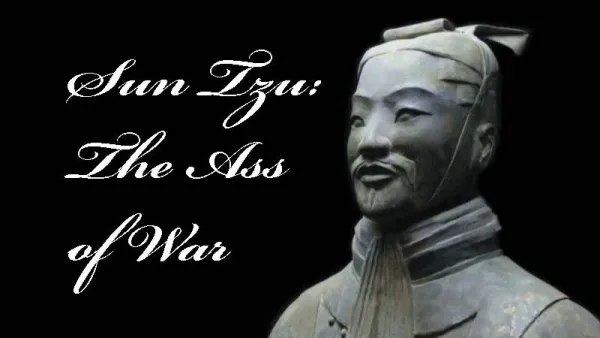
Sun Tzu, whose book, The Art of War, was written some 2,500 years ago during a period of constant war, and popularized in the West some 100 years ago (just in time for industrialized warfare), is the leading example of what’s wrong with digging up ancient platitudes as guides for action today in the areas of war and peace.
“That the impact of your army may be like a grindstone dashed against an egg — this is effected by the science of weak points and strong.”
This “wisdom” provides nothing to the modern warmonger on his own terms, and even less to the advocate for peace; yet it’s imagined to be relevant to both, to create common ground for both, and to embody deep timeless meaning.
“But a kingdom that has once been destroyed can never come again into being; nor can the dead ever be brought back to life.”
Read that solemnly as if discovering amazing new insights. If you can, you are a better war artist than I.