
Environment
The Nuclear Industry is a global affair, especially when something goes wrong, requiring transparency to ensure the safety of children and families around the world. History has shown that significant releases of radiation that effect the environment and population can be released long before any hope of containment or control can be expected. Nuclear disasters can not only threaten the health of first responders, but also cripple critical systems that allow complex situations to be analyzed and reported effectively.
While the amount of time it takes before officials act can be measured in days and weeks, the amount of time before radiation can spread and effect those outside of the nation’s borders can be a matter of minutes or hours. After the disaster at Fukushima Daiichi, it was noted that radioactivity from the damaged station could reach the opposite end of the Pacific Ocean within a matter of days.
While the amount of time it takes before officials act can be measured in days and weeks, the amount of time before radiation can spread and effect those outside of the nation’s borders can be a matter of minutes or hours. After the disaster at Fukushima Daiichi, it was noted that radioactivity from the damaged station could reach the opposite end of the Pacific Ocean within a matter of days.
Humankind is now threatened by the simultaneous implosion, explosion, incineration, courtroom contempt and drowning of its most lethal industry.
We know only two things for certain: worse is yet to come, and those in charge are lying about it---at least to the extent of what they actually know, which is nowhere near enough.
Indeed, the assurances from the nuke power industry continue to flow like the floodwaters now swamping the Missouri Valley heartland.
But major breakthroughs have come from a Pennsylvania Senator and New York's Governor on issues of evacuation and shut-down. And a public campaign for an end to loan guarantees could put an end to the US industry once and for all.
FUKUSHIMA: The bad news continues to bleed from Japan with no end in sight. The "light at the end of the tunnel" is an out-of-control radioactive freight train, headed to the core of an endangered planet.
We know only two things for certain: worse is yet to come, and those in charge are lying about it---at least to the extent of what they actually know, which is nowhere near enough.
Indeed, the assurances from the nuke power industry continue to flow like the floodwaters now swamping the Missouri Valley heartland.
But major breakthroughs have come from a Pennsylvania Senator and New York's Governor on issues of evacuation and shut-down. And a public campaign for an end to loan guarantees could put an end to the US industry once and for all.
FUKUSHIMA: The bad news continues to bleed from Japan with no end in sight. The "light at the end of the tunnel" is an out-of-control radioactive freight train, headed to the core of an endangered planet.
Valery Alexeyevich Legasov was a famous Soviet scientist, whose death in the spring of 1988 on the second anniversary of the tragedy at Chernobyl rocked the Soviet Nuclear Industry. At the time of the Chernobyl disaster on April 26, 1986, Legasov had become the First Deputy Director of the Kurchatov Institute of Atomic Energy. His role was to investigate the cause of the disaster, and help plan for the mitigation efforts. He was a chemist, and extremely professional. "With our reactors, we may expect apocalypse any time" Legasov kept repeating in his meetings, but his words always fell on deaf ears. He had always carried a premonition of catastrophe, and constantly worked at the Institute of Atomic Energy to organize groups of experts to determine the safety of different types of reactors.
This may be the moment history has turned definitively against atomic energy.
To be sure: we are still required to fight hard to bury reactor loan guarantees in the United States. There are parallel struggles in China, Indian, England, France and South Korea.
The great fear is that until every single reactor on this planet is shut, none of us is really safe from another radioactive horror show.
Thus the moment is clearly marked at Fukushima by three reactors and a radioactive fuel pool still untamed after three months, with the horrific potential to do far more apocalyptic damage than we've seen even to date.
That image includes Japanese school children being issued Geiger counters to carry with them 24/7.
And Fukushima's radiation raining down on the United States, with links to reports of a heightened infant death rate in Seattle.
To be sure: we are still required to fight hard to bury reactor loan guarantees in the United States. There are parallel struggles in China, Indian, England, France and South Korea.
The great fear is that until every single reactor on this planet is shut, none of us is really safe from another radioactive horror show.
Thus the moment is clearly marked at Fukushima by three reactors and a radioactive fuel pool still untamed after three months, with the horrific potential to do far more apocalyptic damage than we've seen even to date.
That image includes Japanese school children being issued Geiger counters to carry with them 24/7.
And Fukushima's radiation raining down on the United States, with links to reports of a heightened infant death rate in Seattle.
"Nuclear power is one hell of a way to boil water."~ Albert Einstein
"There is a way of survival which will strengthen and help you. There is also a way of destruction which will push you into oblivion." ~ I Ching
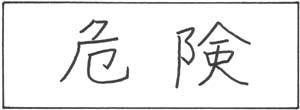
Over the last fifty years it has become apparent that nuclear energy is full of dangers, some of which carry repercussions even greater than those produced by a nuclear weapon. By way of their response to the disaster at Fukushima Daiichi, the nuclear industry, regulatory oversight committees, nuclear engineers, and leading scientific experts have failed the global community. Their actions have proved that they continually underestimated the situation, and did not fully understand it before making crucial decisions.
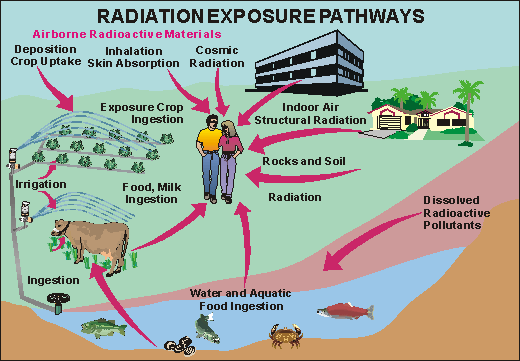
"There is a way of survival which will strengthen and help you. There is also a way of destruction which will push you into oblivion." ~ I Ching
Over the last fifty years it has become apparent that nuclear energy is full of dangers, some of which carry repercussions even greater than those produced by a nuclear weapon. By way of their response to the disaster at Fukushima Daiichi, the nuclear industry, regulatory oversight committees, nuclear engineers, and leading scientific experts have failed the global community. Their actions have proved that they continually underestimated the situation, and did not fully understand it before making crucial decisions.
At the end of John Huston's 1948 classic "Treasure of Sierra Madre," armed bandits tell Humphrey Bogart they are federal agents.
Bogie demands to see their badges.
"Badges?" says their leader. "We ain't got no badges. We don't need any badges. I don't have to show you no stinking badges."
Now nuclear fleet operator Entergy has, in effect, told New York the same thing.
Fire protection? We ain't got no fire protection. We don't need any fire protection. We don't have to show you no stinking fire protection.
Investigations by the New York News and others show Indian Point's fire detection and suppression systems to be woefully inadequate. "Indian Point's ongoing failure to comply with federal fire safety requirements is both reckless and unacceptable," says Eric Schneiderman, New York's Attorney-General.
Bogie demands to see their badges.
"Badges?" says their leader. "We ain't got no badges. We don't need any badges. I don't have to show you no stinking badges."
Now nuclear fleet operator Entergy has, in effect, told New York the same thing.
Fire protection? We ain't got no fire protection. We don't need any fire protection. We don't have to show you no stinking fire protection.
Investigations by the New York News and others show Indian Point's fire detection and suppression systems to be woefully inadequate. "Indian Point's ongoing failure to comply with federal fire safety requirements is both reckless and unacceptable," says Eric Schneiderman, New York's Attorney-General.
New readings show levels of radioisotopes found up to 30 kilometers offshore from the on-going crisis at Fukushima are ten times higher than those measured in the Baltic and Black Seas during Chernobyl.
"When it comes to the oceans, says Ken Buesseler, a chemical oceonographer at the Woods Hole Oceanographic Institution, "the impact of Fukushima exceeds Chernobyl."
The news comes amidst a tsunami of devastating revelations about the Fukushima disaster and the crumbling future of atomic power, along with a critical Senate funding vote today:
Fukushima's owner, the Tokyo Electric Power Company, has confirmed that radiation was released at Unit One BEFORE the arrival of the March 11 tsunami.
This critical revelation confirms that the early stages of that melt-down were set in motion by the earthquake that sent tremors into Japan from a relatively far distance out to sea.
"When it comes to the oceans, says Ken Buesseler, a chemical oceonographer at the Woods Hole Oceanographic Institution, "the impact of Fukushima exceeds Chernobyl."
The news comes amidst a tsunami of devastating revelations about the Fukushima disaster and the crumbling future of atomic power, along with a critical Senate funding vote today:
Fukushima's owner, the Tokyo Electric Power Company, has confirmed that radiation was released at Unit One BEFORE the arrival of the March 11 tsunami.
This critical revelation confirms that the early stages of that melt-down were set in motion by the earthquake that sent tremors into Japan from a relatively far distance out to sea.
Licensing Board Allows Endangered Species and Toxic Algae Contentions to Proceed to Hearing Stage
Monroe, MI--The U.S. Nuclear Regulatory Commission (NRC) Atomic Safety and Licensing Board (ASLB) presiding over the Fermi 3 combined construction and operating license application (COLA) proceeding ruled on May 20 against nuclear utility DTE’s motion for summary disposition on two contentions against the proposed new reactor brought by an environmental coalition. The first contention concerns risks of Fermi 3’s construction and operation exacerbating the proliferation of toxic algae in Lake Erie. The second involves risks to an endangered indigenous species -- the Eastern Fox Snake -- from the proposed new atomic reactor.
Monroe, MI--The U.S. Nuclear Regulatory Commission (NRC) Atomic Safety and Licensing Board (ASLB) presiding over the Fermi 3 combined construction and operating license application (COLA) proceeding ruled on May 20 against nuclear utility DTE’s motion for summary disposition on two contentions against the proposed new reactor brought by an environmental coalition. The first contention concerns risks of Fermi 3’s construction and operation exacerbating the proliferation of toxic algae in Lake Erie. The second involves risks to an endangered indigenous species -- the Eastern Fox Snake -- from the proposed new atomic reactor.
Fukushima may be in an apocalyptic downward spiral.
Forget the corporate-induced media coma that says otherwise…or nothing at all.
Lethal radiation is spewing unabated. Emission levels could seriously escalate. There is no end in sight. The potential is many times worse than Chernobyl.
Containing this disaster may be beyond the abilities of Tokyo Electric or the Japanese government.
There is no reason to incur further unnecessary risk. With all needed resources, it's time for the world's best scientists and engineers to take charge.
Even then the outcome is unclear.
For a brief but terrifying overview, consult Dr. Chris Busby as interviewed by RT/TV.
Fukushima Units One, Two and Three are all in various stages of melting down.
Molten fuel at Unit One may have burned through its reactor pressure vessel, with water poured in to cool it merely pouring out the bottom.
A growing pond of highly radioactive liquid is softening the ground and draining into the ocean.
Forget the corporate-induced media coma that says otherwise…or nothing at all.
Lethal radiation is spewing unabated. Emission levels could seriously escalate. There is no end in sight. The potential is many times worse than Chernobyl.
Containing this disaster may be beyond the abilities of Tokyo Electric or the Japanese government.
There is no reason to incur further unnecessary risk. With all needed resources, it's time for the world's best scientists and engineers to take charge.
Even then the outcome is unclear.
For a brief but terrifying overview, consult Dr. Chris Busby as interviewed by RT/TV.
Fukushima Units One, Two and Three are all in various stages of melting down.
Molten fuel at Unit One may have burned through its reactor pressure vessel, with water poured in to cool it merely pouring out the bottom.
A growing pond of highly radioactive liquid is softening the ground and draining into the ocean.
As Fukushima continues to leak and smolder, what may be the definitive battle over new nukes in America has begun.
The critical first US House vote on a proposed $36 billion loan guarantee package for reactor construction may come as early as June 2. Green power advocates are already calling and writing the White House and Congress early and often, gearing up for a long, definitive showdown.
Germany and Japan have made their decision---the "Lethal Atom" has no future.
The coffin nail is Fukushima. Substantial radiation still leaks from three or more of its six reactors. Volatile fuel rods are dangerously exposed. Various containment and fuel pool structures are compromised. Heat and radiation still pour into our global eco-systems, with no end in sight.
Thankfully, a global citizens movement helped lower the amount of plutonium-based MOX fuel loaded into Unit Three. Without that, Fukushima's emissions would be far more lethal.
The critical first US House vote on a proposed $36 billion loan guarantee package for reactor construction may come as early as June 2. Green power advocates are already calling and writing the White House and Congress early and often, gearing up for a long, definitive showdown.
Germany and Japan have made their decision---the "Lethal Atom" has no future.
The coffin nail is Fukushima. Substantial radiation still leaks from three or more of its six reactors. Volatile fuel rods are dangerously exposed. Various containment and fuel pool structures are compromised. Heat and radiation still pour into our global eco-systems, with no end in sight.
Thankfully, a global citizens movement helped lower the amount of plutonium-based MOX fuel loaded into Unit Three. Without that, Fukushima's emissions would be far more lethal.