
The Free Press is bringing back a Reviews section after some absence. We hope to review plenty of events around town. Check back frequently and if what\'s going on is any good.
Arts & Culture
Image
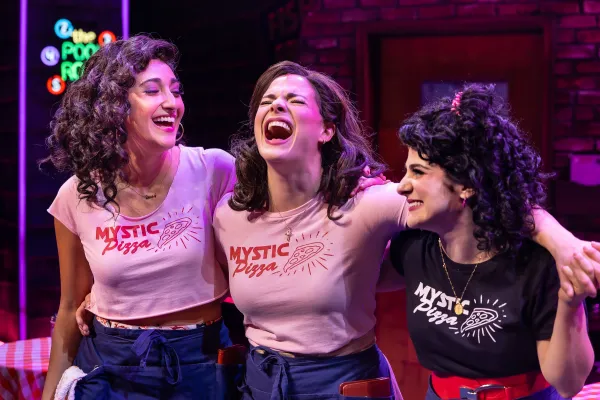
Mystic Pizza is a thoroughly enjoyable, consummately unoriginal musical play, from top to bottom. This retread of the 1988 movie is essentially a coming of age story about three young women in the eponymous Mystic, a seaside town in Connecticut. The trio – Daisy Arujo (Krystina Alabado), her sister Kat (Kyra Kennedy) and their friend Jojo Barboza (Gianna Yanelli) – are searching for romance and their pathways in life, yearning for a more fulfilling life than mere housewifery and drudgery in proletarian Mystic. This timeworn plot is, however, set in a fairly novel social milieu, namely a community with many residents of Portuguese descent, a minority group that doesn’t get much attention in U.S. pop culture.
Image
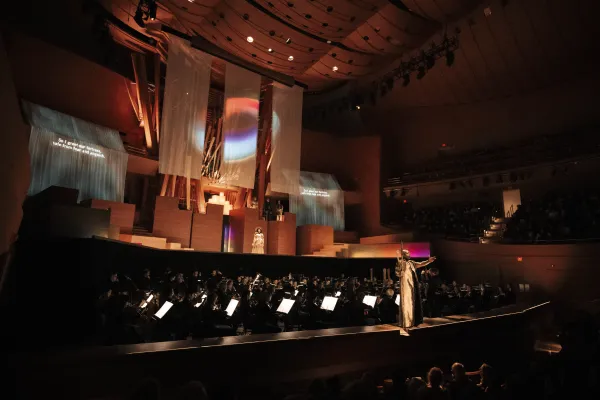
LA Phil and its Music & Art Director, Gustavo Dudamel, are taking Richard Wagner’s Das Rheingold out of the opera house and into the concert hall to present Das Rheingold, the first of the ambitious librettist/composer’s mammoth, marathon 17-hour, musical/ theatrical, four-opera extravaganza known as The Ring Cycle or Der Ring des Nibelungen. Das Rheingold – which refers to the gold of the Rhine River, not to the official beer of the N.Y. Mets – is set in primeval Germany, its characters and story derived from Northern European mythology.
Wagner’s magisterial, majestic, moody music is perfect for evoking these mythic gods, giants, dwarves, trolls, nymphs, Valkyries and other figures, plus tales, from lore that existed centuries before Christianity spread to Europe and Wagner wrought his “Bühnenfestspiel” (stage festival play) about the epic quest and struggle for a magical golden ring that endows its bearer with omnipotent powers.
Image
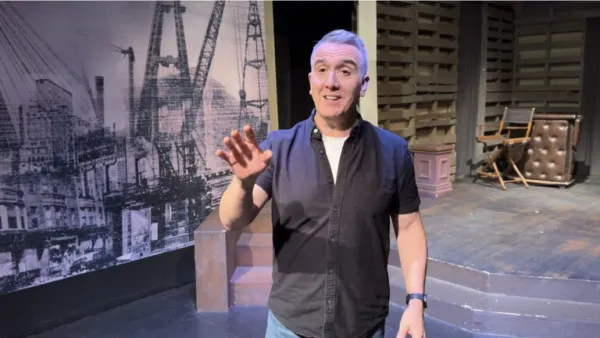
John Colella’s An Extraordinary Ordinary Man is a paean to the writer/actor’s dad and his
Italian-American clan. In his autobiographical one-man show Colella lovingly, vividly brings his
family alive onstage, regaling the audience with vignettes from his youth, growing up amidst the
family business in Chicago. Claudio Pastry was established by Colella’s immigrant grandfather,
who arrived penniless from the Mother Country and created an enduring, thriving business that
was passed down to the playwright’s father.
The bakery became the center of the family’s existence. When John was a child, he relished
learning all of the tricks of the baker’s trade, as well as devouring delicious desserts baked right
on the premises. In the play, indulging in paisano pastries such as cannolis and eclairs, little John
amusingly muses that it was as if he had his own private, personal “Willy Wonka.” He also
idolized his dad, a baker so skillful that to his son, his pop was a three-star-plus Michelin chef,
imbued with mystical flour power.
However, to his son’s surprise, John Sr. would repeatedly counsel his lad to “be anything but a
Image
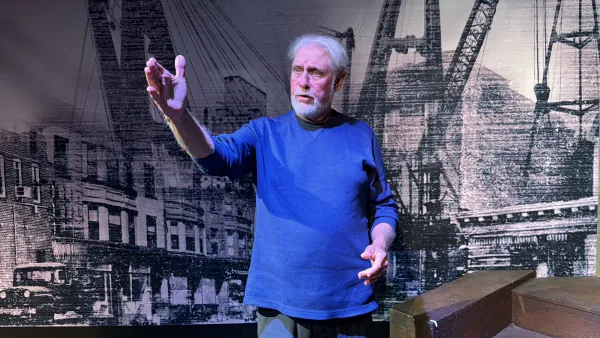
Really, Reilly? Charles Nelson Reilly – a fixture on stage and the little and big screens for about half a century, best known as a habitue of televised variety, talk and game shows plus sitcoms – attended one of America’s most renowned acting schools in Manhattan during the 1950s. But who knew that the comic performer – who appeared countless times in skits on The Dean Martin Show, as a panelist on What’s My Line?, Password and Match Game, as a guest 100-plus times on The Tonight Show Starring Johnny Carson and as an actor in the sitcom The Ghost & Mrs. Muir – studied acting under the revered Uta Hagen at New York’s fabled HB Studio? That his classmates at Herbert Berghof’s famed Greenwich Village acting outpost included Hal Holbrook, Geraldine Page, Steve McQueen, Orson Bean and many other luminaries – some of whom Reilly would go on to teach at HB Studio himself?
Image
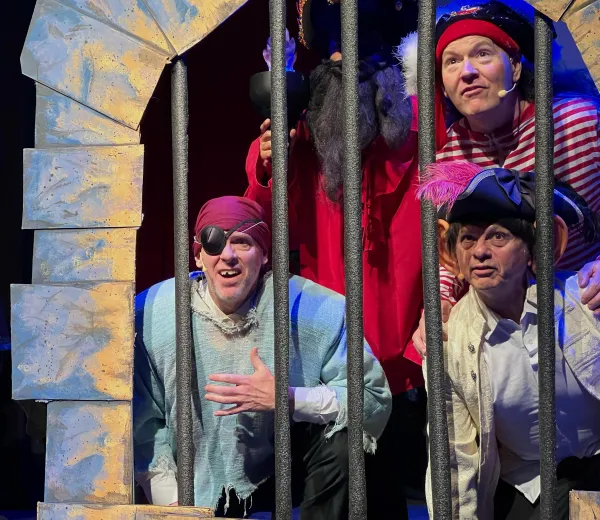
For 28 years of inspired insanity, the L.A.-based Troubadour Theater Company has wreaked
maniacal mayhem mangling modern and classic sources in order to manufacture mischievous
musical mishmashes upon the live stage. The Troubies’ – as this inimitable intrepid troupe is
monikered – mirthful mashups include 2014’s Abbamemnon (see:
https://hollywoodprogressive.com/stage/troubador-theater-company-abbame…), which
combined Aeschylus’ first tragedy in his ancient trilogy The Oresteia with the Swedish band
Abba’s disco music. Haunted House Party is the Troubies’ adaptation of Roman playwright
Plautus’ 2 nd century B.C. comedy Mostellaria (see:
https://hollywoodprogressive.com/stage/haunted-house-party). And in 2021’s Lizastrata, which
blends Liza Minnelli songs, especially from Kander and Ebbs’ Cabaret, with Aristophanes’
Greek antiwar sex satire Lysistrata, first performed in Athens in 411 BCE (see:
Image

Producer Sam Goldwyn supposedly once said: “If you want to send a message, use Western Union.” The movie mogul presumably believed that motion pictures are not the appropriate medium for artists to impart a philosophical or political perspective in. In fact, Metro-Goldwyn-Mayer’s motto, which appeared superimposed around the head of a roaring lion, was “Ars gratia artis,” which translated from Latin is: “Art for art’s sake.”
Audra McDonald seems to disagree with Goldwyn’s dictum, that implies talents should not express their worldview through an art form. “I pick songs based on their messages,” the soprano unabashedly proclaimed to the rapt throng at L.A.’s sold-out Dorothy Chandler Pavilion. Apparently, the audience agrees with McDonald’s POV, and not Goldwyn’s verdict.
Image
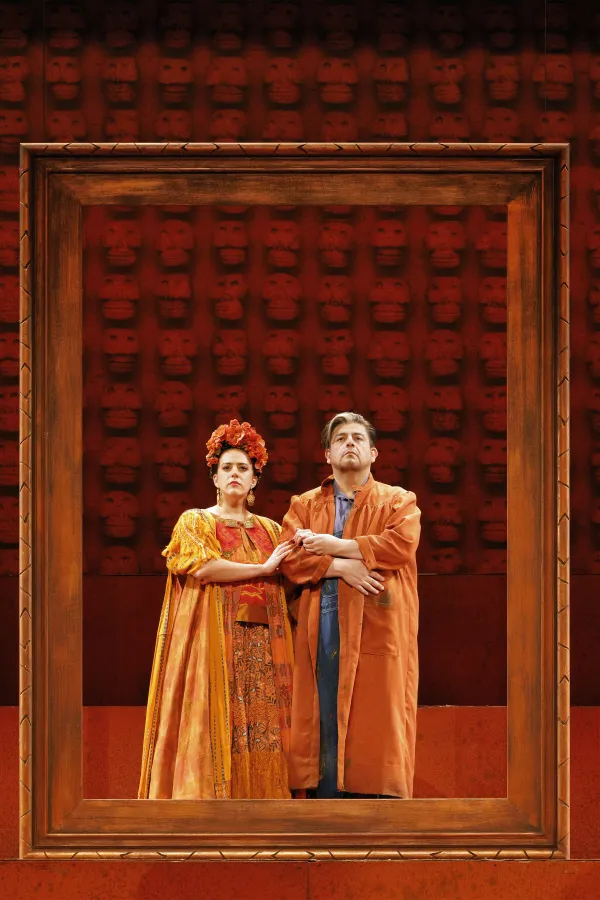
If ever there was an operatic couple absolutely ideal for immortalization in the musical medium of maestros Mozart, Puccini, Rossini, Wagner, and company, it’s Frida Kahlo and Diego Rivera. They are indelibly iconic as Mexico’s premiere artists, communists and legendary lovers. Their romance and marriages were marked by intense ardor and infidelity, with equally passionate politics, befriending the beleaguered co-leader of the Russian Revolution after Leon Trotsky was exiled from the Soviet Union and sought refuge in Mexico. Of course, Rivera’s masterful murals and Kahlo’s expressive canvases are the aesthetic foundations of their lasting renown.
Image
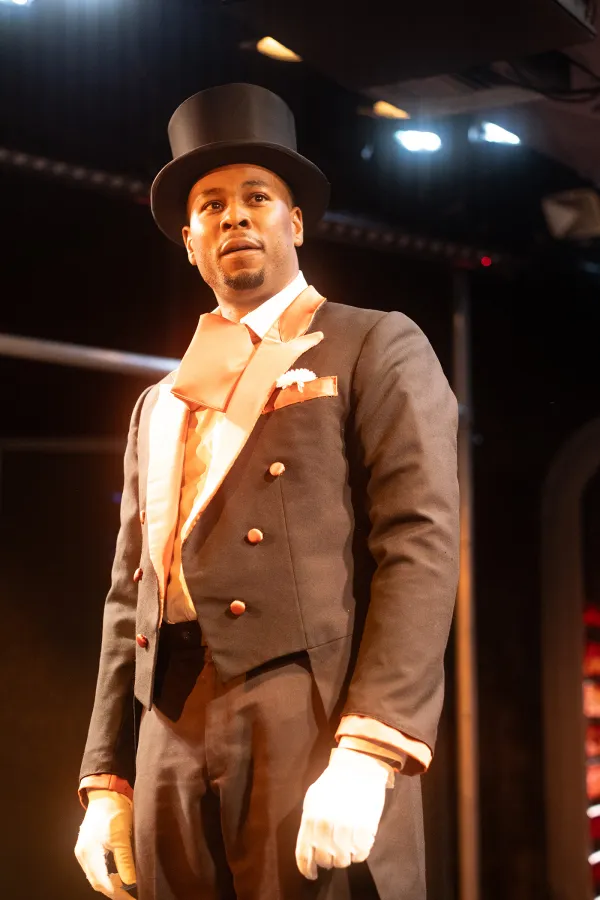
The West Coast premiere of award-winning playwright Howard L. Craft’s crafty Freight: The
Five Incarnations of Abel Green starring J. Alphonse Nicholson at the Fountain Theatre is
among the best one-man shows I’ve ever experienced. (Technically, Sidney Edwards portrays
“The Universal Flow,” who graciously assists Nicholson between scenes with props, costumes,
etc., as he morphs from one character to the next; otherwise, this is essentially a solo show.)
The 90-minute-plus, one-act play spans a century, and each of the five dramatis personae
Nicholson adeptly, smoothly transitions to and transforms into represents aspects of the African
American experience, from the 1910s to 2010s. (Freight ran Off-Broadway in 2015 and was a
New York Times’ Critic’s Pick – as it is for moi, too.) The quintet of characters includes circa
1910 a minstrel act performer who, cleverly channeling Hattie McDaniel and Stepin Fetchit,
would rather be well paid by white folks for playing a clueless, stereotypical “darkie” than to
actually be one subject to persecution and lynching. In the 1930s-set vignette the preternaturally
Image
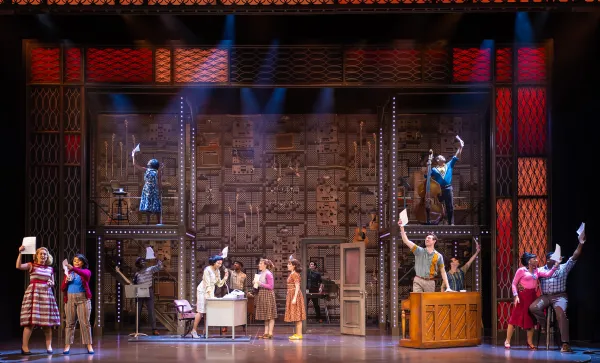
If you want to feel the Earth move under your feet, bop on over to the La Mirada Theatre to enjoy the rock ’n’ roll extravaganza Beautiful, The Carole King Musical. This bioplay dramatizes the life story of one of pop music’s most prolific, prodigious talents, with performances of 30 sizzling songs, rather gloriously accompanied by a live 10-ish piece orchestra ensconced out of sight (but not out of earshot) in the pit fronting the stage. The title character is nothing short of the “King Klein” of rock (Klein is Carole’s birth surname), who literally started composing songs and having them recorded when the precocious, precious pianist was only 16.
Image
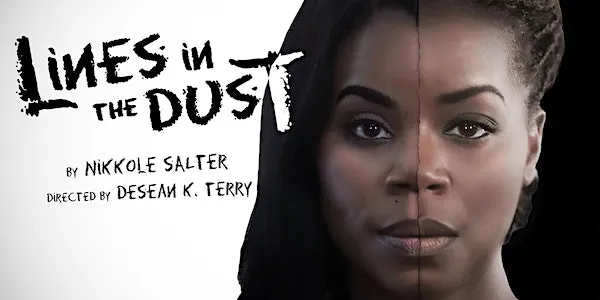
At the heart of Pulitzer Prize-nominated and Obie Award-winning playwright Nikkole Salter’s Lines in the Dust is the issue of a quality education for Blacks – just as it was during much of the Civil Rights movement, which was partly inspired by the struggle to desegregate America’s separate and unequal schools, from the Supreme Court’s 1954 Brown v. Board of Education ruling to Medgar Evers’ applying to go to the University of Mississippi to the Little Rock Nine to Gov. George Wallace blocking the schoolhouse door at the University of Alabama, etc. In fact, the title of Salter’s play is derived from Wallace’s 1963 inaugural speech at Montgomery where the pugnacious racist declared: “I draw the line in the dust… Segregation today… Segregation tomorrow… Segregation forever.”