The Free Press is bringing back a Reviews section after some absence. We hope to review plenty of events around town. Check back frequently and if what\'s going on is any good.
Arts & Culture
Image
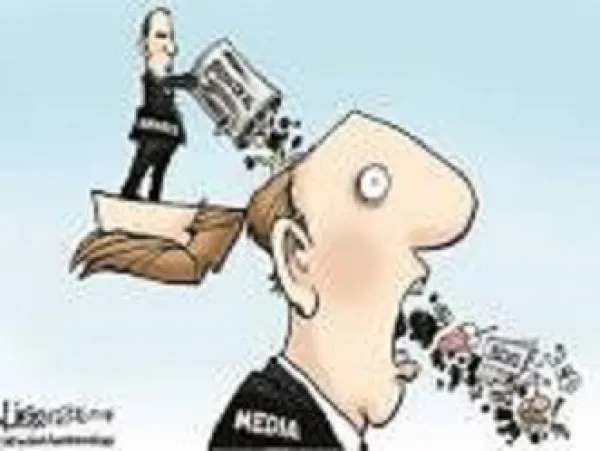
Picture, if you will, video footage of vintage (early 2016) Donald Trump buffoonery with the CEO of CBS Leslie Moonves commenting on major media's choice to give Trump vastly more air time than other candidates: "It may not be good for America, but it's damn good for CBS."
That's the introduction to a powerful critique of the U.S. media. A new film screens in New York and Los Angeles this week called All Governments Lie: Truth, Deception, and the Spirit of I.F. Stone.
Image

I grew up in a working class household with a stay-at-home mom and a dad who started working on the family farm when he was a small boy. My late father spent much of his working life in construction work, operating heavy machinery. He also supervised several county landfills. Well into his seventies, he could still work rings around men decades younger. He used to say that he didn’t trust a man who claimed to work, but wasn’t dirty by the end of the day. Like a little boy, he loved getting dirty, and the dirtier, the better. Dirty work was honest work.
Like my late father, Zimring, an associate professor of Sustainability Studies in the Department of Social Science and Cultural Studies at Pratt Institute, has a keen interest in dirt and trash. He has written another book on trash and recycling, and is the general editor of the Encyclopedia of Consumption and Waste: The Social Science of Garbage. Clearly dirt, trash and waste are important to Zimring. In Clean and White shows us that a lot can be said about the social impact of trash and waste.
Image

I have only visited the White House once, in 1975, a year before America’s bicentennial. Of course it was much easier to get in then–pre 9/11–and the public rooms still retained most of the vision and gloss of Jacqueline Kennedy, the First Lady responsible for the restoration of the building in 1962.What I remember most is that the colors of the room are extraordinarily vivid–the Red Room is really, really red–and a sense of wonder that Americans can rubberneck around the home of the President of the United States. This can’t be said about the official homes of most other world leaders.
Image
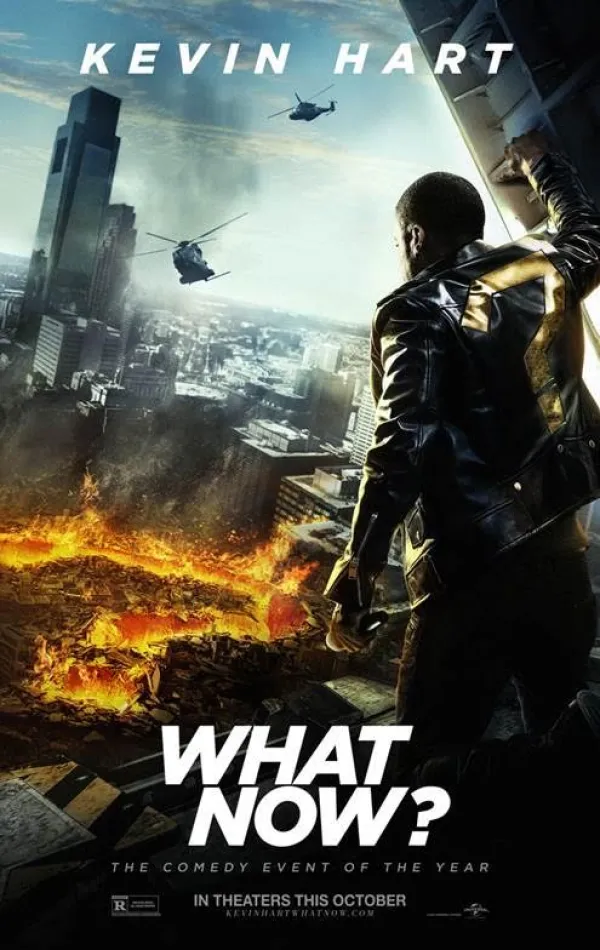
For fans of hilarious, often off-color comedy, Kevin really can’t wait: So head on down to the multiplex to laugh your head off at Kevin Hart: What Now? Much of it is a concert film in the tradition of Richard Pryor and Eddie Murphy’s earlier forays into this category of semi-documentary filmmaking of a live performance by a comedian. However, Hart’s standup routines are wittily sandwiched between an opening credit montage and sequences that are rib-tickling genre spoofs featuring Halle Berry, Don Cheadle and Daily Show and Hangover alum Ed Helms (as a token Caucasian?).
There are some inventive sight gags in the opening scene that are reminiscent of visualizations Woody Allen previously spoofed, although Hart, who also executive produced What Now? (which was directed by veteran Hart helmer Leslie Small), does so in an original way. But most of this film is shot in a sports stadium (which I am deliberately not naming in order to avoid giving a corporate plug) where an animated, at all times engaging Hart delivers a number of his routines.
Image
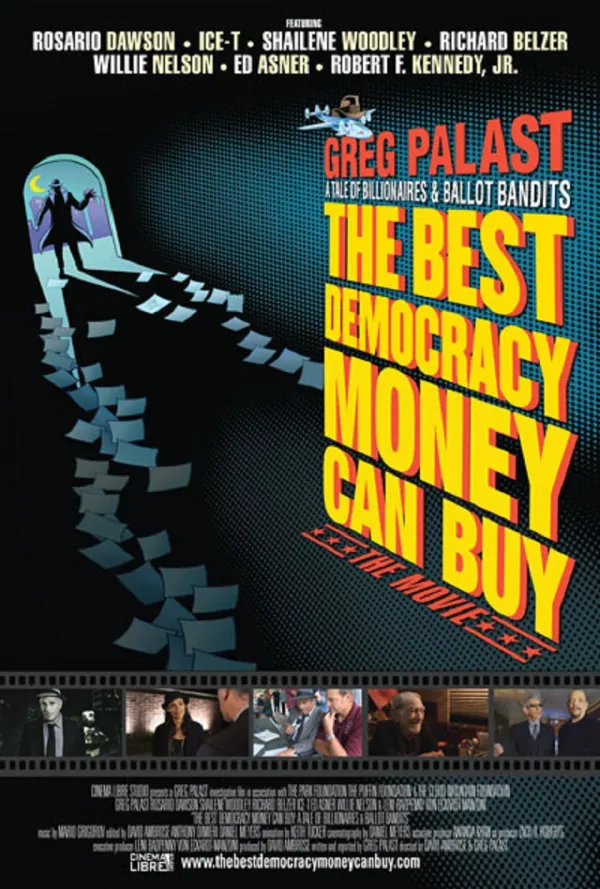
One of the American Left’s knights in shining armor, Greg Palast, is back with a new film. The trench coat, fedora-wearing Palast is to investigative reporting what Raymond Chandler’s private eye, Philip Marlowe, is to detective novels. In The Best Democracy Money Can Buy Palast wears out the shoe leather, pounding far flung proverbial pavements, from the Arctic Circle to way down South in the land of cotton to America’s heartland in Kansas to the Sunshine State to posh East Coast enclaves in Manhattan and the Hamptons to the West Coast (where Palast and Marlowe were both born) to the Congo, Venezuela and beyond, our man Palast is hot on the trail of the film’s subtitled Billionaires and Ballot Bandits.
Image
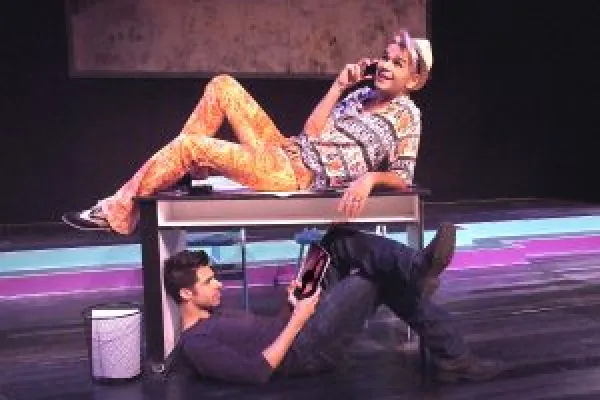
As a film historian I was a sucker for Drama Queens from Hell, playwright Peter Lefcourt’s homage/rip-off/mash-up of movie maestro Billy Wilder’s 1950 immortal masterpiece Sunset Boulevard. To be fair, Lefcourt’s two-acter also contains an original story that imaginatively, wittily riffs on Wilder and co-writer Charles Brackett’s saga about a young screenwriter’s (William Holden as Joe Gillis) relationship with an aging silent screen diva (Gloria Swanson as Norma Desmond) dreaming of a comeback and her butler/chauffeur and former director (Erich von Stroheim as Max von Mayerling) in her decaying mansion, located at that eponymous boulevard of broken dreams. All three thespians were Oscar-nommed, as was the film for Best Picture, while Wilder and Brackett scored a screenwriting Academy Award.
Image
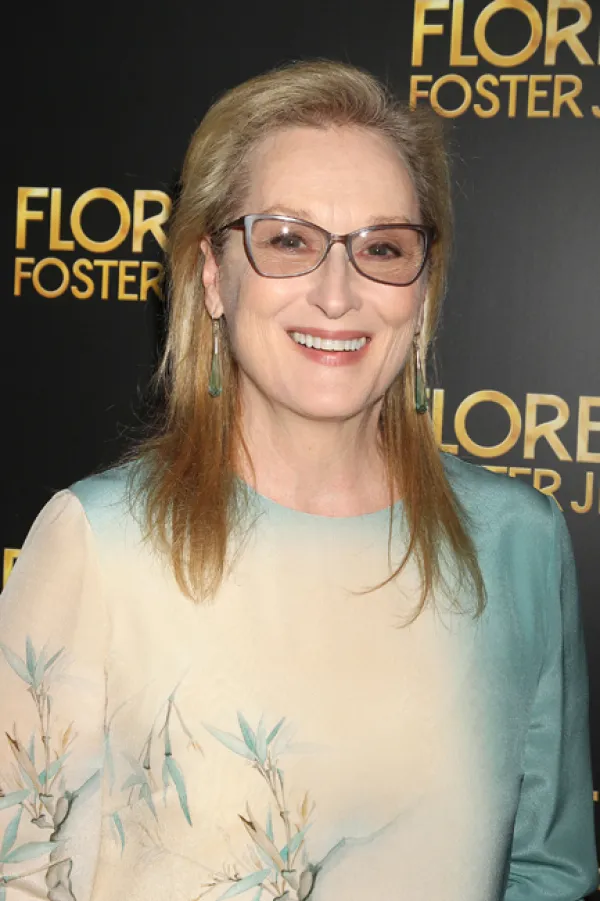
British director Stephen Frears’ latest biopic, about wannabe chanteuse Florence Foster Jenkins (the much Oscar-ed and “much-er” Oscar-nommed Meryl Streep), is a winning motion picture on many levels. Florence Foster Jenkins is at all times highly entertaining and occasionally downright hilarious. Based on the real life, eponymous Jenkins, it is a saga about a woman with limited (if any) vocal talent who somehow managed to pursue a career singing classical music. Let’s take a look at some of the dimensions Florence Foster Jenkins explores.
The stylish-looking film shot by London-born director of photography Danny Cohen (who was Academy Award-nominated for 2010’s The King’s Speech) has a “veddy” English sense of class. Florence makes it abundantly clear that Jenkins was a member of the 1% whose wealth enabled her, through a variety of ruses ranging from audience padding to influence peddling - of critics, elite figures in the rarified world of classical music, such as vocal coaches, music hall impresarios and the renowned conductor Arturo Toscanini (John Kavanagh), etc. - to buy her way onstage.
Image
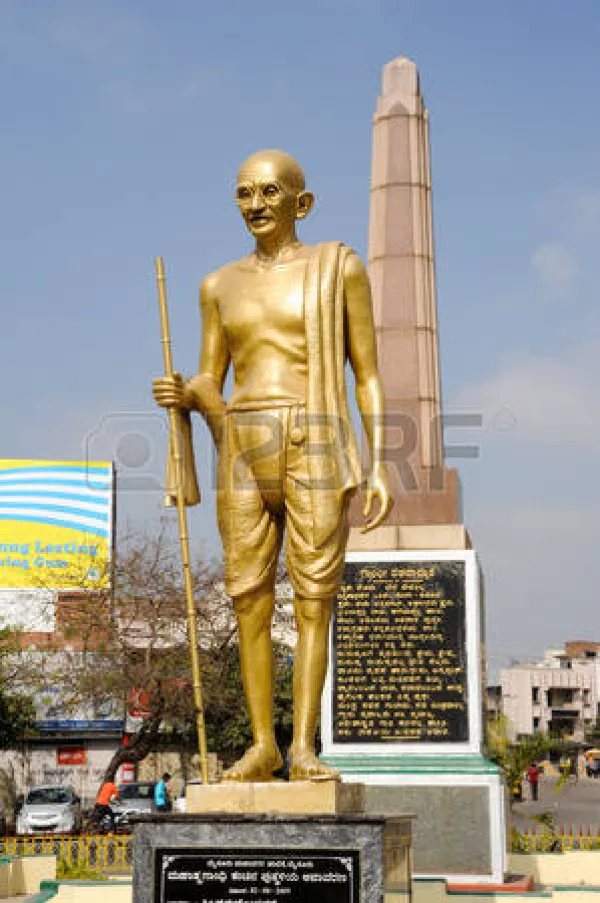
I sometimes wonder whether one of the ways in which 'Amercian exceptionalism' manifests is that many US scholars and others are unable to consider the contributions of those who are not from the USA. For example, I routinely read about studies of Martin Luther King Jr. and his associates (such as strategist James Lawson) in relation to nonviolence while the much more insightful and vastly greater contributions of Mohandas Karamchand Gandhi on the same subject are largely ignored by US scholars (although not, for example, by Professor Mary E. King, one of the best in the field).
I have just read another book that falls into this trap: 'This is an Uprising: How Nonviolent Revolt is Shaping the Twenty-first Century' http://www.publicaffairsbooks.com/book/hardcover/this-is-an-uprising/9781568587332
Image

This article first appeared on Reader Supported News
Only so long you can keep this charade
Before they wake up and see they’ve been played
Too many people with their livin’ at stake
Ain’t gonna take it.
The comin’ round is going through
The comin’ round is going through.
t’s not often a single stanza can sum up a whole political system. But those words from Bonnie Raitt ring truer every day as this pathetic “selection” season lurches ever deeper into astounding ugliness.
As evidenced by her new album, Dig in Deep, and her current concert tour, the opposite is true of Ms. Raitt, whose astonishing talent and endless heart just keep growing.
By way of disclosure, I’ve had the privilege of working with Bonnie on nuclear and other issues since 1978.
At the end of July I had the good fortune to see her perform at the Greek Theater in Los Angeles. She is on a long tour now, and if you get the chance to catch one of her shows, don’t pass it up.