
The Free Press is bringing back a Reviews section after some absence. We hope to review plenty of events around town. Check back frequently and if what\'s going on is any good.
Arts & Culture
Image
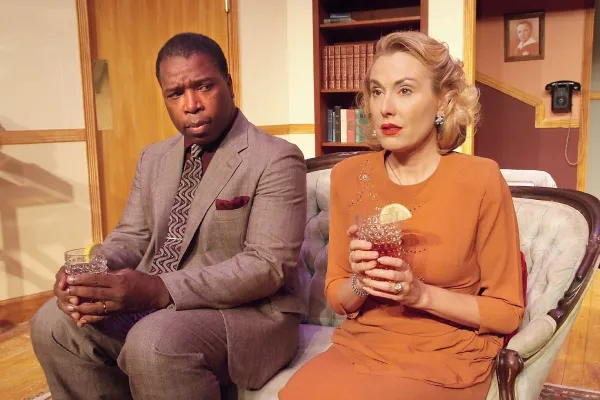
The Manson tribe was not the only wolfpack of murderous maniacs to inhabit a remote ranch in L.A. County in order to foment a helter-skelter race war in America. Before the U.S.A. entered World War II, Nazi sympathizers endeavored to create a Hitlerian enclave at Murphy Ranch in Rustic Canyon, according to the new drama Blueprint for Paradise. Members of the Silver Shirts - a pro-Nazi organization with militia-like aspects - were suspected of drilling and training at this 50 acre compound near Pacific Palisades. Perhaps even more mindboggling is that in their effort to build this dystopia dedicated to the eugenicist “ideals” of the blonde-haired, blue-eyed Aryan super race, an African American architect was hired to render the eponymous blueprints for the goosesteppers.
In this riveting world premiere written by Laurel Wetzork the
Image
In the same way that Bronx-born, Brooklyn-raised Woody Allen is the motion picture poet laureate of New York Jews, Mississippi-born playwright Tennessee Williams is the theatrical poet laureate of Southern white trash. The prolific two-time Pulitzer Prize winner for the plays A Streetcar Named Desire and Cat on a Hot Tin Roof also wrote for the big screen, including the screenplay adaptations of many of his stage productions.
Image
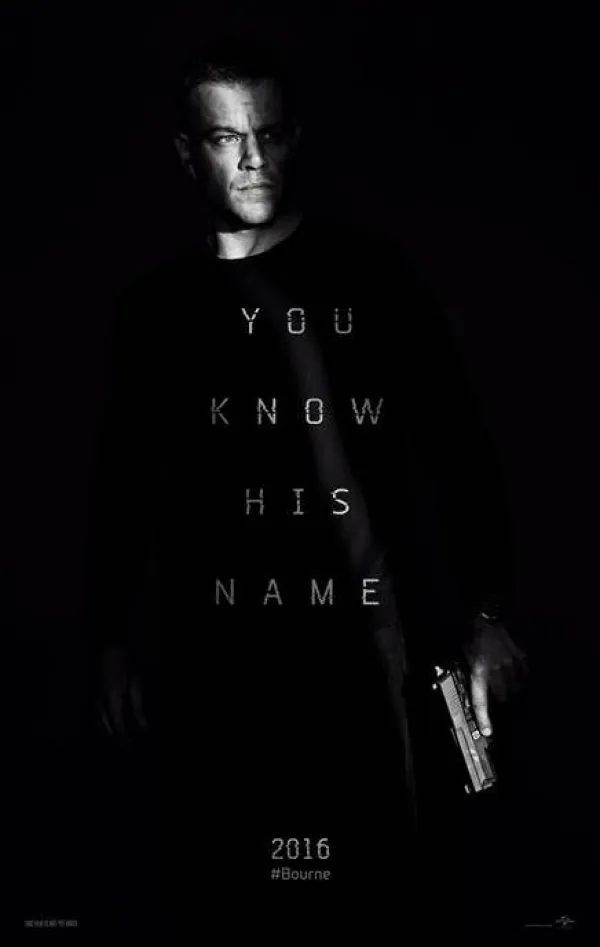
Jason Bourne is the fifth installment in the Bourne film franchise derived from Robert Ludlum’s espionage novels that began with 2002’s The Bourne Identity. Ludlum’s original Bourne trilogy began in 1980 but didn’t reach the big screen until shortly after 9/11, when the CIA and other U.S. intelligence agencies turned to what author Jane Mayer called The Dark Side. The latest sequel continues the Bourne formula of nonstop action combined with criticism of the Central Intelligence Agency and is the fourth movie starring Matt Damon as the title character and the series’ third feature helmed by British director Paul Greengrass, starting with 2004’s The Bourne Supremacy.
Image
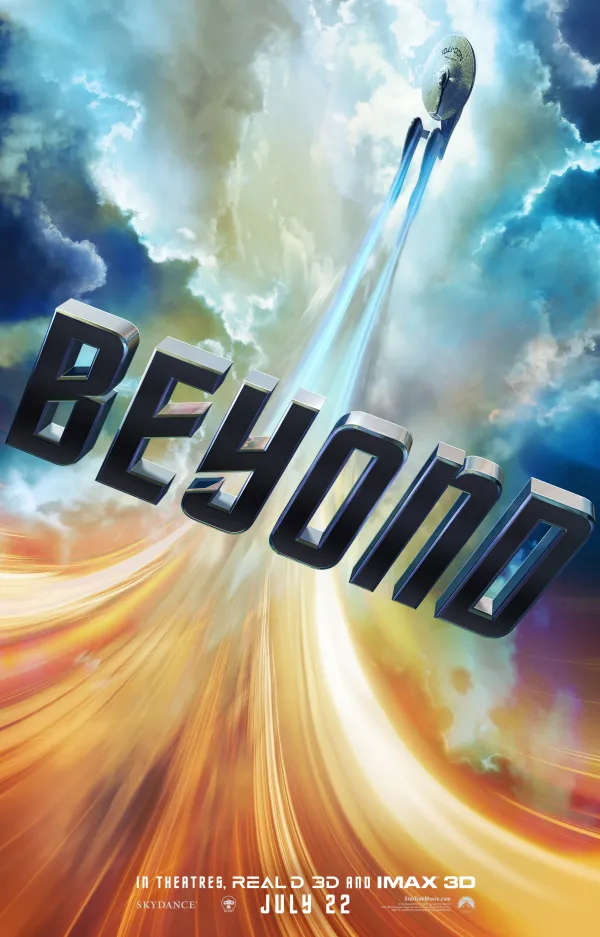
What a tired retread this umpteenth rip-off of the brand Gene Roddenberry pioneered 50 years ago with 1966’s Star Trek TV series, is, directed and produced by the cinematic art form’s most overrated, overpaid colossal no-talents. To see how many televised and motion picture permutations - perhaps mutations is a better word? - there have been of this sci fi TV classic, starting with a 1979 big screen adaptation and including 1982’s The Wrath of Khan and 1984’s The Search for Spock, see:
Image
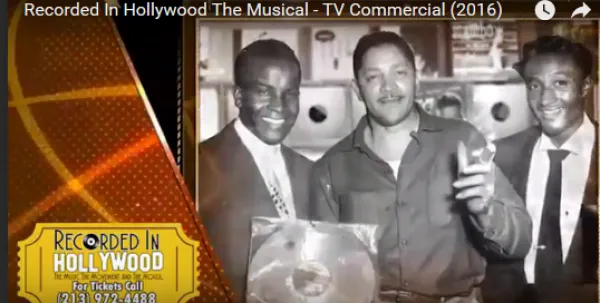
Who knew? Before there was Fox-TV’s Empire, there was John Dolphin (Broadway veteran Stu James),who from 1948-1958 was an African American impresario and entrepreneur who pioneered “Race music” at a critical time when Rock ‘n’ Roll was being born. AsRecorded in Hollywood splendidly dramatizes through music, dance, dialogueand more, this trailblazer presided over his show biz domain from the record shop Dolphin’s of Hollywood. However, as this bioplay quickly reveals in Act I, the emporium from whence Dolphin ruled his mini-empire was not located on then-lily white Hollywood Blvd., where not- so-angelic Angeleno realtors literally refused to rent a space out to him, even when offered rent in advance in hard cold cash.

Image

Clare Hanrahan's memoir The Half Life of a Free Radical: Growing Up Irish Catholic in Jim Crow Memphis is a remarkable feat: part Jack Kerouac, part Dorothy Day, part Howard Zinn, and a bit of Forest Gump.
Image

Mark Rudd, who chaired Columbia University’s Students for a Democratic Society chapter and co-led the celebrated 1968 student revolt there and co-founded the ultra-left Weatherman, recently took part in a talkback following Home/Sick, a drama about the Weather Underground which is being presented at Los Angeles’ Odyssey Theatre through July 3. The “Your Brain is a Bomb: A Revolutionary Conversation Series” that followed four Home/Sick performances (see: www.assemblytheater.org/talkback) also featured ex-SDS member and historian Jon Wiener, host of a KPFK radio program and The Nation’s weekly podcast.
Image
Dan Ireland's The Ultimate Arena: The Sacrifice of an American Gladiator is a fictionalized account, speculative in some of the details, but true in all the major facts, to the story of Pat Tillman. Any Good American who "supports the troops" has a duty to read this book, as it recounts the life and death of just about the only troop in recent years to be given a face and a name, if not a voice, by the U.S. media.
The most disturbing question raised for me by this story, as by news reports of the actual events, is unrelated to the killing of Tillman or the lying about it. My question is this: How could this larger-than-life, super-inquisitive, amateur ethicist and philosopher, raised in a uniquely intellectually stimulating and morally instructive family have come to the conclusion that it was a good idea to sign up for participation in mass murder? And secondarily: How, after concluding that he'd been duped and was engaged in purely destructive mass killing, could the same independent rebel have decided it was his moral duty to continue with it, even though he had the ability to easily stop?
Image
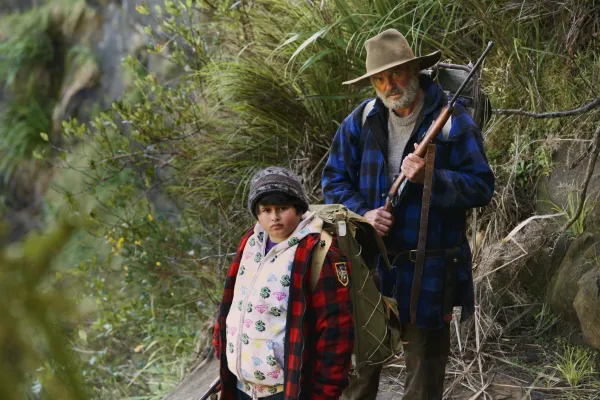
This is a banner week for South Seas Cinema, the film genre set in/shot at the Pacific Islands. It is being kicked off by writer/director Taika Waititi’s gem, Hunt for the Wilderpeople, which was made on location in Aotearoa/New Zealand. This good-natured, well-made film is a sheer delight and absolute joy to behold (and although there is some off-color language and violence, is recommended viewing for most children and families).
In essence, Wilderpeople is about an urban Maori (the indigenous people of NZ) juvenile delinquent type, Ricky Baker (the droll, roly-poly Julian Dennison), who is placed in a foster home somewhere out in the bush. There, he is begrudgingly adopted by “Uncle” Hec, a Caucasian ex-con and “bush man” played by the great Sam Neill. (Did you know that in addition to co-starring as Dr. Alan Grant in 1993’s Jurassic Park and 2001’s Jurassic Park III, as well as in 1999’s Hawaii-set Molokai, Neill grew up in the South Island of New Zealand and co-directed/co-wrote an insightful documentary about that country’s movies called Cinema of Unease?)