
Peace

George Lakey’s new book is called How We Win: A Guide to Nonviolent Direct Action Campaigning. On its cover is a drawing of a hand holding up two fingers in what is more often considered a peace sign than a victory sign, but I suppose it is meant as both.
Perhaps nobody is better qualified to write such a book, and it’s hard to imagine one better written. Lakey co-wrote a similar book in the 1960s and has been studying the matter ever since. He doesn’t just draw lessons from the Civil Rights movement, wasn’t just there at the time, but was applying lessons from earlier actions to training activists at the time. His new book provides — at least for me — new insights even about the very most familiar and often discussed nonviolent actions of the past (as well as lots of new rarely discussed actions). I’d recommend that anyone interested in a better world get this book immediately.
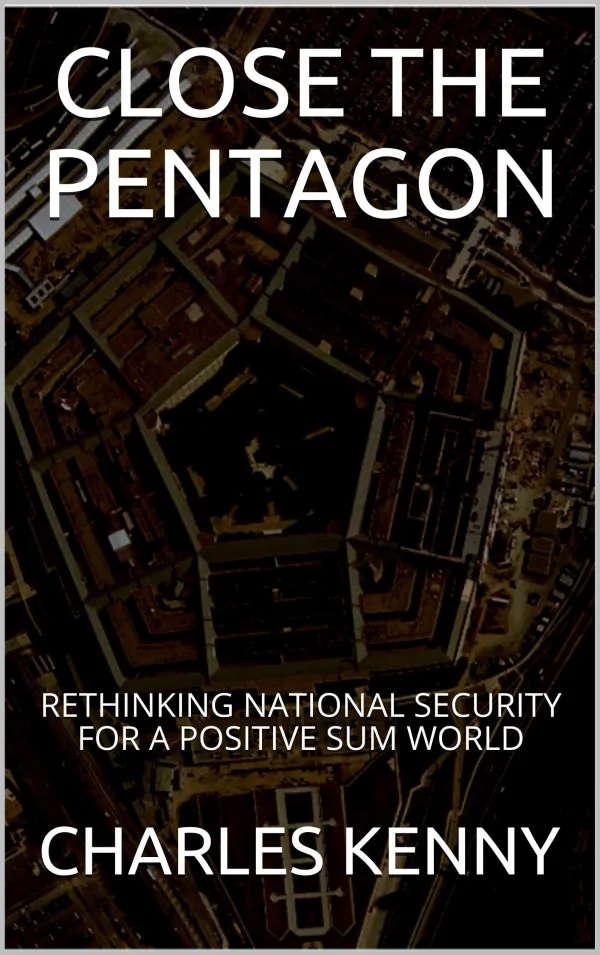
Charles Kenny’s book, Close the Pentagon, has an endorsement from Steven Pinker despite wanting to close something that Pinker rarely acknowledges exists.
This is a book to answer the question: What if someone who believed that war was only committed by poor, dark, distant people, and had therefore almost vanished from the earth, were to encounter the U.S. military and the U.S. military budget?
The answer is basically a proposal to move the money from militarism to human and environmental needs — and who doesn’t want to do that?
And if people who think war is almost gone and disappearing on its own can nonetheless be motivated to help end war-making by what they consider a bit player and what Dr. King correctly labeled the greatest purveyor of violence on earth, so much the better!
But a strategy to make it happen is going to need to be in greater contact with the real world than is a book that contains words like these: “If the U.S. wants to reduce the number of civil wars and their resulting spillovers . . . .”
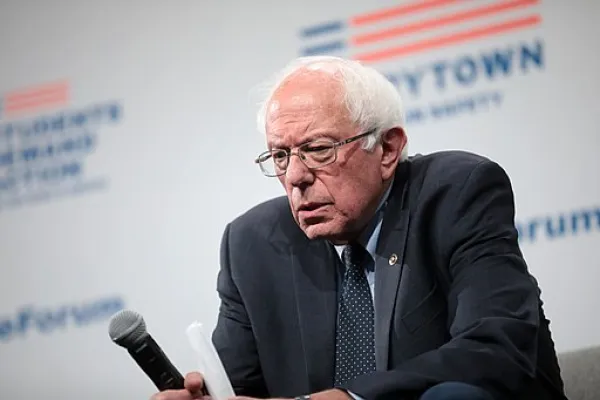
When it comes to foreign policy, it ought to go without saying that Trump, Biden, and Buttigieg are walking catastrophes. A bit of research suggests that Elizabeth Warren is pretty much a true believer in slightly modified catastrophe. But what about Bernie Sanders?
I think that, as he is right now, Sanders would, overall, if pressed a typical amount, be a dramatic improvement over 45 out of 45 past U.S. presidents. But that’s a low bar. I’m delighted with his domestic policies and with the prospect of watching the corporate media squirm as he wins. And I think Sanders has improved enough on foreign policy, in part in response to this demand, to support him now.
I also think that LBJ would have been pretty good on domestic policy if he’d resisted militarism and understood the connections between the two, and I wonder whether Sanders understands that lesson or rather has internalized the corporate-media notion that it’s anti-militarism that hurts your domestic agenda.
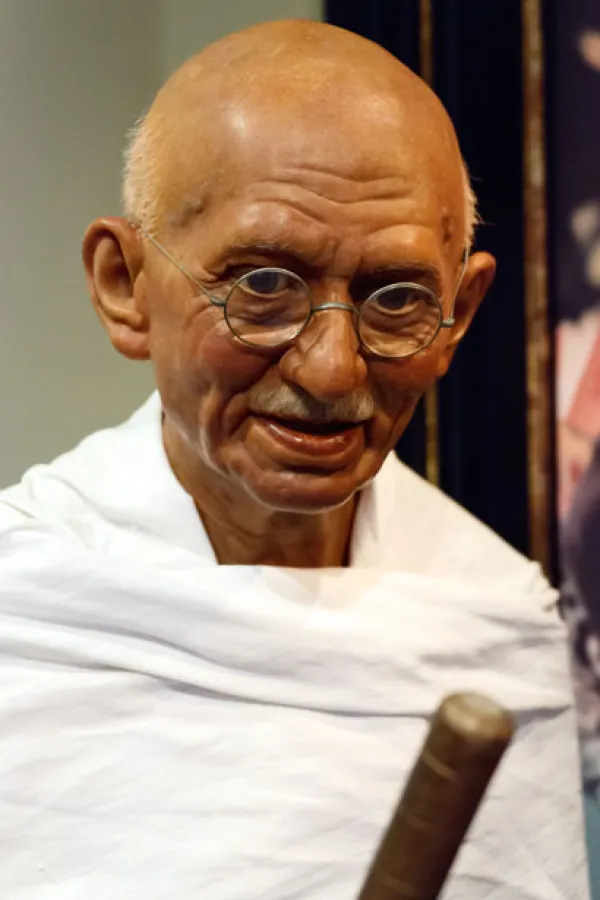
As we approach the 72nd anniversary of the assassination of Mohandas K. Gandhi on 30 January 1948, it is worth reflecting on one simple fact that he did not realize. His efforts to teach humanity that conflict, including violent conflict, could be resolved without violence were based on one fundamentally flawed assumption: that at least some humans were interested in, and committed to, seeking out and using nonviolent strategies for dealing with conflict in each and every context.
Unfortunately, as his own experience taught him and he showed clear signs of realizing towards the end of his life, the fundamental truth is that humans love violence and it is this love of violence that will ensure the extinction of Homo sapiens in the near term absent a profound response that shows no sign of emerging yet. See ‘Human Extinction Now Imminent and Inevitable? A Report on the State of Planet Earth’.

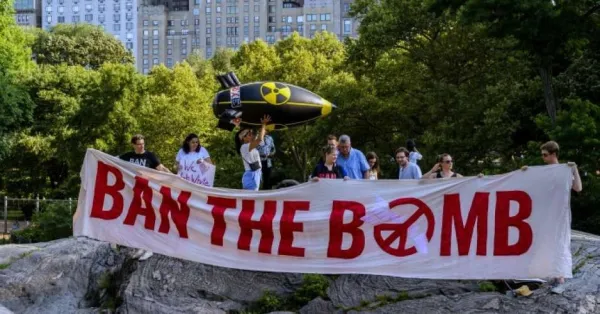
There really only is one option when it comes to nuclear weapons, and that is to do everything we can to abolish them before they abolish us. New York City Council will be voting on January 28, 2020, to do its part by voting on two measures that already have enough sponsors to give them veto-proof majorities.
One thing that becomes clear to me when I wander into the world, and the minds, of geopolitical professionals—government people—is how limited and linear their thinking seems to be.
When I do so, an internal distress signal starts beeping and won’t stop, especially when the issue under discussion is war and mass destruction, i.e., suicide by nukes, which has a freshly intense relevance these days as Team Trump plays war with Iran.
What doesn’t matter, apparently, is any awareness that we live in one world, connected at the core: that the problems confronting this planet transcend the fragmentary “interests” of single, sovereign entities, even if the primary interest is survival itself.
Bases, Demilitarization, Myth of Benefits, World
By David Swanson, Executive Director of World BEYOND War, January 15, 2020
South Korea cannot choose to make peace with North Korea without the consent of a foreign power that keeps thirty thousand troops in South Korea, makes South Korea pay much of the cost of housing them, commands the South Korean military in war, holds veto power at the United Nations, and is not accountable to the International Criminal Court or the International Court of Justice.
Martin Sheen has just released a powerful new 11-minute video outlining the two biggest dangers the world faces.

The huge crisis with Iran is more dangerous because so many Democrats have been talking out of both sides of their congressional mouths.
An example is the recent rhetoric from Sen. Chris Murphy. “The attack on our embassy in Baghdad is horrifying but predictable,” he tweeted on the last day of 2019. “Trump has rendered America impotent in the Middle East. No one fears us, no one listens to us. America has been reduced to huddling in safe rooms, hoping the bad guys will go away. What a disgrace.”
The annual defense budget, passed recently by both the House (377-48) and Senate (82-8), came in at $738 billion for 2020, up from last year a sweet $22 billion.
War hits the motherlode every year.
“The money just isn’t there” for virtually anything that matters — you know, healthcare for all, free college tuition, clean water, eco-sustainable energy production — but we’ve sold the national soul to the war god so long ago that the perfunctory, bipartisan passage of the National Defense Authorization Act comes and goes every year with, at most, a few marginal cries of outrage and a big shrug from the media.