
Global
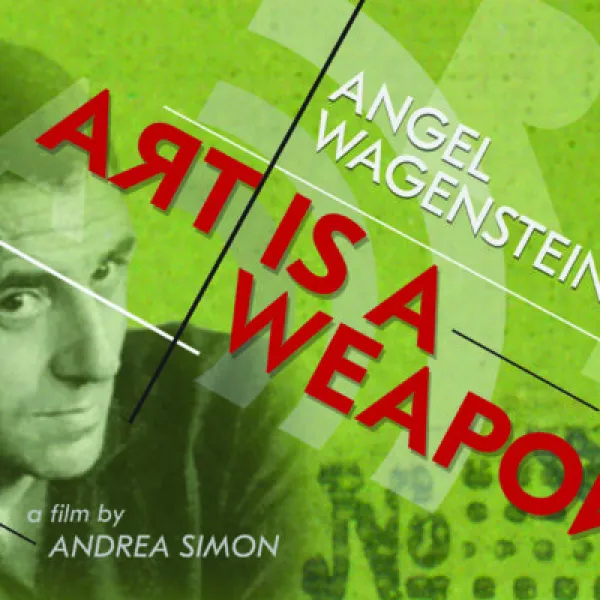
The USSR had Sergei Eisenstein, while Bulgaria had Angel Wagenstein. The life and work of the 94-year-old screenwriter and novelist is wonderfully depicted in Andrea Simon’s top notch documentary, Angel Wagenstein: Art is a Weapon, which had its West Coast premiere at Laemmle Music Hall in Beverly Hills during the 12th annual South East European Film Festival.
This extremely well-directed, enlightening nonfiction biopic paints a fascinating portrait of this leftwing Jewish writer who was born 1922 in Plovdiv. The son of a Bulgarian dedicated Communist - who, the son quips, naively “expected the world revolution to take place next Tuesday” - little Angel met his father on a visit to the prison where he was confined for his role in what Weapon contends was the first armed uprising against a fascist regime. Wagenstein (alternatively spelled as “Vagenshtain”) would recount this largely overlooked 1923 rebellion in one of his first scripts, 1954’s The Heroes of September.

As of this writing, 7,269 people in the United States, and rising steadily, have posted messages of friendship to the people of Russia.

Corporate Democrats and liberal commentators love to scapegoat the activist left for their catastrophic failures. The blame game just fell to a new low with Bill Maher’s latest attack on Jill Stein.
Like Hillary branding Trump supporters as “deplorables,” Bill tells American grassroots activists to “go f*** yourselves with a locally grown organic cucumber.”
Hillary says she was “on her way to victory” when FBI Director James Comey and “the Russians” intervened. Maher and others say Stein caused her defeat, as they blamed Ralph Nader for George W. Bush in 2000.
Hillary now pledges to “resist” Trump Fascism. Maher and other liberal pundits have been relentless in their attacks on him.
And the rest of us struggle with the keys to nonviolent resistance in the Dark Age now upon us.
But one thing is clear: what won’t work is another 16 years of liberals like Maher scapegoating left activists without facing the basic realities of where Trump came from:

 onald Trump’s latest insane excursion into US history has been to claim that his great hero, Andrew Jackson, might have prevented the Civil War.
Given his racist, genocidal nature, our seventh president could only have done that by giving up slavery in the South, spreading it into the North or giving the Southwest back to Mexico.
Jackson, of course, would never have given up slavery, which was the cause of the war and the core of his fortune.
As a young man, like a cowboy driving cattle, Jackson personally drove slaves to market. He eventually owned more than a hundred of them, and defended America’s “peculiar institution” at every opportunity.
In addition to their authoritarian temperaments, Jackson and Trump share “accomplishments” such as trashing the Constitution, personally profiting from the presidency, and inciting imperial conquest. Jackson did stand for the Union against South Carolina’s threatened secession, but that was about tariffs, not slavery.
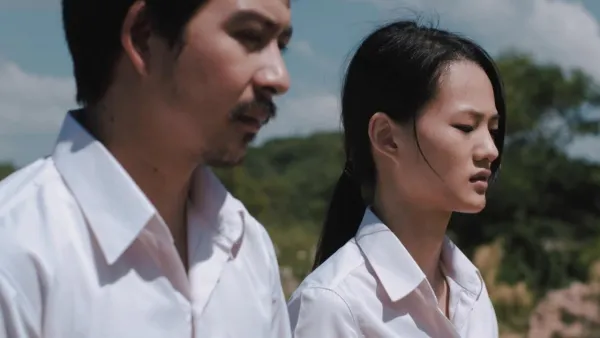
The Los Angeles Asian Pacific Film Festival focuses on features, shorts and documentaries from and about Asia and the Pacific Islands. The films screened during LAAPFF in L.A. from April 27-May 4 and in Orange County from May 5-11 are all shot on location in Asia and Oceania and/or depict characters of and/or were made by talents of Asian and Pacific Islander ancestry, such as Mele Murals, a documentary about Hawaiian street artists. As such, LAAPFF provides cineastes with an invaluable window into the movies and societies of Asia and Polynesia, and of individuals from those ethnic groups living in continental North America. The L.A. venues where LAAPFF screenings and conferences took place highlight specialty cinema, such as the opening and closing night galas at Hollywood’s Egyptian Theatre and the Directors Guild of America on Sunset Strip, as well as the Downtown Independent, the arthouse where I viewed the below.
THAILAND: BY THE TIME IT GETS DARK
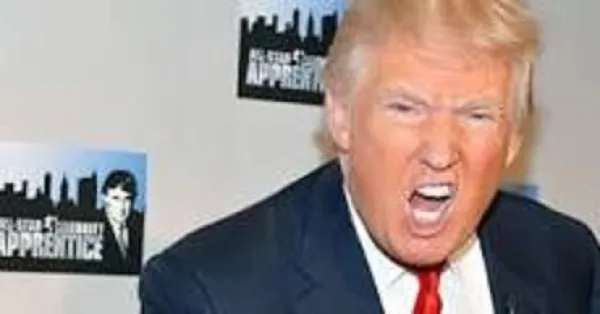
The reviews of Donald Trump’s first 100 days have generally focused on his failures, flip-flops and follies. We’ve heard a lot about what he’s failed to achieve, but far too little about what he is intent on doing.
Trump’s time in office so far has been a systematic and vicious assault on civil rights. The progress that was won with struggle, sacrifice and legislation is being subverted by ink and administrative actions and deregulation. Trump is intent on rolling back the legacy of Dr. Martin Luther King, and in his first 100 days the damage has already begun.
He appointed Neil Gorsuch to the Supreme Court, a judge with a record of rulings undermining the rights of workers, women, LGBTQ community, and protections of the environment and democracy.

At dusk I stood on a residential street with trim lawns and watched planes approach a runaway along the other side of a chain-link fence. Just a few dozen yards away, a JetBlue airliner landed. Then a United plane followed. But the next aircraft looked different. It was a bit smaller and had no markings or taillights. A propeller whirled at the back. And instead of the high-pitched screech of a jet, the sound was more like… a drone.
During the next half-hour I saw three touch-and-go swoops by drones, their wheels scarcely reaching the runaway before climbing back above Syracuse’s commercial airport. Nearby, pilots were at the controls in front of Air Force computers, learning how to operate the MQ-9 Reaper drone that is now a key weapon of U.S. warfare from Afghanistan to the Middle East to Africa.
Since last summer the Defense Department has been using the runway and airspace at the Syracuse Hancock International Airport to train drone operators, who work at the adjoining Air National Guard base. Officials say it’s the first time that the federal government has allowed military drones to utilize a commercial airport. It won’t be the last time.

At the climate rally in Chicago last week, people started drumming in the rain.
Pardon me while I walk uncertain ground here, looking for clues and connections in a smattering of unlikely places. The world is in a fragile, dangerous place. We need to create peace, fairness and sustainability. We need to create a world that doesn’t yet exist, but this is only possible if we look at the world we have with awareness that transcends the limits of our knowing. I don’t know how to do this, but I’m going to try.
And so I listen again to the native drums beating in the rain, in the bitter wind, in the company of several thousand people huddled next to each other in the city’s Federal Plaza, many of them bearing signs that expressed fragments of hope and alarm:
“Defend Our Mother.”
“We are the Earth, rising up to defend herself.”
“Save Our Planet. I don’t want to move!”
“Give kids a future.”

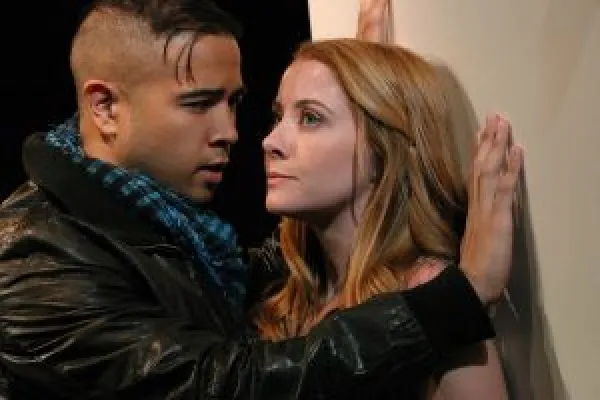
My readers (hiya Ma!) know I’m usually very careful regarding plot spoilers, either completely avoiding or clearly labeling them, so as not to ruin the element of surprise for theatergoers. This is actually the first time I’ve reviewed a play when critics and ticket buyers are not given the program until after the play and reviewers are admonished in a press kit disclaimer printed in boldface to “not give away details of the plot.” So, to paraphrase Teddy Roosevelt, your reviewer will make it a point to “talk softly, but carry a big Bic” in this critique.