Global
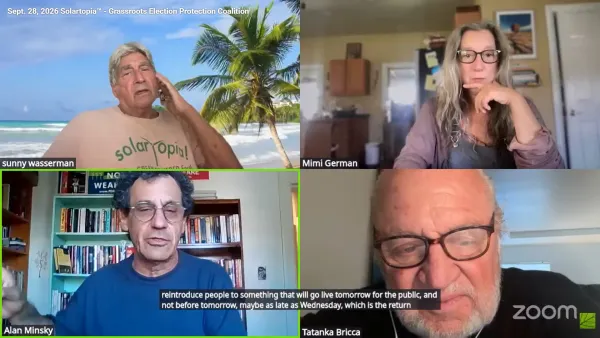
We open our latest GREEP Zoom gathering with a poem and a report from MIMI GERMAN in the deep desert of Eastern Oregon.
From ALAN MINSKY of Progressive Democrats of America we get crucial warnings on how to protect your vote.
Forever activist MYLA RESON makes it clear that the term “illegals” is rooted in unacceptable racism.
From the Democracy Security Project’s MAJU VARGHESE and TEISHA GARRETT we hear even more about protecting your personal security as well as your precious franchise.
Erstwhile engineer STEVE CARUSO posts the latest warnings about AI from none other than Bill Gates.
Co-convenor MIKE HERSH warns about AIs producing new AIs, which is “very frightening."
From legendary computer guru LEE FELSENSTEIN we hear a genius analysis that compares AIs to “rat-bots" & Data Centers to their feeding troughs.
From the League of Conservation Voters we hear GREG LINDNER about extending the membership on the US Supreme Court.
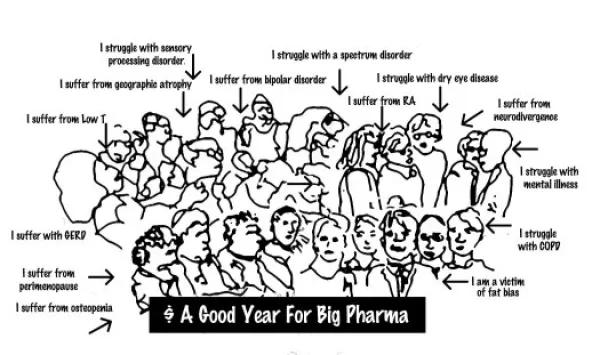
Many realize that health corporations make money when you are sick--or you are afraid you're sick--but some are blissfully ignorant of the dual and hypocritical messaging.
Industry's "hypochondria sell," of course, is the basis of Ask Your Doctor advertising but it also fuels the health "news" you hear.
Drugmakers fund medical schools, medical centers, medical journals, medical practices, drugstores, telehealth and new offices in strip malls designed to sell drugs.
The "exciting" news you hear about a drug from a clinical trial is bought and paid for by the drugmaker behind the study and repeated verbatim by news outlets and medical journals.
So are new "diseases" which either sport expensive drugs, screening or both. Industry knows people like the identity and attention they get from being health victims. Ka-ching
Exhibit A is this week's elevation of near sightedness--myopia--to a "disease." Other diseases "sold" by industry include GERD, IBS, Low T, RA, neurordivergence, perimenopause, osteopenia, dry eye, obesity, GA, narcolepsy, EPI, OAB and many more.

As President Trump and Secretary of War Pete Hegseth try to deflate Iran’s nuclear energy industry our nation faces a national security threat at a controversial swing state reactor.
A failed Department of Energy (DOE) attempt to restart the ailing Palisades nuclear power plant near South Haven, Michigan could become the midterms' October surprise.
Unlike the Ayatollah’s nuclear project, an opaque Camden, New Jersey company has run into big trouble trying to restart this antique reactor with the full faith and credit of the Trump administration.
Holtec International’s Palisades reactor, has become a poster child for the “What Me Worry” folks at what’s left of Trump’s downsized and Doged Nuclear Regulatory Commission. This clear and present danger should be a target for Congressional dismantling

More and more humans are suffering from empire psychosis.
People who can’t go ten minutes without checking their phones, losing hours a day to social media and mindless scrolling.
People talking to chatbots, learning about the world from them, learning about life from them, making friends with them, forming relationships with them.
Binging on podcasts, binging on streaming services, binging on video games, binging on apps, binging on vapes, binging on treats delivered to their door by underpaid workers from bombed-out countries.
The bread was designed in a lab to be furiously addictive, and the circuses track your preferences to serve you up all your favorite performances.
Empire psychosis keeps us in a constant state of distraction and escapism, always scrambling to avoid the here and now like we’re trying to climb out of our own skins.
It’s a frenzied discontentedness. A persistent delusion that satisfaction exists right around the corner after the next restless squirm. It’s an artificially manufactured mental disorder. And it’s worth trillions of dollars.

Palantir Technologies is a software company based in Tampa, Florida that develops big data integration and analytics platforms for government and commercial clients. The company was founded in 2003 by Peter Thiel, Alex Karp, Joe Lonsdale, Stephen Cohen, and Nathan Gettings. It provides software that powers intelligence agencies, health insurance companies, defense departments systems and private hospitals around the world. It is complicit in Israel’s genocide against Palestinians and many other war crime. According to CEO Alex Karp, “Palantir is here to disrupt...and, when it’s necessary, to scare our enemies and, on occasion, kill them.”
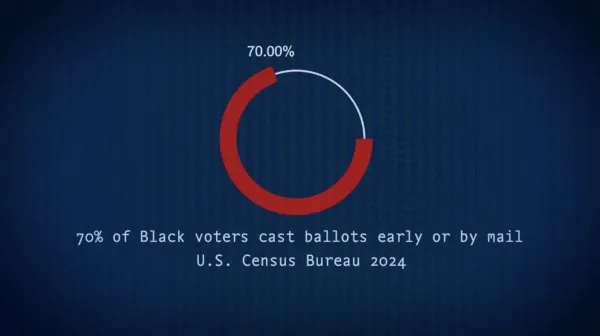
In 2020, the Attorney General of Texas confessed to stealing the vote for Donald Trump in Texas. “Confess” is the wrong word, I suppose, because on the Steve Bannon podcast, Ken Paxton proudly crowed about his felonious attack on Black voters. It’s unbelievable, but if you watch our video, you’ll have to believe your eyes and ears.
 Ken Paxton on Steve Bannon’s War Room boasts of blocking 2.5 million mail-in ballots.
Paxton, not coincidentally, is running for the US Senate in Texas against James Talarico. Control of the Senate, control of our future, may come down to this Texas ballot robbery scheme.
Here’s a bit of Paxton’s boasting confession:
“Trump won by 620,000 votes in Texas. Harris County [Houston] mail-in ballots that they wanted to send out were 2.5 million. Those were all ‘illegal,’ and we were able to stop every one of them. Had we not done that, Donald Trump would have lost the election.”

Watch video here
Following the arrest of 100 anti-genociders in the morning, everyone remaining (and arrestees too) march to the UN to protest WarCrim Netanyahu’s address there, which in any case was delivered to the backs of delegates also marching: out.