
Global

Solartopia™ - Grassroots Election Protection
Regularly Monday 5 P.M. ET/ 2 P.M. PT
Registration link:
https://grassrootsep.org/upcoming-zooms
Register once and you can choose one or more occurrences to attend without having
to re-register for each meeting.
If you are able, please donate @ https://grassrootsep.org/donation
———————————————————————
AI & DATA CENTERS ON THE RUN?
Lee Felsenstein
2026 & THE 20% SOLUTION, WITH FASCISM HANGING IN THE BALANCE
Marju Varghese, Teisha Garrett, Doug Lindner

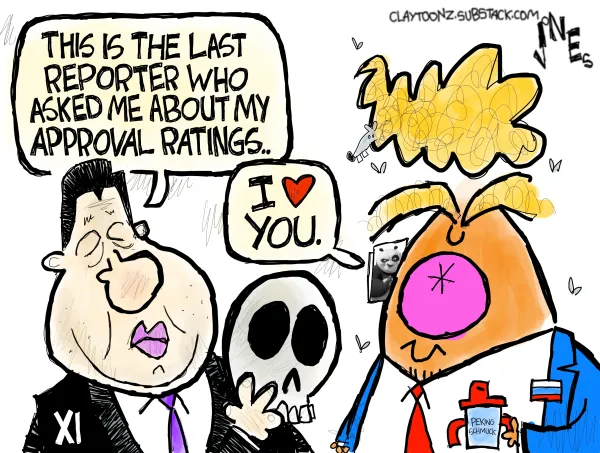
Donald Trump clearly believes the 2026 mid-term election---like the 2024 Presidential---has already been bought for him by Elon Musk, Peter Theil and the “Epstein Class” billionaires.
Only one thing stands in their way---grassroots organizing and a “20% solution” to fund it.
Musk and his uber-rich evil-doers mean to drown the mid-terms in satanic cash. Musk has pledged $200,000,000. But with his $1,000,000,000,000, that’s probably a vast understatement.
Much of the Epstein Class may not like, admire or trust Donald Trump in any way. But he plugs them into the public trough. Their return on investment is gargantuan.
So the tech bros buy media by the billions. They raise the cost per minute of air time far beyond the reach of most progressive candidates, no matter how much grassroots cash they can scrape together
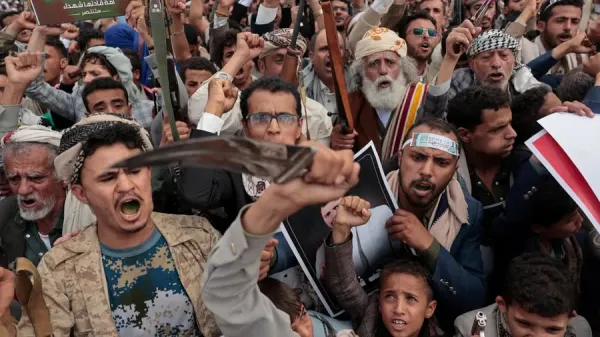
The Houthis are a small tribe in Yemen’s mountainous north who love their quirky Zaidi sect of militant Islam, cherish their guns, and love to chew the narcotic shrub qat. I joined Houthis in the wild mountains of Yemen to follow their wars and chew qat.
Houthis like to argue, smoke weed and repel invaders. They live in one of our planet’s wildest, most inhospitable regions, so bleak and arid that even the local camels are cranky and irritable.
The highlands are filled with squabbling tribes who call themselves pure Muslims while accusing their neighbors of being ‘bad’ Muslims. They do not welcome outsiders unless they bring tobacco and ammunition. The Houthis really dislike their Sunni Muslim neighbors. They deeply detest their Saudi Arabian neighbors who, in turn, despise their Yemeni neighbors as unlettered mountain bandits.
Into this hotpot of neighborhood animosities strode the Saudis. Long dismissed as illiterate Bedouin hicks, the increasingly rich Saudis decided they wanted to be the regional power. One of their first targets were the Houthis high up in the Arabian mountains.

"Révoltée" by Claude-Yolande is licensed under CC BY-NC-SA 2.0.
Are all six New England governors out of their minds? It’s 2026, renewable energy is surging globally, nuclear power plants remain as dangerous as ever, and they want to build new nukes?
On September 30, Massachusetts Gov. Maura Healey will host her regional counterparts at a “pro-nuclear summit” at the University of Massachusetts-Lowell, for the public to supposedly learn about the so-called safety and benefits of “advanced” nuclear energy. Protesters will be there in droves, led in part by the Clamshell Alliance, which began exposing the perils of atomic energy half a century ago. The dangers nukes pose haven’t changed; 21st century marketing has.
At a time when the governors—and other government leaders—should be the strongest voices promoting renewable energy, many instead either enacted legislation, or offered incentives, or adjusted regulatory frameworks to support nuclear development. We’re in the midst of a catastrophic climate emergency that demands we accelerate clean energy, not gamble our future on repackaged nukes.
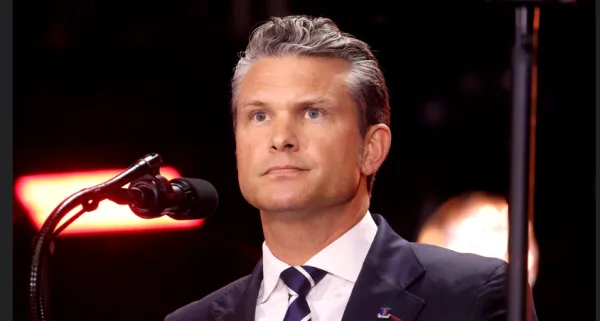
The Purge at the Top: Targeting Excellence in the Pentagon
When Defense Secretary Pete Hegseth targeted high-ranking military leadership, the pattern of removals was striking. Nearly sixty percent of the senior officers sidelined, fired, or stripped from promotion lists were Black or female, despite Black and female service members accounting for fewer than twenty percent of all active-duty generals and admirals. As recently highlighted on Antonia Hylton’s The Assignment, these actions are not about meritocracy. These purges specifically target highly qualified Black, female, and transgender officers who spent decades scaling the ranks of military leadership. Under the guise of an anti-diversity mandate, the administration treats identity as an immediate disqualifier rather than an institutional strength.

‘Page Six Hollywood’ recently declared: “War of Open Letters Erupts Between Pro-Israel and Pro-Palestine Factions in Hollywood.” Only a few years ago, a headline like this would have seemed unthinkable.
The article described an increasingly open struggle between pro-Palestine and pro-Israel forces within the entertainment industry. On one side are artists and other industry figures taking a clear stand against Israel’s genocide in Gaza; on the other are defenders of Israel attempting to deny that genocide in the face of irrefutable evidence.
Yet even this framing failed to tell the whole story. What is unfolding is far more consequential than a quarrel among celebrities or a “war of open letters.” It is part of a brewing cultural revolution in American society - one that has now reached the highest echelons of the country’s cultural establishment. And in that struggle, Israel is losing - and losing badly.

When a president grants clemency to a convicted soldier despite objections from the military leadership, the decision naturally raises questions about justice, accountability, and the meaning of mercy.
Israeli President Isaac Herzog's decision to pardon former IDF soldier Elor Azaria provides precisely such a moment. Azaria was convicted of manslaughter after shooting and killing Abdel Fattah al-Sharif, a wounded and incapacitated Palestinian in Hebron in 2016. Herzog's decision came despite opposition from senior military officials to shortening the consequences of Azaria's conviction.
That disagreement is significant. The military's position and the president's decision represent two different judgments about what should happen after a serious criminal conviction. Herzog's office cited factors including the passage of time, Azaria having completed his sentence, changed personal and family circumstances, and the remorse expressed in his clemency request.
But there is another side of the story that should not be forgotten: the person who died and the family who had to live with that loss.

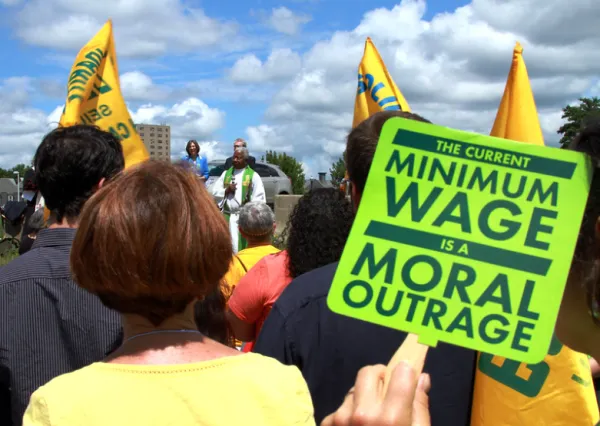
On June 6, 2025, Donald Trump’s White House staff issued an upbeat statement proclaiming that what it called the “Trump Effect” was creating “higher pay for American workers.” The reality, though, is that Trump, during his second term in office, has deliberately reduced the wages of millions of workers and, despite substantial inflation, frozen the wages of millions more.