
Global
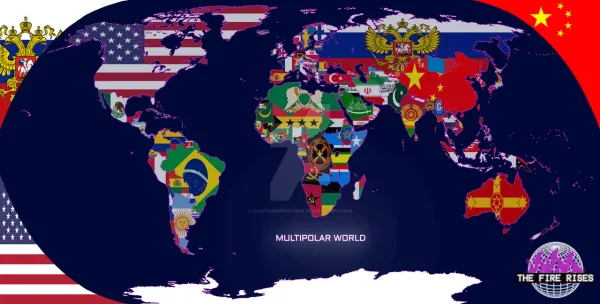
While many observers and critics describe the current confrontation between the United States, Israel, and Iran as a quagmire, stalemate, or even a “new Vietnam” for the United States, the crisis may be better understood through a different historical analogy: the 1956 Suez Crisis. The Suez Crisis demonstrated a fundamental shift in global power relations, revealing that the United Kingdom and France could no longer pursue independent military and foreign policies without the consent and support of the United States.
Likewise, the present conflict illustrates not only the limits of Israeli strategic autonomy, but also the broader transformation of the international system as American dominance is increasingly challenged by the rise of China and the emergence of a more multipolar world order.


The recent announcement by the Department of Justice regarding a $1.776 billion "Anti-Weaponization Fund" is not merely a policy decision, it is a profound affront to the American taxpayer and the rule of law. We are witnessing the formalization of what can only be described as a federal "slush fund"—a mechanism designed to provide financial redress for those who claim they were victims of the legal system, a category that conveniently encompasses the very individuals who participated in the January 6th insurrection.

Trump on a tear: unpresidented corruption riles the GOP. Bossman distracts by renaming the war. Colbert is done for now, but the regime pretty much satirizes itself. The semiquincentennial celeb is an almost perfect lie; we expected nothing less. And Kars4Kids apparently benefits different kids, paying for teen trips to Israel for free indoctrination.


As of today, Friday, May 22, Director of National Intelligence Tulsi Gabbard has announced her resignation, effective June 30, 2026. She cited her husband’s recent diagnosis with a rare form of bone cancer as the reason for her departure.
Her departure is just part of a broader trend happening this year and an echo of the defections and terminations during Trump’s first term. Gabbard’s announcement follows a string of other high-level exits, including Attorney General Pam Bondi, Department Homeland Security Secretary Kristi Noem, and Labor Secretary Lori Chavez-DeRemer. Additionally, the earlier resignation of Joe Kent (Director of the National Counterterrorism Center) in March—who stepped down over objections to the administration's policy regarding the war in Iran—serves as a primary example of the internal friction currently affecting Trump’s cabinet.
The Treasury Resignation
The resignation of Brian Morrissey preceded the most recent major announcement.

According to If Americans Knew, under the terms of the Oslo Accords, Israel collects import and export taxes on behalf of the Palestinian Authority, which are supposed to be transferred to the PA for its operating budget. Israel regularly withholds part of this revenue—now totaling over $4 billion—claiming it is being used illegally for the so‑called “Pay‑for‑Slay” program (Palestinians often call it the Martyrs’ Fund), a social safety net for Palestinian families who have lost their breadwinner due to the conflict with Israel.
Never mind that many Palestinian “martyrs” were not killers or attackers, but were themselves killed while walking to school, participating in peaceful demonstrations, or sleeping in their beds. Israel does not differentiate, claiming the program encourages Palestinians to volunteer for suicide missions. Meanwhile, Israel is not subjected to any “Pay‑for‑Slay” restrictions, despite receiving $3.8 billion annually from the United States. This gives Israel impunity to oppress Palestinians and avoid accountability.

US President Donald Trum’'s state visit to China will go down in history as the day the United States finally acknowledged Beijing’s ascendancy as a global superpower. That acknowledgment does not need to be articulated in a formal statement; it can be clearly read in the subtext of diplomatic behavior, global perception, and shifting media coverage.
During the summit, Trump’s delegation—accompanied by prominent American corporate leaders—engaged with President Xi Jinping not from a position of absolute global dictation, but through a lens of defensive pragmatism. This transactional approach focused on securing bilateral trade commitments and preventing catastrophic economic friction.
