
Global

Wednesday, January 13–Saturday, January 16
Comic book fans of all ages: get ready for the ninth annual Schomburg Black Comic Book Festival, the virtual edition!
Each year, the Schomburg Center’s Black Comic Book Festival brings creators, illustrators, writers, and independent publishers together with thousands of collectors, blerds, and nerds for two days of programming and activities. The highly-anticipated community event includes interactive panel discussions, a vendor marketplace featuring exclusive titles by Black creators, a cosplay show, and more.
Black Comic Book Festival participants are encouraged to wear their favorite cosplay costumes and to register for the annual cosplay show (details TBA).
Have you registered yet?
Events include a tribute to actor and former Schomburg Center acting teacher Chadwick Boseman, a workshop with animator Tim Fielder, the launch event of John Jennings's Megascope imprint, and more!

Israel’s decision to exclude Palestinians from its COVID-19 vaccination campaign may have surprised many. Even by Israel’s poor humanitarian standards, denying Palestinians access to life-saving medication seems extremely callous.
Amnesty International, among many organizations, condemned the Israeli government’s decision to bar Palestinians from receiving the vaccine. The rights group described the Israeli action as evidence of the “institutionalized discrimination that defines the Israeli government’s policy towards Palestinians.”

AN OPEN LETTER TO MAGA MARCHERS
When Donald Trump incited you to assault the Capitol, he said he would be with you.
He wasn’t.
Four of you are dead and you’ve killed a policeman. More of you will suffer and die from the COVID that spread through your maskless march. Many of you now face prison terms and ruined lives.
Had you been black, you’d’ve been gunned down before you got anywhere near the Capitol building.
Some of you in Los Angeles compensated by assaulting a black woman who accidentally walked into one of your rallies. Others expressed your opinions about Jews by wearing hats saying 6MWE (Six Million Wasn’t Enough).
Maybe Trump’s bone spurs kept him from marching with you.
When Alice Paul and Martin Luther King and Dorothy Day and Cesar Chavez and so many other great American leaders have organized marches for social change, they personally endured gassings, beatings, imprisonment. They never hesitated to risk their own bodies for a higher cause.

I still see the noose in front of the capitol building, dangling oh so metaphorically.
“No matter how all this plays out, it’s only the beginning,” wrote a user on TheDonald message board, according to the Associated Press.

As the US ruling elites have fully succumbed to Israel’s political discourse on Palestine, the Israeli government of right-wing Prime Minister, Benjamin Netanyahu, may feel that it, alone, is capable of determining the future of the Palestinian people.
This conclusion is, perhaps, gleaned from Israel’s behavior in recent years and months. The expansion of illegal Jewish settlements, the plan to annex large swathes of the Occupied Palestinian Territories and the entrenching of the existing system of apartheid and perpetual colonialism are all evidence that demonstrates Israel’s renewed sense of empowerment.
Israel is further emboldened by the fact that the so-called ‘international community’ has, thus far, failed to challenge American and Israeli intransigency. The European Union, which is fighting for its own identity, let alone survival, is proving to be a marginal force in Israel and Palestine. Without American guidance, the EU seems incapable of leading its own independent initiatives.
In 1973, Dr. D. L. Rosenhan, a professor of psychology and law at Stanford University, published a ground-breaking psychiatric study in the January 19 issue of Science magazine. The article exposed a serious short-coming in the psychiatric hospital system at the time, and therefore it became very controversial. Dr. Rosenhan designed the study to try to answer the question in the title of this article: “If sanity and insanity exist, how shall we know them?”
The now famous (some of the offended or embarrassed psychiatrists preferred to call it “infamous”) experiment that was carried out involved 12 different psychiatric hospitals and 8 different people, mostly professionals (including the author). Each of the eight were totally and certifiably sane “pseudo-patients”.

BANGKOK, Thailand -- Thailand's 68-year-old king and his loyal, testy
prime minister suffered a dangerous 2020, relentlessly exposed to
loud, satirical, young revolutionaries in the streets demanding
democracy and limits to the monarch's wealth and security forces.
"Maha" or "Great" King Vajiralongkorn and Prime Minister Prayuth
Chan-ocha now face a harsh January but are expected to emerge secure.
"Prayuth does not seem to be in danger. The royal-military alliance
seems to be unassailable," said Michael Nelson of the Asian Governance
Foundation.
The foundation focuses on law, academia and other sectors in Asia. Its
advisors include former commanding general of the U.S. Marine Corps in
the Pacific, Lt. Gen. Wallace C. Gregson.
"The protesters, though big on Facebook, also have little backing in
the population. And now, the government is getting tough with them,"
Mr. Nelson said in an interview.
Prime Minister Prayuth seized power in a bloodless 2014 coup when he
was a general and army commander-in-chief.

The Republican plunge into Trumpism has made the party especially unhinged and dangerous, but its basic ideology has long been a shameless assault on minimal standards of human decency. Now -- while Democratic leaders and most corporate media outlets are suitably condemning the fascist tendencies of Trump and his followers -- deeper analysis and stepped-up progressive organizing are urgently needed.
Economic injustice -- disproportionately harming people of color -- constantly propels U.S. society in a downward spiral. Poverty, economic insecurity and political disempowerment go together. Systemic racism continues to thrive, enmeshed with the predatory routines of corporate power.
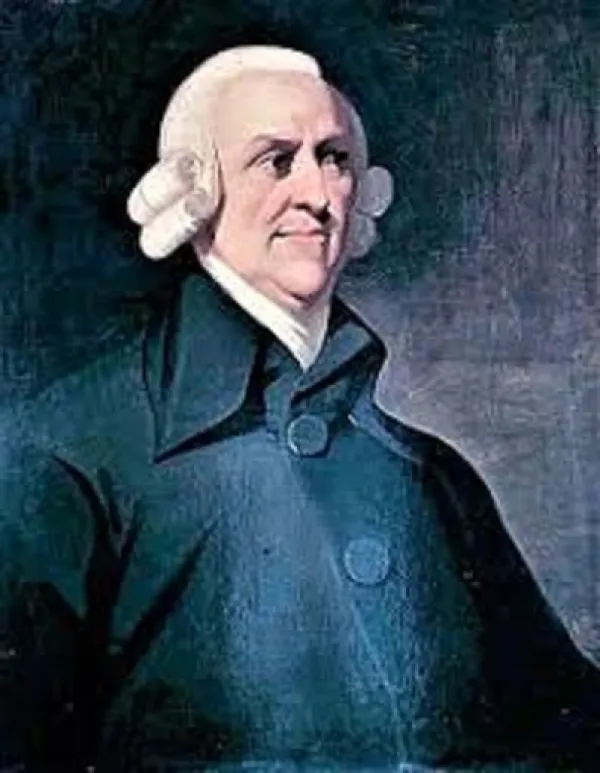
The invisible hand
As everyone knows, Adam Smith invented the theory that individual self-interest is, and ought to be, the main motivating force of human economic activity, and that this, in effect, serves the wider social interest. He put forward a detailed description of this concept in an immense book, “The Wealth of Nations” (1776).

I couldn’t resist putting together this little group of photos from two fascist-leaning nations from different eras that exhibited similar political leanings.
No comment should be necessary, but it needs to be understood that proto-fascist cults have a disdain for liberal education and their cult-leaders (who are amoral, paranoid, narcissistic, megalomaniacal wannabe dictators) readily use violence and terror to take and maintain power. In addition, fascist movements always try to silence their opponents and enemies and therefore make use of censorship in their attempts to take power. (GGK)