
Global

On Monday, July 6, Israeli occupation forces (IOF) launched a drone strike on a vehicle in Nabatieh al-Fawqa, southern Lebanon, killing Esperanza Ghandour, principal of Youssef Chamoun School, her mother, and two other workers whose identities were not released. One was reported to be a domestic worker, while the other was a Syrian worker.
According to reports, Ghandour was returning to her family's home with her mother and the two workers to inspect repairs to their war-damaged house. Israel claimed the vehicle posed a threat to its forces. The strike was reportedly the deadliest attack in Lebanon that week.
Lebanese lawmaker Hussein al-Hajj, head of the Baalbek-Hermel Parliamentary Bloc, criticized the Lebanese government for abandoning its citizens and failing to condemn the killing of civilians or file complaints against Israel during the so-called ceasefire. His remarks came after Israeli forces shelled Nabatieh on July 6.
In a video statement addressed to Lebanon's president and prime minister, al-Hajj said: "This calls for a complaint to the Security Council... or has Lebanese blood become that cheap?"

When is the last time the U.S. government, or a fragment thereof, has truly been held accountable – not merely legally or politically, but morally accountable – for an act of violence, for its addiction to violence? Ever?
And what might that even mean?
These are not questions I’ve ever even asked until a few hours ago, when I began learning about a lawsuit that has been filed against Homeland Security Secretary Markwayne Mullin and acting ICE director David Venturella. Technically, it’s a freedom of speech lawsuit, but it’s also so much more than that. At least that’s how it seemed to me, the more I learned about it.
The suit pulls back horrible January and the invasion of Minneapolis, a.k.a., Operation Metro Surge, when armed and masked members of ICE and Customs and Border Protection began occupying the Twin Cities for the purpose of snatching and deporting (“allegedly”) undocumented immigrants, creating immense fear and chaos everywhere, and leading to huge protests.

Analysis of the Iran–Israel–United States conflict has largely focused on Iran’s nuclear program, regional proxy networks, and ideological hostility towards Israel and the United States. While these factors remain central to the conflict, they are better understood as manifestations of a deeper strategic rivalry rather than its fundamental causes. Explanations centered exclusively on nuclear proliferation or proxy warfare cannot adequately account for why decades of sanctions, diplomacy, covert operations, deterrence, and military pressure have failed to produce a durable political settlement. More importantly, they cannot explain why overwhelming U.S. military superiority has repeatedly failed to translate into decisive political outcomes.

Wednesday, July 8, 7pm
Virtual
DSA is teaming up with USCPR Action and Adalah Justice Project for this week’s national phonebank to demand that Congress vote against the NDAA and pass the Block the Bombs Act NOW! Make calls to supporters in key moveable districts and ask them to pressure their members of Congress to stand on the right side of history.
Israel and the U.S. are poised to merge their militaries. This dangerous proposal has been buried inside the annual military spending bill. In total, the 2027 National Defense Authorization Act (NDAA) would:
- Increase military spending to a whopping budget of $1.5 trillion
- Integrate U.S. and Israeli military technology, intelligence systems, and research through shared databases and weapons coproduction
-Rob voters of representation by shielding this deadly U.S.-Israel military merger from all congressional oversight votes
Join us in demanding Congress stop arming Israel: bit.ly/callfornomore

 BANGKOK, Thailand -- Vietnam is digging up a graveyard so a sprawling Trump International golf resort with plush residences can be built along the Red River, while "the highest Starbucks Coffeehouse in Asia" has opened on Vietnam's tallest mountain peak near Sapa.
Trillionaire Elon Musk meanwhile received a Starlink satellite operating license in February to expand Vietnam's censored internet.
And Apple CEO Tim Cook told CNBC news last year for U.S. sales of "Mac and iPad and AirPods and the Watch, almost all of the country of origin is Vietnam."
Hanoi's eager embrace of American capitalism spotlights how vastly U.S.-Vietnam relations have changed since their grueling 10-year war ended with a communist victory in 1975.
Hanoi favors close ties with Washington to balance its economic vulnerability with China, its giant trading partner across Vietnam's northern frontier.
U.S. investments in Vietnam meanwhile appear to be growing.


When you prioritize principles, you decide what is right or wrong for you, regardless of whether others will praise you or whether doing so will bring you fame. That's precisely what the Lebanese child chess star Lauren Abdel Samad did during the 2026 World Youth Championship. Lauren withdrew from two matches against Israeli opponents at the FIDE World Cadets Cup in Batumi, Georgia.
Lauren was born in 2018 in the Chouf region of Lebanon, a small area with limited access to elite chess infrastructure. She recently gained prominence after winning first place in national competitions and qualifying to represent Lebanon at the FIDE World Cadets Cup in Georgia.
Her achievements stand out because:
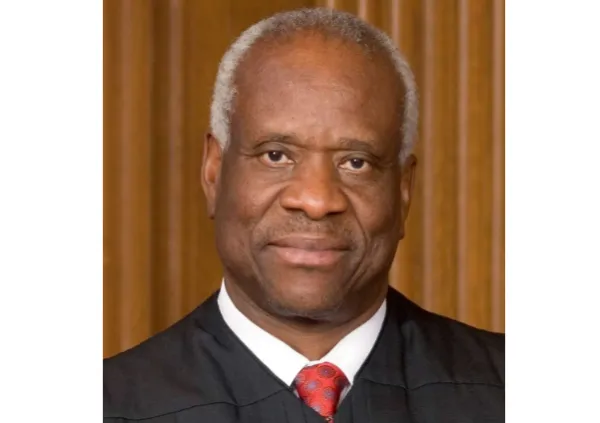
Justice Clarence Thomas’s dissenting and concurring opinions on matters of immigration/birthright citizenship, voting rights, and transgender athletes have once again landed the enigma at the center of controversy. The thinking is and has always been that as a member of an historically marginalized group perhaps Thomas would be empathetic toward similarly situated minorities and move accordingly. Makes sense, yet for the past thirty-five years that hasn’t been the case. Many have maintained that Thomas has done quite the opposite.