
Global
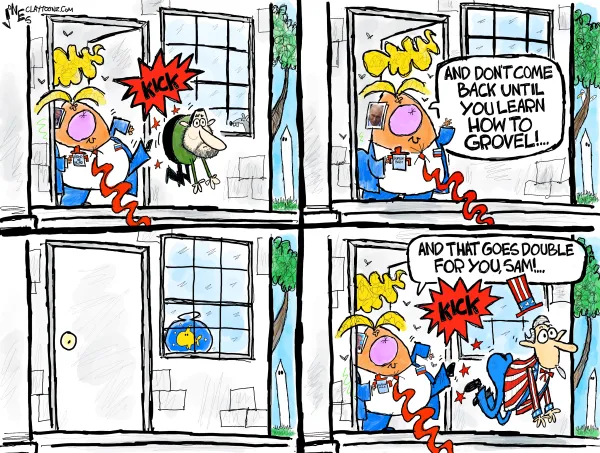
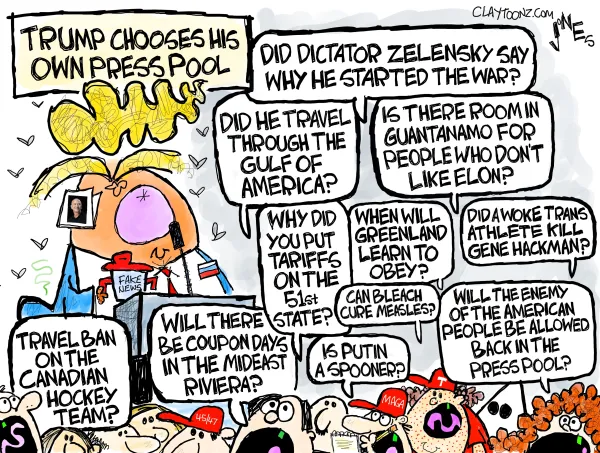
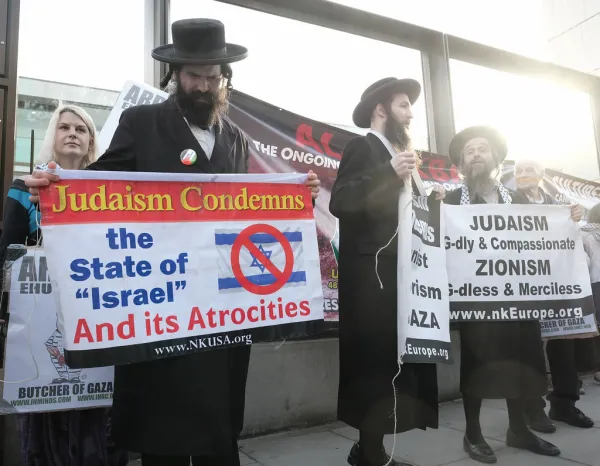
After Donald Trump began to pull together his cabinet and inner circle it became pretty clear that the overwhelming tie that bound the group together was its embrace of Israel and everything that it is doing. There were even jokes that the top cabinet officials had apparently been selected by Prime Minister Benjamin Netanyahu of Israel himself to reflect the fact that the Jewish state would be calling the shots for Trump even more than they did with the spineless Joe Biden. The handover of power was confirmed for all to see when Trump invited Netanyahu to the White House, the first foreign head of state to be so sanctified. While in Washington, a grinning Netanyahu was beguiled to learn of a crazy scheme to either kill or throw all the remaining Palestinians out of what was once Palestine and turn the ruins of Gaza into a high-end beach resort. Since that time, Trump has assured a delighted Netanyahu that no Palestinians would be allowed to return to visit what was once the site of their homes and communities.
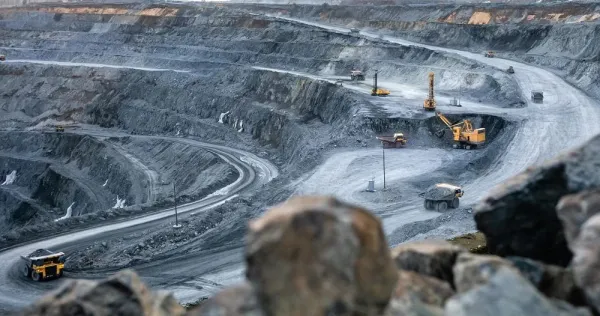
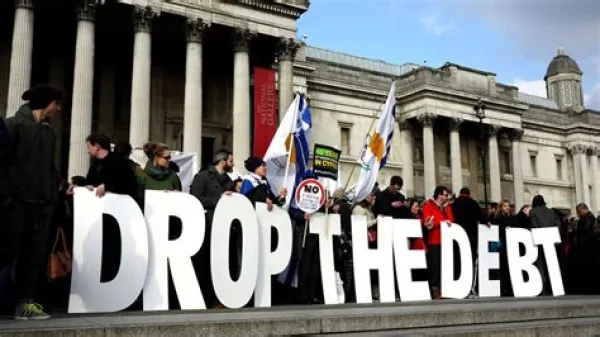
The systematic plundering of Ukraine by international financial institutions and governments is underway. As history has shown in countless other countries, predatory terms will cripple Ukraine’s future, a continuation of war, by other means. This is colonization in action—not through military conquest, but through economic enslavement, will bind Ukraine in perpetual debt and subjugation.
Ukraine is home to some of the world’s richest agricultural land and vast mineral deposits, including critical rare earth elements. Today, it is being sacrificed to the international community, its natural wealth placed on the altar of global capital. Her fertile land, water, and fragile ecosystems stand on the brink of exploitation—viewed not as living, sustaining forces, but as mere "natural resources" for extraction, debt collateral for creditors, and fuel for industrial appetites.
We will hear the familiar rhetoric of "green energy," "sustainability," and "digital transformation," but behind these words lies a brutal reality: a feeding frenzy cloaked in the language of progress. The word we should be screaming is STOP!
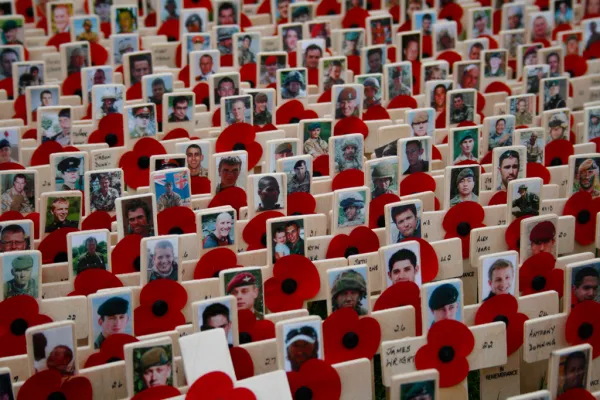
Donald Trump’s power has thrived on the economics, politics, and culture of war. The runaway militarism of the last quarter-century was a crucial factor in making President Trump possible, even if it goes virtually unmentioned in mainstream media and political discourse. That silence is particularly notable among Democratic leaders, who have routinely joined in bipartisan messaging to boost the warfare state that fueled the rise of Trumpism.
Trump first ran for president nearly a decade and a half after the “Global War on Terror” began in the wake of the 9/11 attacks. The crusade’s allure had worn off. The national mood was markedly different than in the era when President George W. Bush insisted that “our responsibility” was to “rid the world of evil.”
We have long argued that the Israeli war and genocide in Gaza must catalyze a change in the overall political discourse on Israel and Palestine, particularly regarding the need to free Palestine from the confines of victimhood. This shift is necessary to create space where the Palestinian people are seen as central to their own struggle.
It is unfortunate that centering a nation in a conversation about its own freedom from colonialism and military occupation requires years of advocacy. But this is the reality Palestinians face—often due to circumstances far beyond their control.
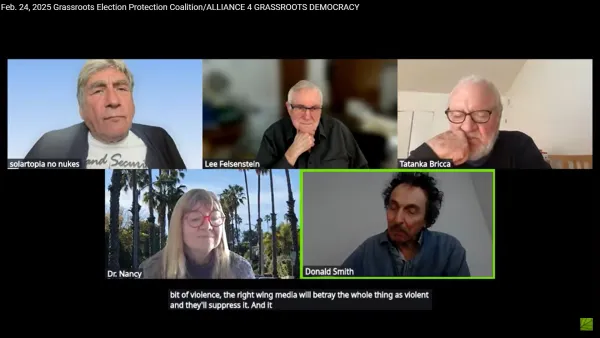
We start GREEP zoom #213 with KANI XULUM and a fascinating exploration of the repression of some 50 million Kurdish citizens.
The great JENNIFER ROBERTS of the Carter Center updates us on a terrifying NC challenge to election integrity.
With TATANKA BRICCA we celebrate the return of LEONARD PELTIER to his people after FIFTY YEARS in unjust captivity.
A boycott of major corporations for Friday, February 28, is announced by DANIELA GIOSEFFI.
DC Home Rule is now under attack, & we get a first-hand report from MIKE HERSH.
The big attacks on the Big 3 of MEDICAID, SOCIAL SECURITY & MEDICAID get a new look from Prof. ERIC KINGSON.
We then examine the realities of MARTIAL LAW and what may soon be coming to the US.
The new EPA Chief’s attacks on funding for renewable energy elicits a question of what will happen with nuke power.
For a deep deep dive into the world of computerization, we then hear from the legendary LEE FELSENSTEIN.
As founder of the Earth-changing Homebrew Club that pioneered the digital revolution, Lee’s genius is now focussed on democratizing information.
As a young person, I was always enthralled by art, history, religion, philosophy, and psychology. While I was born a reformer—driven by a deep instinct and hunger to understand how systems, policies, and the social mechanics of society worked—I also ventured deeply into humanity, culture, and the fundamental questions of what makes people tick and how. Instead of winning my school’s annual academic excellence prize, I was awarded prizes for service to the community. In 1995, at the age of eighteen, I was named my county’s Young Citizen of the Year for my contributions to both local and international volunteer work. A moral code of service and compassion guided me, balancing heart with action.
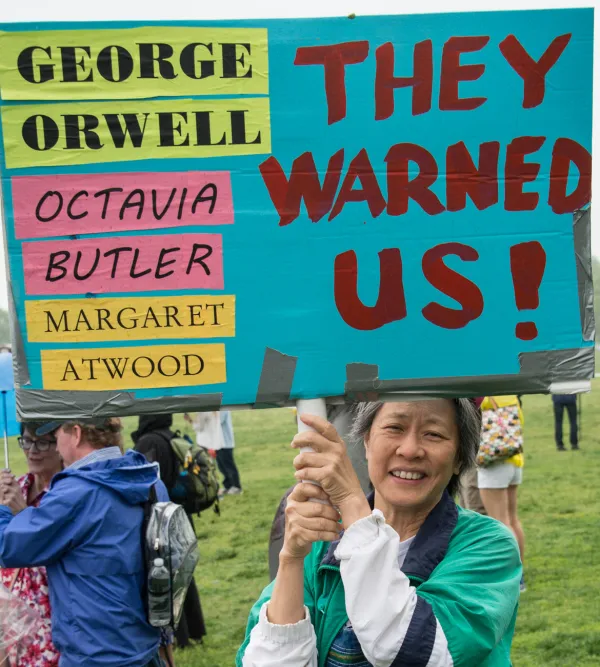
“The enemy of the moment always represented absolute evil, and it followed that any past or future agreement with him was impossible.”
The words are from George Orwell’s Nineteen Eighty-Four (where else?), explaining the root causes of a dystopian world. The book may be a work of fiction, but his words are deeply embedded in reality – we need enemies, the worse the better! This certainty may well be humanity’s most profound existential threat. I fear it could be “the meteor” that hits Planet Earth, ultimately spelling extinction for the dominant species.
Mostly what we do is prepare for – and wage – war. We always wage it in self-defense, even when in retrospect its motivating factor is colonial conquest. When it comes to the manifestation of power, at its core are the words “us vs. them.” That captures the public spirit so much more fully than cooperation, connection, understanding . . . or, groan, love.
As far as I’m concerned, this is humanity’s primary challenge of the moment. It’s time to transcend war, the meteor of our own making.