Global
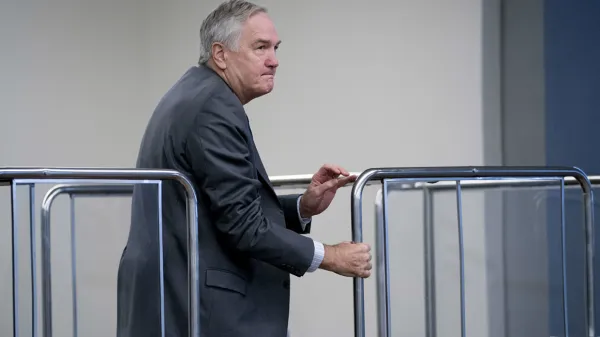
Former U.S. Sen. Luther Strange (R-AL) knew last week that Trump Attorney General Jeff Sessions (R-AL) had been fired, roughly two hours before the news had been released in the press, according to a report at the Washington Examiner. Is this an oddity, of little or no import? We think it is much more than that, adding to the mountain of evidence that federal courts in Alabama are a nauseating sewer.

The Florida election official so well-respected by Republicans and Democrats alike in 2000 that he was tapped to oversee that year's historic Presidential "recount" between George W. Bush and Al Gore in Florida (until it was stopped by the U.S. Supreme Court), tells us today that it is likely impossible for the state to complete three statewide recounts --- for U.S. Senate, Governor and Agriculture Commissioner --- in time to meet the state's ridiculously arbitrary statutory deadlines.
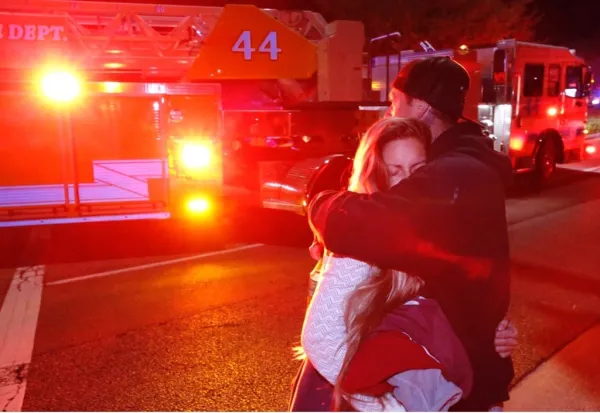
Thousand Oaks, California: a city torn apart by wildfire and gunfire. Both are unnatural disasters.
“This is the new abnormal,” Gov. Jerry Brown said this week at a press conference, talking about global warming and the three voracious fires that are tearing up his state, one of them — the Camp Fire, in Northern California — the deadliest and most destructive in the state’s history.
“Unfortunately, the best science is telling us that dryness, warmth, drought, all those things, they’re going to intensify,” Brown said.

Iván Arriagada Herrera, the CEO of Antofagasta Minerals S.A. (since 2015) and Antofagasta plc (since 2016) said that Donald Trump’s election has created a “more favourable climate for the development of the (Northern Minnesota Twin Metals) project.”
Arriagada recently said that Antofagasta’s Twin Metals unit was preparing an environmental impact assessment for an underground copper-nickel mine in Minnesota. (Twin Metals was a Canadian Penny Stock mining company until Antofagasta acquired 100% of the company’s shares a few years ago.)
But the project hinges on the resolution of a legal dispute with the US government, which under former President Barack Obama, refused to renew the company’s mineral leases in 2016 to protect the Boundary Waters Canoe Area Wilderness area from possible pollution.
I predict the extreme polarization of medical sciences. There will be a small (and diminishing) corps of dedicated individuals; real scientists who want to make a difference. Through them, and only through them, we will continue to make significant advances in medicine.
But their effort will be swamped out by the continuing wave of lies and corruption which passes for “science”. It contains no new discoveries, only new ways of lying about what the pharmaceutical industry is peddling.
But those who criticize this system of rampant corruption will be increasingly pilloried and attacked as incompetent, dangerous, dishonest, stupid. It’s already happening with criticism of the “anti-vaccines loonies” and other pejoratives.
The only way of surviving in this coming world of chemicalized madness is to look after yourself. But the medical industry won’t like that. It will become more and more difficult, as suppliers of natural products and experts in non-pharma healing are increasingly marginalized or even criminalized.
People like me could end up in jail, for teaching you that nature can heal!
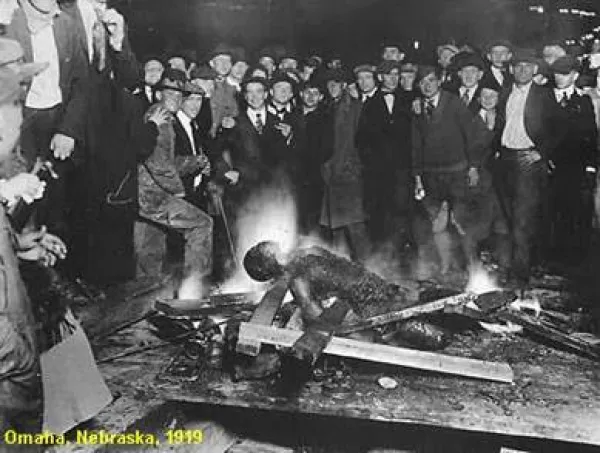
When naive people are in trouble and go looking for someone to solve their problems for them, they often get bamboozled by cunning, politically-motivated con men who are quite willing to step in and take charge.
In pre-Nazi Europe, the fascist dictators Benito Mussolini and Adolf Hitler were such politicians. In 1929, Germany had been victimized by the Wall Street Stock Market Crash which had caused economic chaos all around the economically-interconnected world – especially heavily-indebted Germany which was still reeling from the consequences of the Great War and the massively unfair Treaty of Versailles that ended the war and made Germany accept responsible for all the reparations costs.
 he 2018 “Blue Wave” that dominates our national healing is, in fact, a mere ripple within the HUUUUUGE “Rainbow Tsunami” that has two years to transform the nation.
It embodies the rise of a new generation – led by women – that embraces diversity and voted that way. Its larger destiny (we hope) is to help move our bleeding nation away from a male-dominated fossil/nuclear autocracy and toward a matriarchal, green-powered social democracy.
It’s now epitomized by the first open refusal of a major Democratic candidate to concede an obviously stolen election. If Stacey Abrams helps remake our elections into an actual democracy, a whole new world is possible.
Let’s count the ways:
This Rainbow vote was powered by a ten-point jump in turnout among citizens under 30, who went more than two-thirds against Trump.
They put close to 120 women into Congress, far more than ever before.
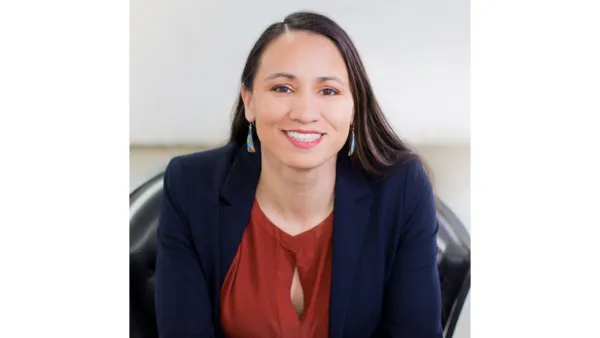
That includes the first two Muslim and the first two Indigenous female representatives, plus (pending Arizona’s outcome) the first openly bi-sexual US senator.
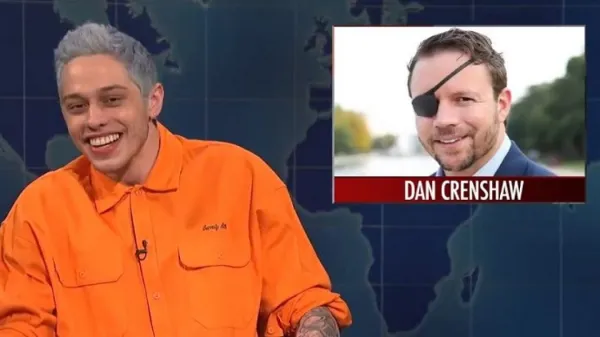
What is more sick about U.S. society?
1) It’s totally 100% acceptable to make cruel stupid jokes about people’s appearance.
2) There’s an exception. You shouldn’t do it if the thing you’re making fun of relates to their participation in mass murder.
3) Violation of that exception is such a sin that you must publicly repent and grovel.
4) This is true even if the sin was committed on a steadfastly unfunny and unintelligent television program that nobody watches.
5) The repentance is incomplete without declaring the participant in mass murder to be a “war hero.”
6) You also must promote militarism in general and instruct the audience to honor participants in mass murder with meaningless phrases like “never forget.”
7) You can claim to find heart-warming unity around mass-murder operations and have not a single campaign launched to remove a single one of your advertisers.