
Global
I have recently returned from three weeks in Korea and Vietnam, countries which have in the past suffered and are still suffering from the ravages of war.
Writing recently in TheNation, Chris Hayes drew an intensely unnerving parallel between the use of fossil fuels as an energy source and the use of slave labor — not a moral parallel, but a financial one, though money and morality have a perversely symbiotic relationship. Where there’s money to be made — especially enormous quantities of it — moral justifications come awfully cheap.
Hayes points out that the movement to end dependence on fossil fuels, drastically reduce carbon emissions and reverse global warming faces a financial hurdle of staggering proportions: “. . . the total amount of known, proven extractable fossil fuel in the ground at this very moment is almost five times the amount we can safely burn,” he writes. Possession of this unexcavated carbon is claimed by global corporations: It’s theirs to pull out of the ground, and it’s worth . . . uh, somewhere between $10 and $20 trillion.
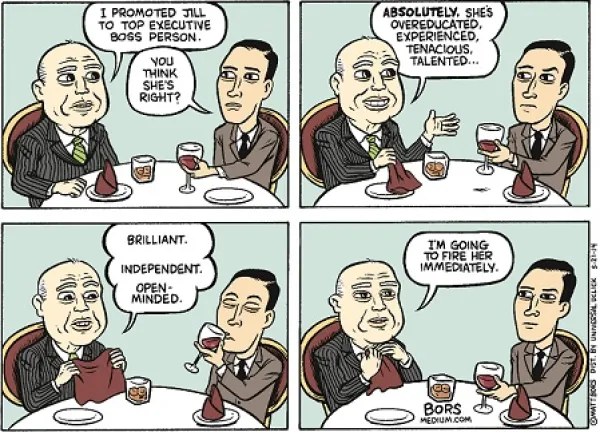

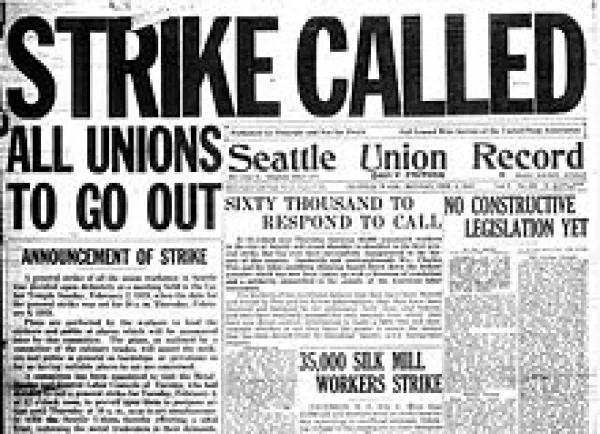
An international one-day strike by fast-food workers is something new, and also something old. People without a union are organizing and acting in solidarity. Others are joining in support of their moral demand for a living wage. They're holding rallies. They're shutting down restaurants. They're using Occupy's people's microphone. They're targeting the one-percenter CEO of McDonald's who apparently is paid $9,002 per hour for the public service of ruining our health with horrible tasting processed imitation food.
Jeremy Brecher has released a revised, expanded, and updated edition of his 40-year-old book, Strike, that includes the origins of these fast-food worker strikes and puts them in the context of a history of the strike in the United States dating back to 1877. This opening passage of Chapter 1 sets the context beautifully:
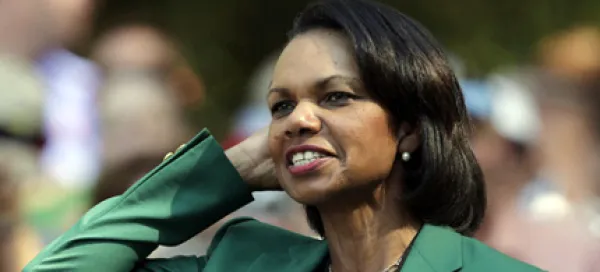
The American Condoleezza Rice, 60, Iraq War architect, and the French Christine Lagarde, 58, International Monetary Fund managing director, have little in common beyond being women of power who have contributed to the misery of millions of people they never cared to meet. And now they have another quality in common, cowardice under fire, albeit only verbal fire after they were invited to speak at college commencements.
Rutgers University invited Rice to speak (for $35,000 and an honorary degree) and Smith College invited Lagarde (compensation undisclosed).

You don’t often hear the phrase “feminist anime”, but Sailor Moon was one of the most girl-positive cartoons to ever air in any part of the world. With a main cast of five teenage girls with magical powers fighting evil in modern-day Japan, the show was as much about friendship and acceptance as it was about stopping the bad guys. This year, Toei Animation is revisiting the series with a new show called Pretty Guardian Sailor Moon Crystal, but just as important to adults who watched the original show, Viz Media is releasing a new translation that embraces some of the more revolutionary aspects of Sailor Moon.
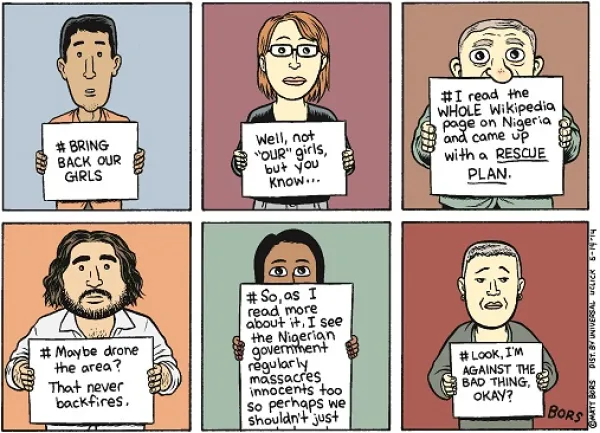
As events in Eastern Europe continue to unravel and occupy the Obama administration’s attention, questions surrounding Afghanistan have supposedly stabilized. The Bilateral Security Agreement, which involves an explicit, adumbrated relationship between the United States and Afghanistan after the scaling down of American troops, remains unsigned to this day. Afghan President Karzai refused to sign the agreement toward the end of last year and the U.S. has had to wait for Afghanistan’s Election results before proceeding further. Without a clear winner in the Presidential Election, however, the waiting will continue until June’s runoff election.